Parent decision guide · One-to-one or group?
Is 1-to-1 Gymnastics Coaching Right for My Child?
A balanced way to consider your child’s confidence, current goal, learning environment and enjoyment—without assuming that private coaching is always better.
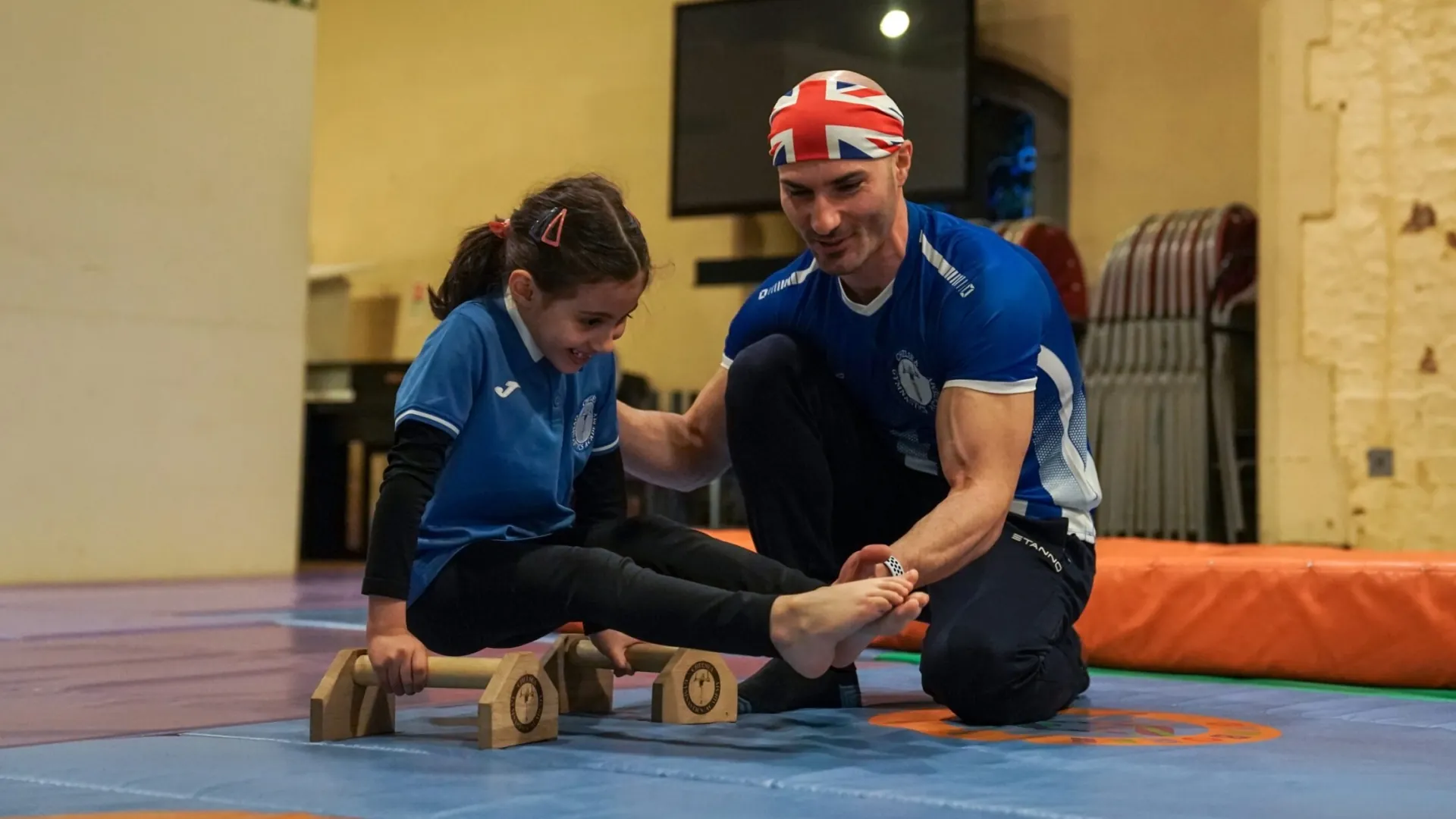
One-to-one gymnastics may suit a child who would benefit from focused instruction, a quieter starting point or time centred on one appropriate goal. It is not essential for every child and it is not automatically better than a group class. The best choice depends on what the child needs, enjoys and is ready for.
One-to-one describes the coaching format: one child receives the coach’s attention during the booked lesson. It does not describe the quality of the coaching, guarantee a result or mean that the child should be pushed harder.
What this guide will help you decide
- Whether individual attention addresses a real need now
- When a group class may offer more value
- How to assess coaching, safeguarding and the setting
- Whether both formats could play different roles
- What to ask before booking a personal lesson
The central principle
Choose for a reason—not for the label
A useful private lesson has a clear purpose that is suitable for the child. “Individual” is not a quality mark by itself, and “group” does not mean that a child receives no personal feedback.
Before comparing services
Start with three questions
Parents often begin by asking which format produces faster progress. A better decision starts with the child and the purpose of the coaching.
What does my child need now?
A calm introduction, focused help with a suitable foundation, regular participation or simply more time enjoying movement?
Where does my child learn well?
Some children engage more easily in a quieter exchange; others become motivated by peers, variety and a shared class routine.
What can this setting honestly provide?
The coach, space and equipment must match the proposed goal. A private booking cannot make an unsuitable activity appropriate.
“The best format is not the most intensive one. It is the one that gives the child the right experience at the right time.”
Dr Stefan KolimechkovReasons to explore it
When one-to-one coaching may be a good fit
These signs can justify a conversation with a provider. They do not mean that a private lesson is necessary or that it will suit every child in the same situation.
A quieter introduction would help
A child who feels hesitant in a busy environment may value time to understand the coach, the space and a few basic tasks before considering a group. See the dedicated guide to one-to-one coaching for shy, cautious or anxious children.
There is one appropriate focus
The child may want help with a foundation such as balance, landing, rolling, handstand preparation or another progression matched to their current level.
The explanation needs adapting
More individual dialogue allows the coach to change the wording, demonstration, task, rest or degree of challenge as the child responds. Read how individualised coaching can support motor development.
The child is returning after a break
A personal lesson may help re-establish familiarity and confidence before the family decides whether to resume group participation.
Gymnastics coaching is not medical rehabilitation, physiotherapy or specialist clinical care. After injury, illness or where there are health concerns, families should follow advice from an appropriately qualified healthcare professional and tell the provider what is relevant.
A strong alternative
When a group class may be the better choice
Group learning is not a lesser version of private coaching. For many children it is exactly where the most useful experience happens.
One-to-one or group? Compare the experience
This comparison is about typical format differences. Actual quality still depends on the provider, coach, setting and suitability of the activity.
There is no universal winner
If the child’s current needs are being met in a good group class, private coaching may add little. If one specific barrier or goal needs focused attention, a personal lesson may serve a clear purpose.
Look beyond “private”
Six signs of a high-quality personal lesson
British Gymnastics places safeguarding responsibilities on clubs and coaches, including appropriate training, welfare support and safer working practices1. Ask how those principles work in the actual lesson—not only whether the provider uses the word “one-to-one”.
The coach asks before prescribingAge, experience, confidence, relevant needs and the purpose of the lesson are discussed first.
The goal matches the settingThe equipment and space are suitable for the proposed activity, with honest limits explained.
The session remains observableProfessional boundaries, parent arrangements and welfare contacts are clear.
Progressions respond to the childThe coach adjusts difficulty rather than forcing repetition or rushing toward an impressive skill.
Feedback is respectful and usefulThe child receives concise guidance and enough opportunity to understand, try and rest.
The next step is honestThe provider can recommend another personal lesson, a group class or no further booking without manufactured urgency.
Ask the safeguarding questions.Who is present? Is the lesson observable? Who is the welfare contact? What happens if the child is uncomfortable or an incident occurs? Read our complete gymnastics safety guide.
Not always either/or
Can a child combine both formats?
Yes—when each session has a useful role and the overall schedule remains appropriate. A weekly group class may provide routine, variety and peers; an occasional personal lesson may focus on one suitable question or foundation.
Belong, explore, participate
Regular structure, shared learning and a broad gymnastics experience.
Focus, adapt, clarify
Individual observation around one reason that matters now.
Complementary—not compulsory
More sessions are not automatically better. Enjoyment, recovery, school and family life still matter.
A calm parent check
Before you book, can you answer “yes”?
We can name the reason for considering one-to-one.It is more specific than “faster progress”.
My child is comfortable with the idea.The format is being chosen with them, not imposed on them.
The proposed activity fits the coach, equipment and space.We understand what the venue can and cannot support.
Safeguarding and observability are clear.We know who is present and who to contact about welfare.
There are no guarantees or artificial urgency.The provider has set realistic expectations and explained alternatives.
Use it when individual attention has a clear purpose and the experience remains child-centred. Choose a group when peers, routine and broad participation are the stronger fit. Reassess as the child changes.
Common parent questions
One-to-one gymnastics coaching FAQs
Is one-to-one coaching better for beginners?
Not inherently. A personal lesson may give a hesitant beginner a calm introduction, while a well-structured beginner group may offer exactly the routine, variety and social experience another child needs.
Will private coaching make my child progress faster?
It can create more opportunities for focused observation and adjusted practice, but it cannot guarantee faster progress. Readiness, confidence, attendance, coaching quality, the nature of the goal and enjoyment all matter.
Is one-to-one gymnastics safer than a group class?
Not automatically. Safety depends on the coach, progression, environment, equipment, supervision and safeguarding arrangements. The format alone does not remove risk.
Can a shy or hesitant child benefit?
Possibly. A quieter setting may help some children become familiar with the coach and tasks. Others relax more easily alongside peers. Avoid treating ordinary hesitation as a problem that must be fixed; discuss what the child is comfortable trying.
Should my child stop group classes to have private lessons?
Usually this is not an automatic requirement. The formats may complement one another, or the group alone may already meet the child’s needs. Ask what each session is meant to contribute before adding more activity.
What does KCGA currently offer?
KCGA’s current personal-lesson service is for children aged 5–11, primarily at The Kensington Studio in W8. The service page explains durations, equipment, venue limits, fees and current arrangements; availability is confirmed directly.
Guidance checked
Sources and service information
- British Gymnastics. Safeguarding in gymnastics. Current guidance. Accessed October 2026.
- British Gymnastics. Welfare officers and safer-care guidance. Accessed October 2026.
- UK Chief Medical Officers. Physical activity guidelines for children and young people. Current GOV.UK guidance. Accessed October 2026.
- Kensington & Chelsea Gymnastics Academy. Personal gymnastics lessons for children. Current service scope, venue, fees and arrangements. Accessed October 2026.
This guide provides general educational information and a decision framework, not medical advice or a promise of outcomes. KCGA service details can change; always check the current service page and confirm the proposed goal before booking.

Decide from the details
Explore personal lessons—or compare a group
Read the current formats, venue, fees and honest limits. If you are unsure, tell KCGA your child’s age, experience and main reason for considering individual coaching.
Hi I have twins and would
Like two to one lesions. Age 5
Girl and boy.
I would like to request for price information and availability
Thank you for your comment. You can find the full list of our prices and terms and conditions on this page: https://kensington-gymnastics.uk/fees/
We are looking forward to meeting you for gymnastics soon.
Best wishes,
coach Stefan