Parent safety guide · Private or group?
Is Private Gymnastics Coaching Safer Than Group Classes?
A clear comparison of what the coaching format changes—and the qualification, progression, environment and safeguarding factors that matter more.
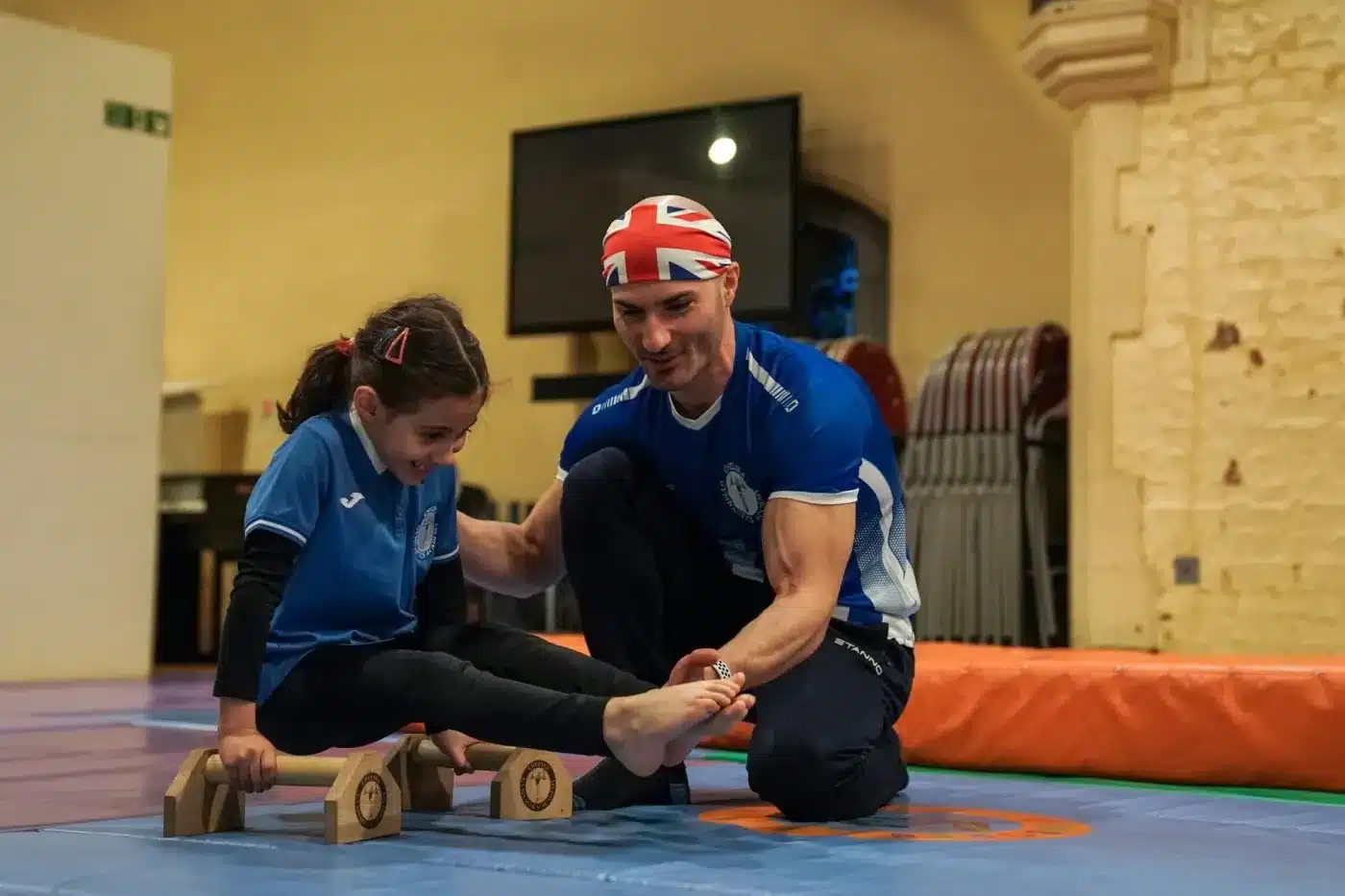 ONE-TO-ONE
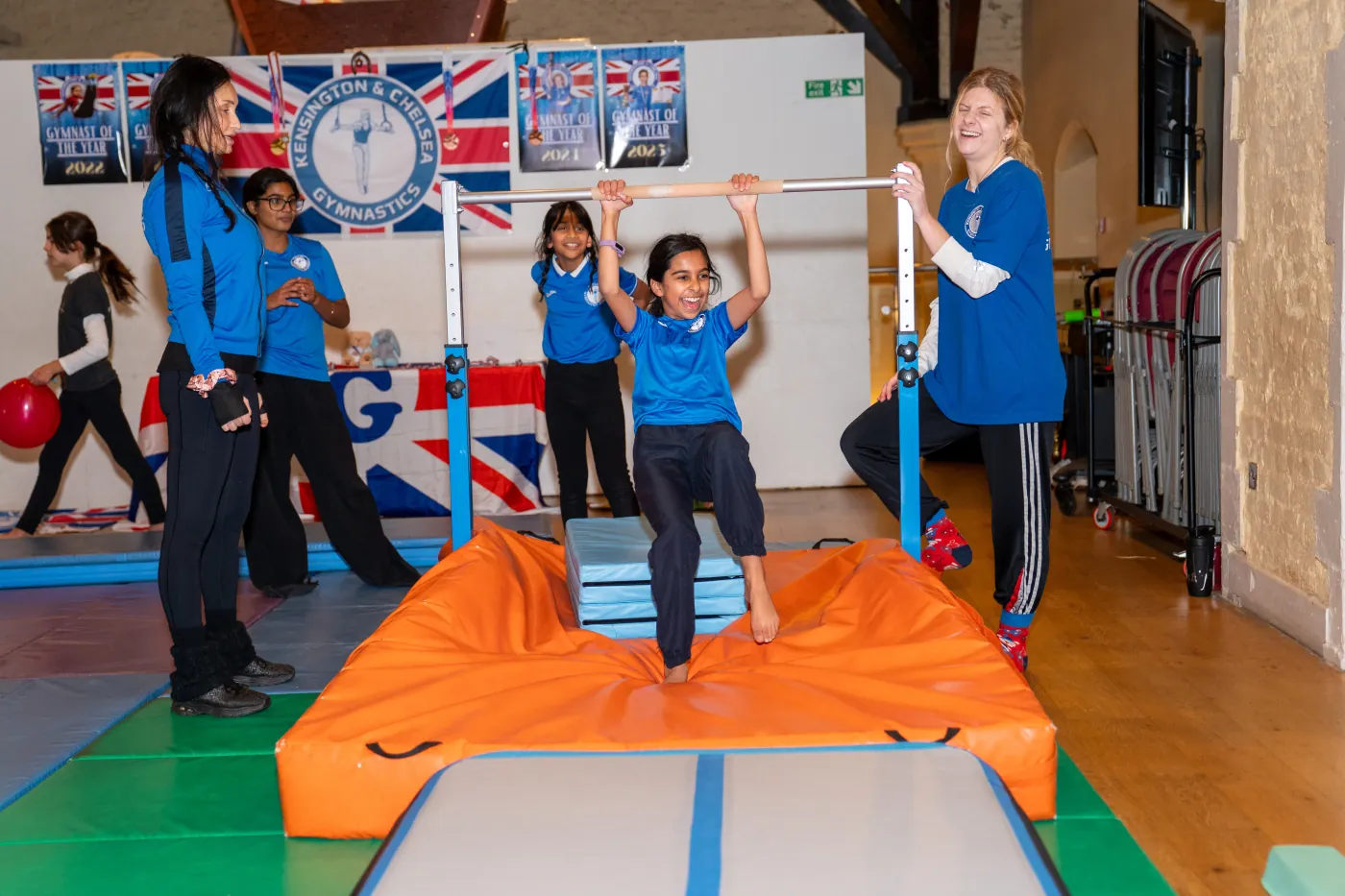 GROUP
No—private gymnastics coaching is not automatically safer than a well-run group class. One-to-one coaching can allow closer observation and faster adaptation to one child, but safety still depends on coach competence, child readiness, suitable progressions, equipment and space, supervision arrangements and safeguarding practice.
Safety is not a feature that arrives with a private booking. It is the result of many decisions made before and during every session—whether one child or several children are taking part.
What you will take away
- Why coach attention and safety are related but not identical
- How strong group-class systems manage shared supervision
- Which safeguarding questions matter especially in one-to-one settings
- Why readiness and progression matter more than speed
- What parents can check before choosing either format
Look at the whole system
Six controls make gymnastics safer
No single control is enough on its own. Good providers connect all six around the participant.
Coach competence
Relevant qualifications, experience, judgement and professional boundaries.
Child readiness
Age, experience, confidence, health and what the movement currently shows.
Progression
Manageable steps that can be adapted, repeated, paused or stopped.
Equipment & space
Suitable surfaces, apparatus, clear working areas and venue limits.
Supervision
Positioning, attention, participant organisation and response to fatigue.
Safeguarding
Open practice, responsible adults, welfare contacts and reporting routes.
More attention does not equal zero risk. It gives the coach more information and more opportunity to adapt—provided the coaching decisions are appropriate.
The genuine difference
What one-to-one coaching can change
With one child at the centre of the booked lesson, the coach can spend more time observing that child’s movement, listening to their feedback and adjusting the task. Those are meaningful advantages—but they are not a safety guarantee.
IT CAN CREATE MORE SCOPE TO
- notice uncertainty, fatigue or loss of control
- change the explanation or task promptly
- give more recovery time when needed
- focus on one appropriate progression
- check understanding through conversation
IT CANNOT REPLACE
- a suitably qualified and responsible coach
- equipment that matches the activity
- an open, professionally managed setting
- gradual progression and child readiness
- first aid, welfare and incident procedures
Close observation is useful when it changes the decision
Seeing a mistake more quickly is not enough. The coach must know whether to simplify, explain differently, offer rest, change the activity or stop. Quality of judgement matters more than the number of corrections.
Shared does not mean unsafe
How a well-run group class manages safety
A group class distributes attention across several participants, so organisation becomes central. Good delivery anticipates where children wait, move, land and receive feedback.
Clear stations and boundaries
Children know where to begin, finish and wait, reducing unnecessary movement through active areas.
Tasks matched to the group
Progressions allow children at different stages to work within a shared structure without all attempting the same difficulty.
Purposeful coach positioning
Coaches place themselves where observation, instruction or physical assistance is most important.
Appropriate organisation
Participant numbers, helpers, equipment and space are considered together rather than relying on one universal ratio.
Rules children understand
Simple routines for turns, landing areas, apparatus and stopping help children participate predictably.
Individual adaptation inside the group
Children can receive different progressions and feedback while still learning alongside peers.
“A safe group is not a collection of identical tasks. It is an organised environment where each child has an appropriate next step.”
KCGA coaching principlePrivate or group: what actually differs?
The format affects how attention and learning are organised. It does not tell you, by itself, whether the provision is safe.
Readiness before difficulty
Safe progression is a decision cycle
Children do not become ready for a skill because a timetable says so or because another child can perform it. Coaches use what they observe to decide what comes next.
Be careful with “correct repetitions”
Practice matters, but repetition is not automatically protective. Repeating an unsuitable task while tired, uncertain or poorly organised can reinforce the wrong experience. Quality, feedback, variation and readiness all matter.
Safety also means welfare
One-to-one safeguarding must remain open
British Gymnastics states that gymnastics activity should take place in an open environment with two responsible adults present, including one appropriately qualified coach, and that clubs should seek to provide viewing opportunities for parents or carers2.
“One-to-one” describes coaching attention—not isolation
A personal lesson can focus on one child while other responsible adults, staff, participants or parents remain present in an open and observable environment. Families should understand the arrangement before the session begins.
Ask the provider
Who else will be present?Confirm the responsible-adult and viewing arrangements.
Who is the welfare contact?There should be a clear route for advice, concerns and reporting.
How is physical assistance managed?Coaches should explain appropriate support and respect the child’s communication.
What happens after an incident?Ask about first aid, recording, parent communication and next steps.
British Gymnastics requires registered clubs and events to have a nominated Welfare Officer, and describes safeguarding, safe recruitment, training and reporting as shared organisational responsibilities1. The Department for Education also provides a parent guide to the safeguarding arrangements families should expect from out-of-school activities and sports coaching3.
Before either format
A practical parent safety check
The coach and organisation are identifiable.Qualifications, safeguarding arrangements and a welfare contact can be explained.
The environment is open and appropriately supervised.You understand who is present, where coaching happens and whether viewing is possible.
The goal matches the equipment and space.The provider explains venue limitations instead of promising every skill.
Progressions are described in manageable steps.There is permission to adapt, step back, rest or stop.
The child’s voice is part of the session.Questions, uncertainty and discomfort are taken seriously.
No result is guaranteed.Safety and progress are discussed honestly, without urgency or pressure.
Pause before booking if…
- the provider cannot explain who is responsible for welfare
- advanced skills are promised before ability and environment are discussed
- one-to-one is presented as risk-free or guaranteed to prevent injury
- parents are discouraged from asking about visibility, boundaries or incidents
Current service context
What this means at KCGA
KCGA applies the same child-centred principles across group and personal coaching. The format changes how attention is organised; it does not change the need for qualified coaching, appropriate progressions, open practice and honest limits.
Focused individual coaching
The current children’s service is for ages 5–11, primarily at The Kensington Studio. Availability is confirmed individually and the studio is a shared facility rather than a promise of exclusive building use.
View current one-to-one details →Structured learning with peers
KCGA’s children’s classes use a planned group environment across its venues, with coaching, activity organisation and suitable progressions shaped around the session.
Explore children’s group classes →Match the goal to the venue.The Kensington Studio has no tumble track or trampoline, and flips, back handsprings and advanced tumbling are not taught there. A private booking does not override those limits.
Common parent questions
Private and group gymnastics safety FAQs
Is one-to-one gymnastics safer for beginners?
Not automatically. A personal lesson may offer a quieter introduction and more individual observation, while a well-structured beginner group may also provide appropriate tasks, clear routines and good supervision. The quality and fit of the provision matter more than the label.
Does closer supervision prevent injuries?
Closer observation may help a coach notice and respond to relevant cues, but it cannot eliminate risk or guarantee that an injury will not occur. Coach judgement, readiness, progression, equipment, space and safeguarding arrangements remain important.
Are group classes unsafe because attention is shared?
No. Good group classes organise participants, equipment, stations, turns and coach positions so that attention is used purposefully. Shared attention requires a strong system; it does not automatically mean poor supervision.
Should my child have private lessons after an injury?
Gymnastics coaching is not medical rehabilitation. Follow advice from an appropriately qualified healthcare professional, share relevant information with the provider and confirm whether the proposed activity is suitable before returning.
Can a child combine group and private coaching?
Yes, when each format has a clear purpose and the overall schedule remains appropriate. More coaching is not automatically safer or better; enjoyment, fatigue, school and family life still matter.
What should I do if I have a safeguarding concern?
If there is immediate danger, contact the emergency services. Otherwise, use the provider’s welfare route or contact British Gymnastics’ Welfare and Safe Sport team. The source links below explain current reporting options.
Guidance checked
Sources and limitations
- British Gymnastics. Safeguarding in gymnastics. Current guidance and reporting routes. Accessed October 2026.
- British Gymnastics. Welfare Officers and safer-care guidance. Accessed October 2026.
- Department for Education. Using after-school clubs, tuition and community activities: guidance for parents and carers. Updated February 2026.
- Kensington & Chelsea Gymnastics Academy. Is gymnastics safe for children? General KCGA safety guide. Reviewed October 2026.
- Kensington & Chelsea Gymnastics Academy. Personal gymnastics lessons for children. Current service scope, venue and arrangements. Accessed October 2026.
This guide is general educational information, not a risk assessment for a particular child, coach, venue or activity. No sports environment can be described as risk-free. Current policies and service details should always be checked directly.

Choose the whole system
Compare the coaching—not only the format
Explore the current personal-lesson and group-class arrangements, then choose the environment that best matches your child, the goal and the available setting.
0 Comments