Is Private Gymnastics Coaching Safer Than Group Classes? A Guide for London Parents
Key Points
• Safe gymnastics training depends on structure, supervision, and progression.
• Private coaching allows closer supervision and immediate feedback.
• Group classes offer valuable social interaction, but individual coaching can reduce risk for certain children.
• The safest programmes combine qualified coaches, proper progressions, and attentive instruction.
Introduction
Gymnastics is one of the most effective sports for developing coordination, strength, and body awareness in children.
Yet parents often ask an important question:
Is gymnastics safe?
And more specifically:
Is private coaching safer than group classes?
The honest answer is that both environments can be safe when delivered by qualified coaches following proper progression systems.
However, 1-to-1 gymnastics coaching provides certain safety advantages, particularly for children who benefit from closer supervision or a slower learning pace.
What Actually Makes Gymnastics Safe?
Safety in gymnastics is not determined by whether a class is private or group-based.
It depends on three key factors.
Qualified coaching and supervision
A knowledgeable coach recognises:
-
when a child is ready to progress
-
when a movement needs correction
-
when fatigue increases risk
This level of observation is critical for safe development.
At Kensington & Chelsea Gymnastics, all sessions prioritise safeguarding and structured skill progression.

Structured skill progression
Children should not jump directly to advanced skills.
Instead they should progress through stages such as:
-
floor fundamentals
-
strength preparation
-
supported skill practice
-
independent execution
This structured approach dramatically reduces injury risk.
Proper equipment and environment
Soft surfaces, appropriate apparatus heights, and clear space all contribute to safer training environments.
Professional gymnastics programmes carefully manage these details.
Where Private Coaching Offers Safety Advantages
Private coaching is not automatically safer — but it can provide additional safeguards.
Closer supervision
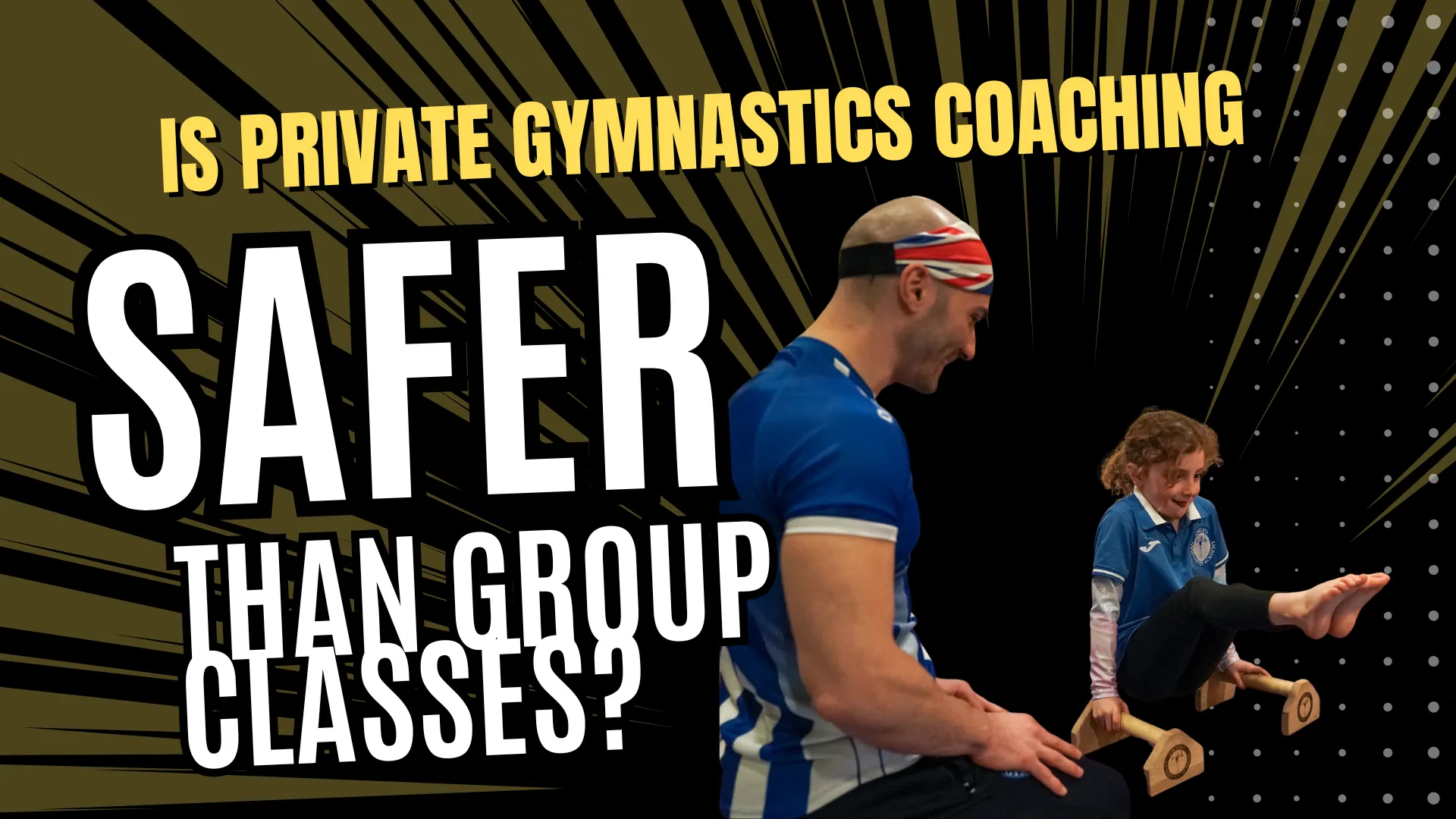
During a 1-to-1 session the coach focuses entirely on one child.
This means:
-
immediate correction of technique
-
faster response to instability
-
constant visual supervision
For certain skills, this can significantly reduce risk.
Slower and more controlled progression
Children develop at different rates.
In group classes, progressions must suit the majority.
In 1-to-1 gymnastics coaching, progression can match the child precisely.
If you’d like to understand what this can mean in practice, you may find our guide on how quickly children can progress with 1-to-1 gymnastics coaching helpful.
Reduced pressure to keep up
Some children feel pressure when peers advance faster.
Private coaching removes this comparison and allows progress to happen calmly and safely.
Children who are naturally cautious or shy may particularly benefit.
When Group Classes Are Still an Excellent Choice
It’s important to emphasise that group classes remain an excellent environment for many children.
They provide:
-
social interaction
-
teamwork and motivation
-
shared learning experiences
For many families, group sessions combined with occasional private coaching can provide the best balance.
You can explore our children’s gymnastics classes here.
The Science Behind Safe Skill Learning
In motor learning research, one principle is clear:
Correct repetitions build safe movement patterns.
Individualised coaching can help children receive immediate feedback, ensuring movements are learned correctly from the beginning.
You can explore the science behind this approach in our article:
👉 Why Individualised Coaching Accelerates Motor Development in Children
What Safety Looks Like in Practice at KCGA
Across our programmes in:
If you’re based nearby, you can also explore our local guide to private gymnastics coaching in Kensington for a clearer picture of how 1-to-1 sessions work in practice.
safety is built into every session through:
• structured progressions
• attentive coaching
• safeguarding standards
• age-appropriate training
Our goal is simple:
To help children develop strong movement skills confidently and safely.
If you are considering private coaching, you can learn more about our approach to private gymnastics coaching here.
A Balanced Approach: Combining Group and Private Coaching
Many families find the most effective pathway is a combination of:
• group classes for social learning
• occasional private sessions for focused skill development
This approach allows children to benefit from both environments.
If you are unsure whether individual coaching would benefit your child, you may also find our parent guide helpful:
Frequently Asked Questions
Is gymnastics dangerous for children?
When taught with proper progression and supervision, gymnastics is considered a safe and highly beneficial sport for children.
Is private gymnastics coaching safer?
Private coaching allows closer supervision and personalised progressions, which can reduce certain risks for beginners or cautious children.
What age is safe to start gymnastics?
Many children begin structured gymnastics around ages 4–5, though introductory movement classes may start earlier.
Should my child do private lessons or group classes?
Both have advantages. Many families combine the two depending on their child’s needs.
👤 About the Author
Dr. Stefan Kolimechkov
Sports Scientist, British Gymnastics Coach, and Founder of Kensington & Chelsea Gymnastics Academy.
Dr Kolimechkov specialises in children’s physical development and health-related exercise science. His international, peer-reviewed research underpins the science-based approach used throughout the KCGA Academy, helping parents make informed decisions about their children’s long-term health and wellbeing.
📘 Continue Learning in the KCGA Academy
If you found this guide helpful, you may also be interested in exploring related topics in the KCGA Academy, where we share calm, evidence-based insights to support children’s physical development.
0 Comments