Competing at the 2024 Masters Gymnastics World Cup
A Sports Scientist’s Perspective on Lifelong Gymnastics and Healthy Ageing
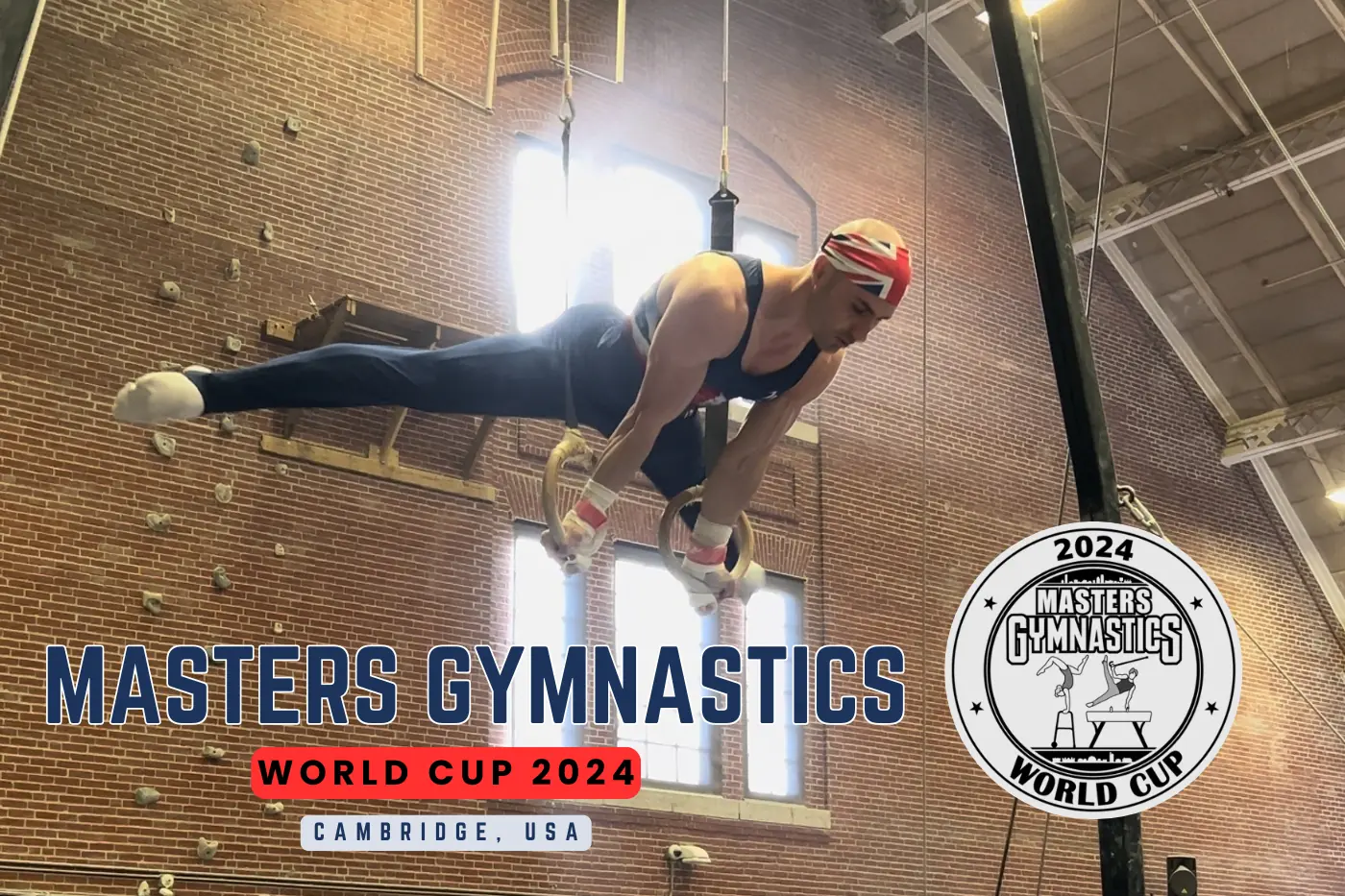
In 2024, I competed at the Masters Gymnastics World Cup, an international event bringing together experienced gymnasts, coaches, and lifelong practitioners from around the world.
For some parents, it may seem unusual that the founder and CEO of a children’s gymnastics academy continues to train and compete internationally. For me, this is not incidental, it reflects the intersection of my work as a gymnast, coach, and published sports scientist.
At Kensington & Chelsea Gymnastics Academy (KCGA), we view gymnastics not as a short childhood activity, but as a lifelong foundation for health, movement quality, confidence, and successful ageing.
Competing as an Athlete, Coach, and Researcher
Preparing for the Masters Gymnastics World Cup requires far more than physical strength. It demands:
-
Long-term training structure
-
Intelligent management of load and recovery
-
Technical precision under fatigue
-
Psychological resilience and consistency
These challenges closely align with my academic research interests in health-related fitness, performance across the lifespan, masters athletes, and successful ageing.
My peer-reviewed research has been published in international scientific journals and explores how physical fitness, movement quality, and lifestyle behaviours influence health and performance at different stages of life. This work is publicly available via:
Remaining an active competitor allows me to apply this research in real-world conditions, not in theory, but under the genuine physical and psychological demands of training and competition.
Why Lifelong Gymnastics Matters — Scientifically
From a sports science perspective, gymnastics is uniquely valuable across the lifespan.
Research consistently shows that activities combining:
-
Strength relative to body mass
-
Balance and coordination
-
Joint stability and mobility
-
Cognitive and motor control
are strongly associated with healthy ageing, injury resilience, and long-term physical independence.
Gymnastics develops all of these qualities in a structured, progressive way. This is why it can support:
-
Children developing fundamental movement skills
-
Adults maintaining movement confidence
-
Masters athletes sustaining performance and health
This scientific understanding directly informs how KCGA programmes are designed: age-appropriate, progressive, and sustainable.
Many of the principles discussed here are explored in more detail in our science-based gymnastics articles, where research on children’s development, health-related fitness, and long-term movement quality is translated into parent-friendly guidance.
“Gymnastics is one of the few physical disciplines that meaningfully supports performance, health, and confidence across the entire lifespan.
When taught correctly, it is not something we grow out of — it is something we grow with.”
— Dr Stefan Kolimechkov, PhD
This rings routine was performed by Dr Stefan Kolimechkov at the 2024 Masters Gymnastics World Cup. The performance highlights long-term strength development, joint stability, and movement control built through consistent, evidence-based training. These same principles underpin KCGA’s approach to safe, progressive gymnastics for children and adults.
What This Means for Children’s Gymnastics in Kensington & Chelsea
Parents often ask what differentiates KCGA from larger, commercial gymnastics programmes.
One key difference is that KCGA is led by someone who:
-
Actively practises gymnastics
-
Coaches children and adults
-
Publishes sports science research on health and performance
This directly informs our work across our venues:
-
Kensington (W8)
-
Knightsbridge (SW1X)
-
Chelsea – King’s Road (SW3 / SW10)
We prioritise:
-
Safe technical progressions
-
Long-term joint health
-
Confidence over comparison
-
Quality over volume
This is why we operate with very small groups (maximum 8 children) and a 1:4 coach–student ratio.
At Kensington & Chelsea Gymnastics Academy, this philosophy is shaped by both lived coaching experience and academic research, which you can explore further on our About the KCGA Academy page.
Successful Ageing Starts in Childhood
One of the most consistent findings in ageing research is that movement habits established early strongly influence health outcomes later in life.
When gymnastics is taught correctly: with patience, clarity, and scientific understanding, children develop:
-
Physical literacy
-
Body awareness
-
Confidence in movement
These qualities persist long after specific skills are forgotten.
At KCGA, gymnastics is viewed as a long-term investment in physical wellbeing, not a short-term activity.
Bringing International and Academic Standards Back to KCGA
International competition and peer-reviewed research serve the same purpose: they enforce honesty.
They reveal what works, what does not, and what must be refined.
Every KCGA class reflects this mindset, whether it is a child’s first forward roll or an adult rediscovering gymnastics later in life.
Competing at the 2024 Masters Gymnastics World Cup was not separate from our mission.
It was an expression of it.
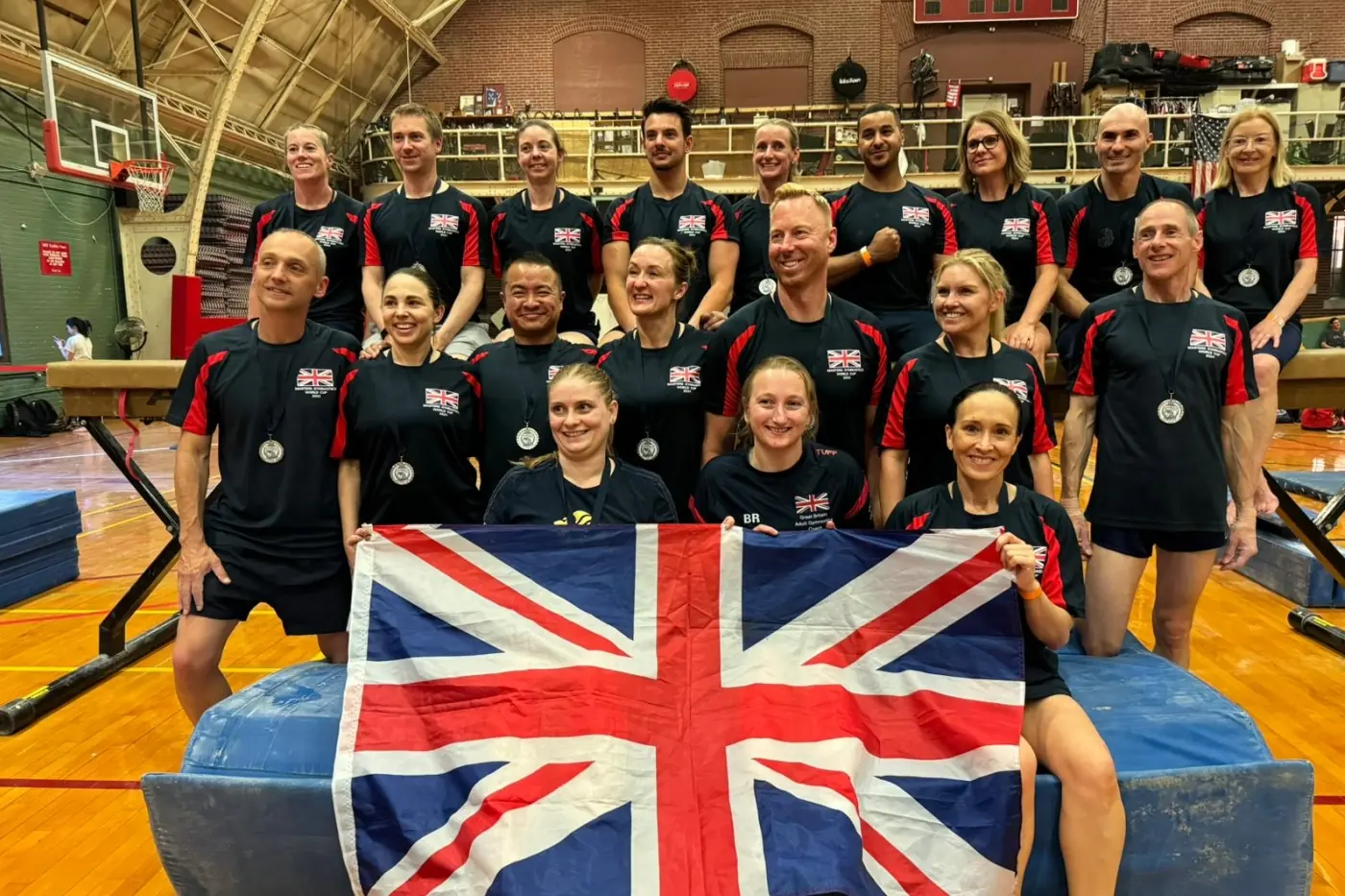
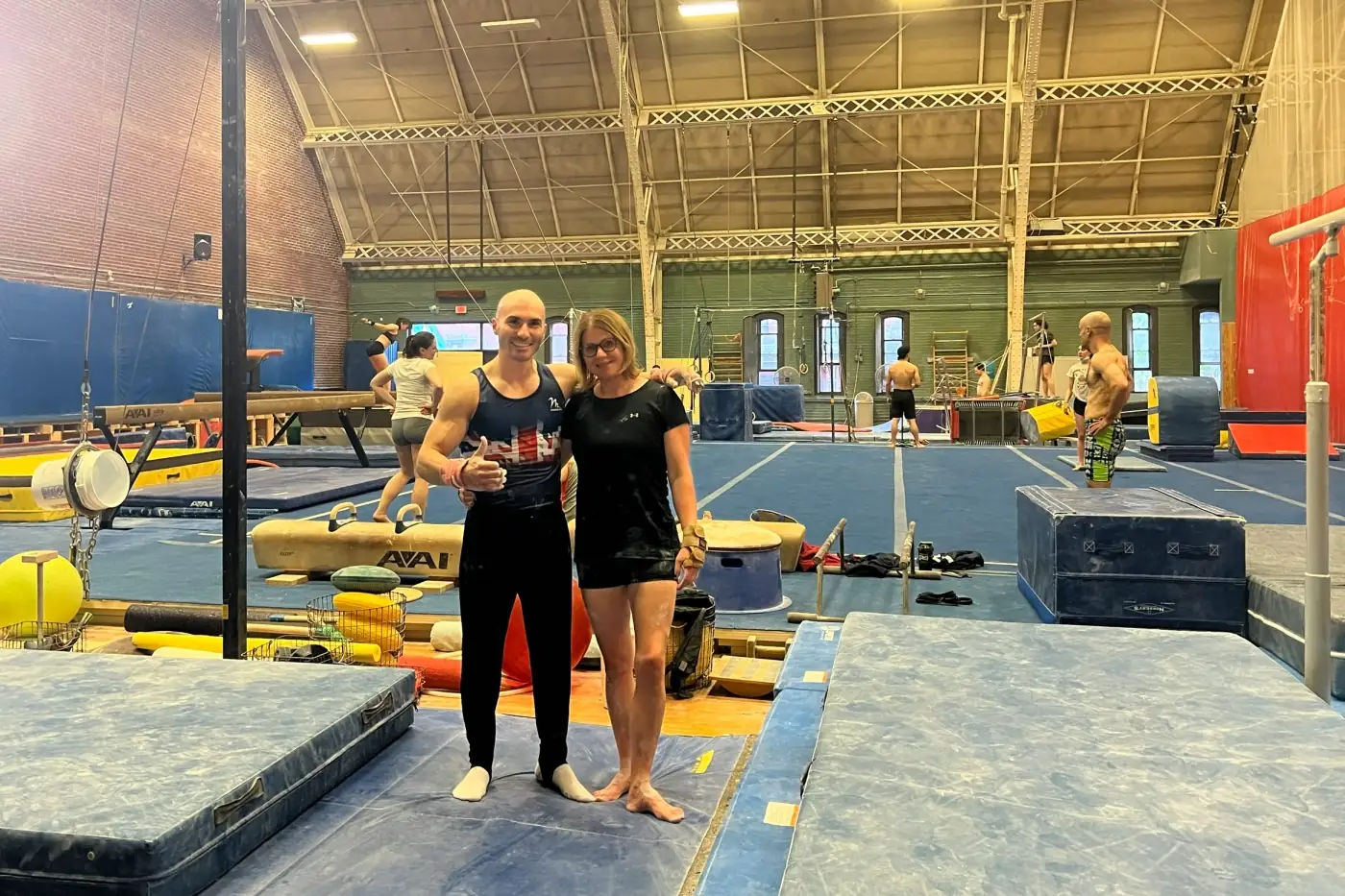
Dr Stefan Kolimechkov with the Great Britain Masters Gymnastics team at the 2024 Masters World Cup, demonstrating lifelong engagement and community in high-level sport. Moments like this are part of a wider culture of lifelong participation in gymnastics, which you can see reflected in our competitions and events gallery.
FREQUENTLY ASKED QUESTIONS (FAQ)
Is gymnastics safe throughout life?
Yes, when taught progressively and appropriately. Well-structured gymnastics supports strength, balance, coordination, and joint health across the lifespan.
Can adults or older athletes start gymnastics?
Yes. With correct progressions and supervision, adults and masters athletes can safely begin or return to gymnastics.
How does sports science influence KCGA’s coaching?
KCGA programmes are informed by peer-reviewed research on physical development, health-related fitness, and ageing.
Does the founder of KCGA actively practise gymnastics?
Yes. Dr Stefan Kolimechkov continues to train and compete internationally, including at the Masters Gymnastics World Cup.
Why are KCGA classes kept small?
Small groups allow individual attention, safer progressions, and better long-term outcomes.
What is Masters Gymnastics?
Masters Gymnastics refers to organised gymnastics participation for adults, typically aged 30 and over, with age-group competitions extending well into later adulthood. It allows former gymnasts and newcomers alike to train and compete in a structured, age-appropriate environment that prioritises safety, longevity, and enjoyment. Masters gymnastics demonstrates that high-quality movement, strength, and coordination can be maintained throughout life when training is progressive and well managed.
How does scientific research influence children’s gymnastics safety?
Scientific research helps coaches understand how children grow, adapt, and respond to physical training at different ages. At KCGA, peer-reviewed research on physical development, injury prevention, and health-related fitness informs how skills are introduced, progressed, and adapted for each child. This evidence-based approach supports safer training, reduces unnecessary physical stress, and promotes long-term confidence and enjoyment in movement.
How does Masters Gymnastics differ from elite competitive gymnastics?
Masters Gymnastics is designed for adults and prioritises long-term health, safety, and enjoyment alongside performance. While elite competitive gymnastics focuses on early specialisation, high training volumes, and peak performance at a young age, masters gymnastics emphasises age-appropriate progressions, recovery, and sustainability. The goal is not to push physical limits prematurely, but to support lifelong participation, confidence, and high-quality movement across adulthood.
👤 About the Author
Dr Stefan Kolimechkov is a sports scientist, British Gymnastics coach, and Founder of Kensington & Chelsea Gymnastics Academy. He specialises in children’s physical development, health-related fitness, and lifelong participation in sport, with particular research interests in successful ageing and masters athletes.
Dr Kolimechkov has published peer-reviewed research in international scientific journals and regularly presents at leading conferences in sports science and health. Alongside his academic work, he remains actively involved in gymnastics as an international masters competitor, ensuring his coaching philosophy is grounded in both evidence and lived experience.
Lifelong gymnastics · Founder perspective
Competing at the Masters Gymnastics World Cup
What one international rings routine can—and cannot—teach us about preparation, recovery, identity and remaining active across adulthood.

The competition in context
One routine, viewed from several angles
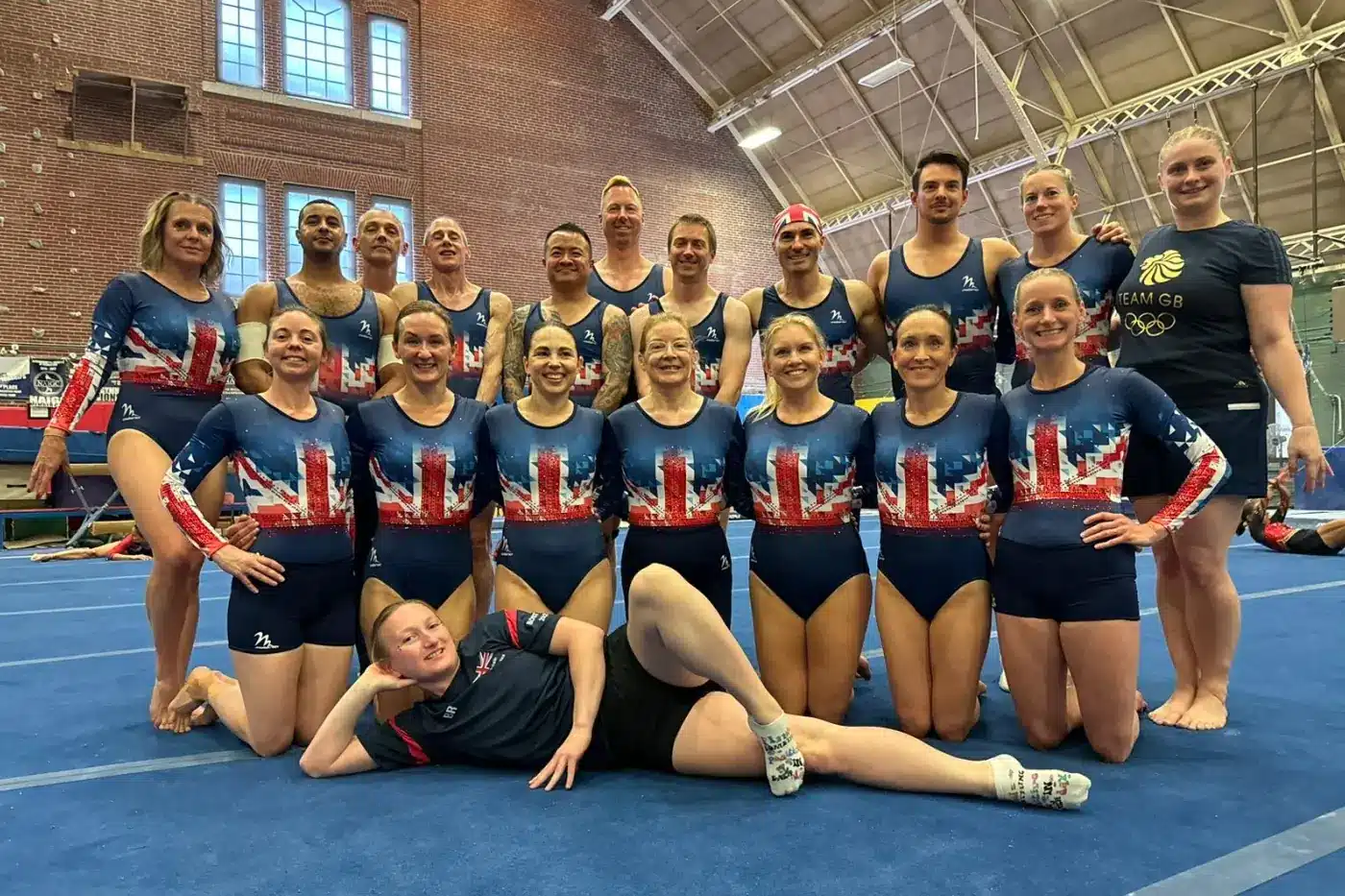
In Cambridge, Massachusetts, Dr Stefan Kolimechkov represented the Great Britain Masters Team and KCGA on still rings. The result matters—but the preparation behind it offers the richer story.
Still rings · Cambridge, USA
The competition took place on 2 June 2024. The official KCGA gallery preserves the event record, routine, team photographs and competition documents.
Lived experience with clear boundaries
A gymnast, a coach and a sports scientist
The same event looks different through each role. Combining those viewpoints can deepen reflection, provided observation is not mistaken for research evidence.
As a gymnast
Preparation becomes personal: strength, technical readiness, fatigue, confidence and recovery all have consequences.
As a coach
The process reinforces patience, honest feedback and the need to adapt training to the person rather than the calendar.
As a scientist
The experience generates questions. Published research—not autobiography—must answer claims about health and ageing.

What the experience can illustrate
Masters participation makes continuity visible
Masters sport shows that organised training and competition do not belong only to youth. It can preserve meaningful goals, social connection and a sense of athletic identity later in life. Qualitative research with Masters athletes reports perceived physical, psychological, cognitive and social benefits—but those are participant experiences, not proof that competition produces identical outcomes for everyone4.
Four themes—not four promises
A clear goal can organise preparation and make training meaningful.
Training must respond to age, history, health, recovery and current ability.
Team identity and shared effort can be important parts of participation.
Performance remains valuable even while physical capacity changes with age.
Research translated for readers
What the wider evidence supports
World Health Organization guidance supports regular physical activity across adulthood, including muscle-strengthening work and—in older adults—multicomponent activity emphasising strength and functional balance1. Gymnastics may contain some of these elements when it is appropriately designed, but the guideline does not establish gymnastics as uniquely superior.
Reviews of Masters athletes find comparatively high physical function and favourable muscle or aerobic characteristics in long-term trained groups23. These studies make Masters athletes useful models for examining active ageing, while leaving an important question unresolved: how much reflects training, and how much reflects who is healthy, motivated and able to remain in sport?
Muscle-strengthening matters
WHO recommends regular strength work. Apparatus-based activity can contribute only when tasks and loading suit the participant.
Movement variety has value
Older-adult guidance includes functional balance and multicomponent activity; safe delivery and progression remain essential.
Capacity is not static
Ageing does not end trainability, but recovery, injury history and health make individual planning increasingly important.
Consistency beats mythology
No single competition or exercise prevents ageing. Long-term participation is built through sustainable habits and suitable environments.
Evidence transparency
What this story cannot prove
Masters sport is a useful window
It can help researchers examine people who remain highly active and can challenge stereotypes that meaningful sport ends in early adulthood.
One pathway guarantees healthy ageing
Masters competitors are self-selected. Observational comparisons cannot fully separate training effects from genetics, prior health, resources, survivorship and motivation.
The most useful transfer
Lessons for coaching—not a programme to copy
The value for KCGA is not to make children train like Masters competitors. It is to bring back principles that work across responsible coaching: preparation before performance, careful progression, honest load management and respect for the person.
Build prerequisites
Visible skills rest on strength, control, confidence and appropriate technical foundations.
Coach the individual
Readiness changes between people and across days. Good plans remain responsive.
Respect adaptation
Rest and recovery are parts of training—not evidence of weak commitment.
Protect the reason to return
Long-term participation is more plausible when challenge, belonging and enjoyment remain present.
These principles inform KCGA’s educational approach, but they do not mean that recreational classes reproduce elite or Masters training.
Watch the still-rings performance
The video documents one outcome. It does not show the full preparation, recovery or decision-making behind the routine.
For adults considering gymnastics
Participation can be adapted without becoming trivial
Adult gymnastics does not need to mean returning to a previous level or pursuing competition. A well-matched setting can focus on useful progress: confidence upside down, supported strength, mobility, body awareness and skills appropriate to the individual.
Start from current capacity
Tell the coach about your experience, health, injuries and goals. Expect progressions and alternatives—not pressure to reproduce another gymnast’s pathway.
Common reader questions
Lifelong gymnastics: FAQs
Does this prove gymnastics slows ageing?
No. The broader evidence supports regular physical activity, strength and multicomponent exercise. Masters-athlete studies are informative but cannot prove that gymnastics itself causes a particular ageing outcome.
Do adults need previous gymnastics experience?
Not necessarily. The appropriate starting point depends on the individual and the class. Beginners and returning gymnasts should both expect tasks adapted to current readiness.
Is Masters competition suitable for every adult?
No. Competition is one possible expression of participation, not its purpose for everyone. Recreation, learning and maintaining an active practice can be equally meaningful.
What should someone returning to gymnastics prioritise?
A suitable setting, qualified coaching, honest communication about health and history, gradual progression and enough recovery to support consistent participation.
Written from experience, checked against evidence

Sports scientist, qualified artistic gymnastics coach, KCGA founder and Great Britain Masters gymnast. View professional profile ↗
Evidence and source transparency
Sources and limitations
- World Health Organization. Physical activity and sedentary behaviour: a brief to support older people. 2022.
- Geard D, Reaburn PRJ, Rebar AL, Dionigi RA. Masters Athletes: Exemplars of Successful Aging? Journal of Aging and Physical Activity. 2017;25(3):490–500.
- McKendry J, et al. Muscle morphology and performance in master athletes: a systematic review and meta-analyses. Ageing Research Reviews. 2018;45:62–82.
- Dionigi RA, et al. “Older, Faster, Stronger”: The Multiple Benefits of Masters Sport Participation. International Journal of Sport and Exercise Psychology. 2023.
- KCGA. 2024 Masters Gymnastics World Cup competition record and gallery.
This guide combines a first-person account with external research. Masters athletes are not representative of all adults, and much of the literature is observational, sport-specific and vulnerable to selection or survivorship bias. The page is educational and does not provide medical advice or an individual training prescription.
Movement can remain part of life
Start from where you are.
Explore age-appropriate gymnastics for adults, or continue into KCGA’s evidence-led research.
0 Comments