Does Gymnastics Improve Posture in Children?
Many parents notice changes in their child’s posture during primary school years — rounded shoulders, slouching when sitting, or a forward head position when using screens.
With increased screen time, homework, and sedentary classroom hours, concerns about poor posture in children are becoming more common.
So the question is: can gymnastics help?
The short answer is yes — when taught progressively and safely, gymnastics can play a valuable role in supporting healthy postural development.
At our children’s gymnastics classes in Kensington & Chelsea, posture is not treated as a cosmetic issue, but as a reflection of strength, balance, and body control.
Why Posture Matters in Primary School Years
Posture during childhood is not just about standing up straight.
It reflects:
-
Muscular balance
-
Core strength
-
Shoulder stability
-
Body awareness
-
Neuromuscular control
Primary school years are formative. Movement patterns developed at this stage often influence long-term physical habits.
For many parents this is also the time when they begin considering organised activities such as gymnastics. If you are wondering when children should begin training, you can read our guide on the right age to start gymnastics.
Good posture supports:
✔ Better breathing mechanics
✔ Reduced muscular strain
✔ Improved coordination
✔ Greater physical confidence
Developing strength and control early can help prevent habitual slouching patterns from becoming ingrained.

What Causes Poor Posture in Children?
Modern childhood environments contribute to postural challenges.
Common factors include:
-
Extended screen time
-
Writing dominance (one-sided loading)
-
Heavy school bags
-
Reduced upper body strength
-
Limited physical activity
When shoulder and upper back muscles are weak, children may naturally collapse into a rounded position.
This is why upper body strength development plays such an important role in posture.
How Gymnastics Supports Better Posture
Gymnastics is uniquely suited to promoting balanced muscular development.
Unlike many unilateral activities, gymnastics regularly requires children to:
-
Support body weight through both arms
-
Engage shoulder stabilisers
-
Activate deep core muscles
-
Maintain alignment during movement
-
Control transitions between positions
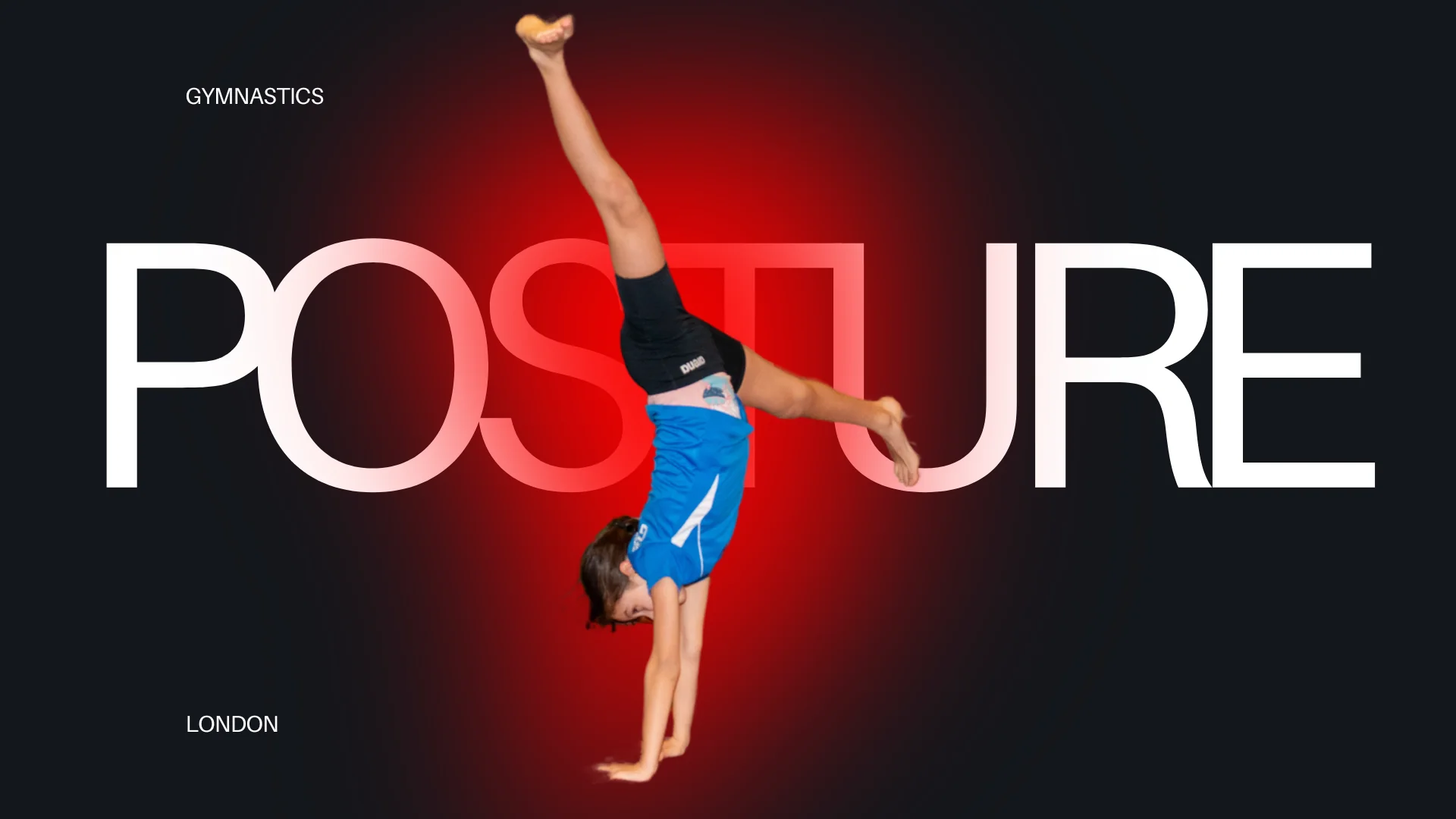
Movements such as handstand preparation, planks, and controlled floor skills naturally reinforce upright alignment and spinal control.
Importantly, structured gymnastics encourages symmetrical development, reducing the risk of dominant-side imbalances.

The Role of Core Strength in Postural Control
Posture is not simply about “standing tall.”
It is about muscular endurance and coordination.
The deep core muscles — including those around the abdomen and lower back — help stabilise the spine during both movement and stillness.
Gymnastics training develops:
-
Core endurance
-
Shoulder girdle strength
-
Upper back engagement
-
Hip control
These elements combine to support a more upright, stable posture over time.
Can Gymnastics Reverse Poor Posture?
Gymnastics should not be seen as a medical treatment for structural conditions. However, for many children, posture issues are linked to strength, endurance, and habit rather than pathology.
Consistent, well-structured gymnastics training can help:
-
Improve muscular balance
-
Increase body awareness
-
Strengthen postural muscles
-
Reduce habitual slouching
Progress takes time and consistency. Parents can also reinforce good habits by supporting gymnastics practice at home safely, focusing on simple strength and balance exercises that encourage good alignment.
Posture and Confidence
There is also a psychological dimension to posture.
Children who feel physically strong and stable often demonstrate:
-
Greater movement confidence
-
Improved coordination
-
More positive body awareness
Gymnastics builds physical capability — and capability supports confidence.
Final Thoughts
Poor posture in children is increasingly common — but it is not inevitable.
By encouraging:
✔ Balanced strength development
✔ Symmetrical movement
✔ Core stability
✔ Regular physical activity
Many parents are surprised by how wide-ranging the developmental impact of gymnastics can be. You can explore the broader benefits of gymnastics for primary school children, including strength, coordination, confidence, and long-term physical health.
Gymnastics can provide a structured and enjoyable pathway toward healthier postural habits.
If you are looking for small-group, research-informed children’s gymnastics classes in Kensington, Chelsea, or Knightsbridge, our sessions are designed to support safe, progressive physical development.
Healthy posture begins with movement — and movement begins with strong foundations.
Frequently Asked Questions About Posture in Children
Can gymnastics fix poor posture in children?
Gymnastics cannot treat structural medical conditions, but it can significantly improve posture related to muscular weakness or imbalance. By strengthening the shoulders, upper back, and core, gymnastics supports healthier alignment over time.
Does screen time cause bad posture in children?
Extended screen time is associated with forward head posture and rounded shoulders. Regular movement, strength development, and physical activity help counteract these patterns.
What exercises improve posture in children?
Exercises that strengthen the upper back, shoulders, and core — such as planks, wall push-ups, and controlled handstand preparation — can support postural control.
At what age should posture training begin?
Postural habits begin developing in early primary school years. Strengthening exercises and structured movement can safely begin once children can follow instructions and maintain controlled form.
👤 About the Author
Dr. Stefan Kolimechkov
Sports Scientist, British Gymnastics Coach, and Founder of Kensington & Chelsea Gymnastics Academy.
Dr Kolimechkov specialises in children’s physical development and health-related exercise science. His international, peer-reviewed research underpins the science-based approach used throughout the KCGA Academy, helping parents make informed decisions about their children’s long-term health and wellbeing.
📘 Continue Learning in the KCGA Academy
If you found this guide helpful, you may also be interested in exploring related topics in the KCGA Academy, where we share calm, evidence-based insights to support children’s physical development.
0 Comments