Evidence-informed guide · Kensington W8
How Gymnastics Can Support Healthier, Happier Children in Kensington
A balanced parent guide to the movement, learning and social opportunities gymnastics can provide—and why the child, coaching environment and wider active week still matter.
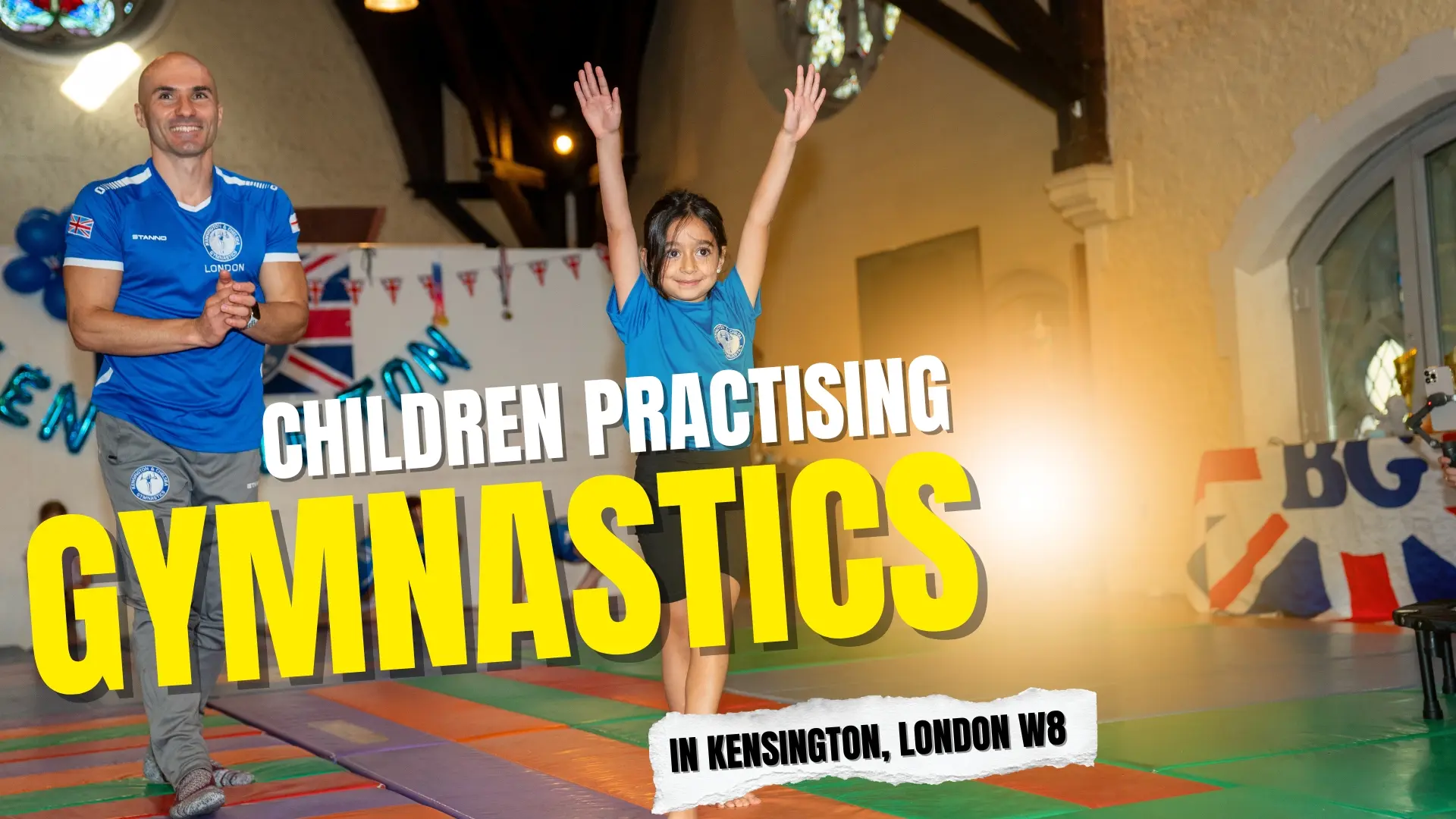
Gymnastics can be one valuable part of an active childhood. It gives children opportunities to practise varied movement, develop physical fitness, learn step-by-step skills and participate with others. Health, confidence and happiness are never guaranteed by one weekly class.
“Healthier” and “happier” are broad ideas. For this guide, they mean creating useful opportunities for movement, physical development, skill learning, enjoyment and belonging—not promising a particular result for every child.
What you will take away
- Four realistic pathways through which gymnastics may contribute
- What KCGA’s own physical-fitness study found—and could not prove
- Why coaching culture can strengthen or weaken the experience
- How one class fits inside a varied, active week
- Current, accurate context for children’s gymnastics in Kensington
Four connected opportunities
A useful way to think about the benefits
The pathways overlap, and none operates automatically. The same activity can feel very different depending on the child, coach, group and programme.
Move
Practise varied shapes, balances, supports, landings and travelling actions.
PHYSICAL EXPERIENCELearn
Work through manageable progressions, feedback, repetition and refinement.
SKILL DEVELOPMENTGrow
Meet achievable challenges and notice improvement without forced comparison.
PERSONAL PROGRESSBelong
Share a structured activity with coaches and other children in a respectful group.
SOCIAL CONTEXTThe formula is opportunity plus environment—not gymnastics alone. Positive experiences are more likely when the challenge is suitable, coaching is supportive and the weekly routine leaves room for play, school, family life and recovery.
What children actually practise
Six movement experiences inside gymnastics
A recreational class can combine several types of movement. The exact content should match the child’s age, readiness and current ability.
Shapes and alignment
Learning stretched, tucked, straight and supported positions with clear body awareness.
Opportunity: organised movementBalance and landing
Controlling posture, force and attention during stable balances and suitable landings.
Opportunity: stability and decelerationSupport and hanging
Age-appropriate pushing, supporting, gripping and hanging tasks using body weight.
Opportunity: muscular fitnessRolling and travelling
Moving forwards, sideways and upside down through suitable floor progressions.
Opportunity: orientation and coordinationMobility and control
Using active ranges of movement without forcing flexibility or chasing extreme positions.
Opportunity: controlled rangeLearning with others
Listening, taking turns, practising near peers and following a shared class structure.
Opportunity: group learningKeep the claim proportionate: practising these tasks creates opportunities to develop; it does not guarantee better posture, confidence, school performance, mental health or success in another sport.
Research translated for parents
What KCGA’s founder-led research can—and cannot—tell us
Dr Stefan Kolimechkov and colleagues compared 49 primary-school children who had practised artistic gymnastics for at least two years with 41 children who were not seriously engaged in sport beyond school PE. The gymnasts performed better in standing long jump, agility and shuttle-run measures, and differed in several body-composition measures3.
KCGA EVIDENCE TRANSLATOR
A meaningful association—not proof of cause
The study was cross-sectional. Children were not randomly assigned, so existing differences, training volume, selection and other factors may partly explain the results. It does not prove that one weekly recreational class causes the same outcomes for every child.
What was measured
Body composition and field-based tests related to strength, power, agility and aerobic fitness.
What was found
The gymnast group generally performed better on several fitness measures than the comparison group.
What remains uncertain
How much was caused by gymnastics, which programme features mattered and whether results transfer to every recreational setting.
Gymnastics is a plausible and valuable way to contribute to children’s physical activity and fitness. The evidence supports opportunity and association—not guaranteed transformation.
Wellbeing depends on the experience
Confidence and enjoyment can grow through the process
A 2026 systematic review of 189 studies found organised sport participation was generally associated with better psychological and social outcomes in children and adolescents. The evidence covered sport broadly, relied heavily on observational studies and found more consistent benefits for team sport than individual sport4.
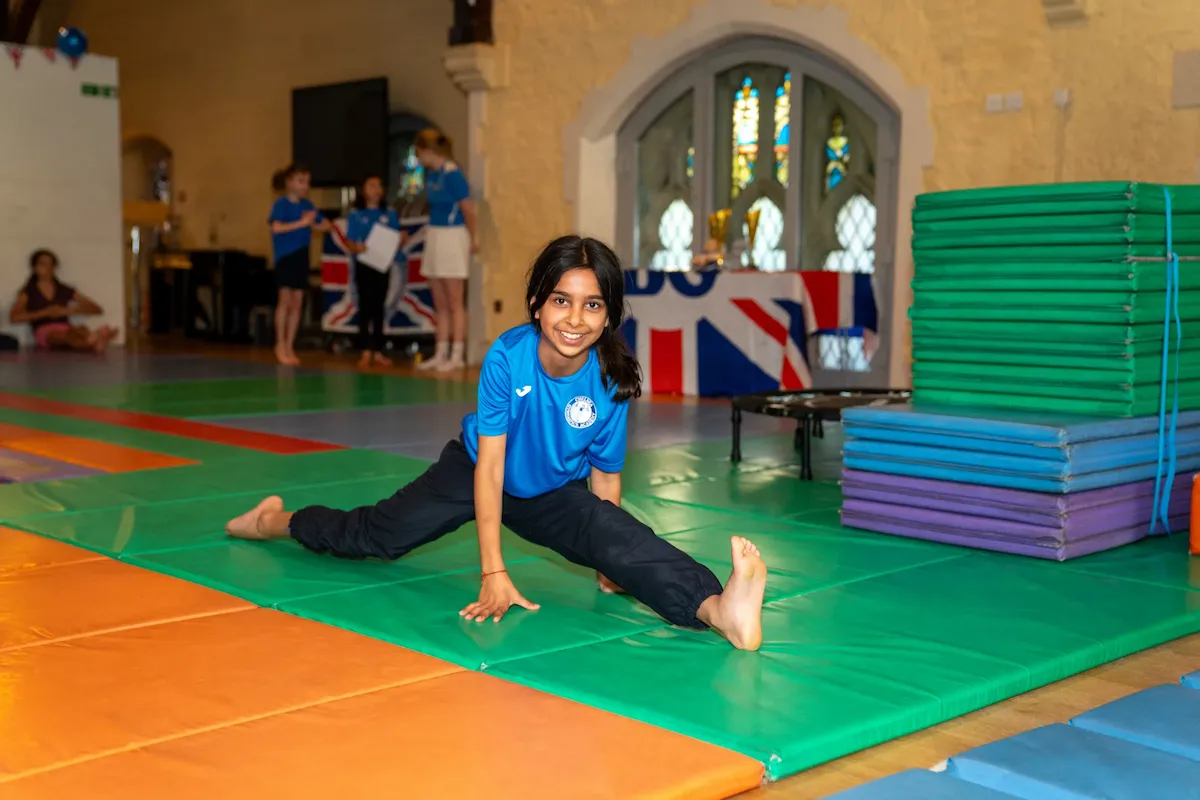
Try
Meet a challenge that is achievable but not automatic.
Practise
Receive clear feedback and repeat the task with purpose.
Notice progress
Recognise a more controlled attempt, not only a completed skill.
Choose to return
Build confidence through a positive experience over time.
Confidence is not something a coach gives a child. We create the conditions in which a child can earn it through safe, meaningful progress.
DR STEFAN KOLIMECHKOVA class is one contribution
Put gymnastics inside a varied, active week
UK guidance recommends that children aged 5–18 average at least 60 minutes of moderate-to-vigorous physical activity per day across the week, with varied activities that develop movement skills, muscular fitness and bone strength1. One gymnastics class contributes; it does not complete the week.
Coached gymnastics
Structured skills, physical preparation, apparatus and feedback.
ONE WEEKLY ROUTEEveryday movement
Walking, playgrounds, PE, active travel and informal family activity.
BUILD ACTIVITY INTO LIFEPlay and recovery
Child-led play, sufficient sleep, food, family time and time away from coaching.
LEAVE ROOM TO RECOVERNo single “best” activity exists for every child. The most useful programme is one the child can participate in safely, enjoy sufficiently and sustain alongside the rest of life.
Current Kensington context
Children’s gymnastics at St Philip’s Church
KCGA’s flagship children’s group programme in Kensington currently operates at St Philip’s Church, Earl’s Court Road, W8 6QH. Published routes serve ages 4–6, 7–11 and 10+, with classes on Tuesday, Friday and Saturday during school terms6.
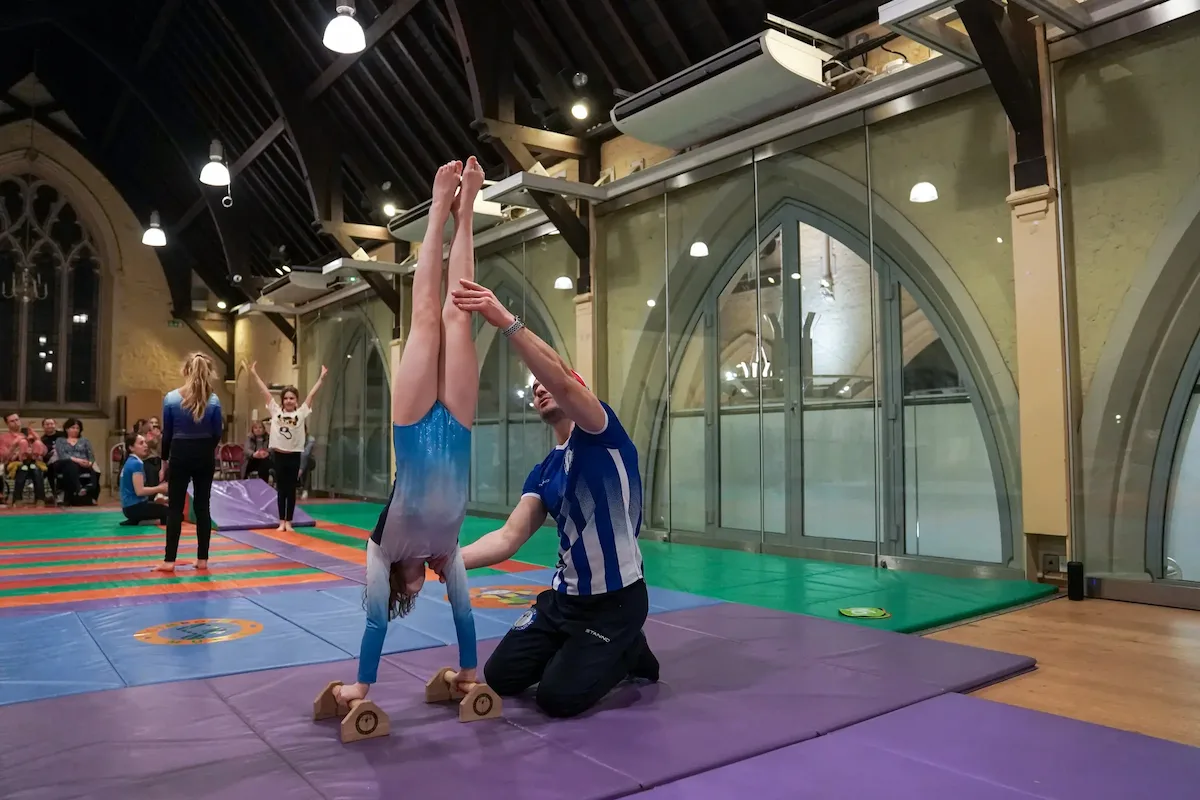
St Philip’s Church
Earl’s Court Road, Kensington, London W8 6QH.
Age pathways
Published groups for ages 4–6, 7–11 and 10+.
Teaching days
Tuesday, Friday and Saturday during school terms.
Published format
Two qualified coaches with up to ten gymnasts.
Keep changing details on the service page. Times, fees, trial arrangements and availability can change; consult the maintained Kensington programme before planning a visit.
The environment is part of the intervention
Five checks before judging the benefits
Department for Education guidance for out-of-school settings emphasises safeguarding, health and safety, suitable people and clear governance5. Parents should be able to understand how these work in practice.
Suitable challengeAre tasks adapted to readiness rather than driven by comparison or speed?
Respectful coachingAre instructions clear, feedback constructive and mistakes treated as part of learning?
Safeguarding clarityCan parents find the policy, named lead and route for raising a concern?
Progressive practiceAre foundations established before adding height, speed or complexity?
Honest communicationDoes the provider explain limits, expectations, group format and current availability?
Positive outcomes and safe participation are related to programme quality. Gymnastics itself is not a substitute for safeguarding, suitable coaching or a child-centred culture.
Read the KCGA safety guide →Review the whole experience
Four questions after a trial
What did they notice?
Ask what felt interesting, difficult, enjoyable or unclear—not only whether it was “good.”
LISTEN WITHOUT LEADINGHow were they taught?
Look for clarity, inclusion, supervision and progressions suited to the group.
QUALITY IS VISIBLECan this week work?
Consider the journey, timing, food, fatigue, cost and other commitments.
SUSTAINABLE BEATS PERFECTWould they return?
One nervous start is not a final verdict, but willingness to continue is useful evidence.
REVIEW, DO NOT PRESSURECommon parent questions
Gymnastics, health and happiness: FAQs
Does gymnastics guarantee a healthier or happier child?
No. Gymnastics can provide valuable physical, learning and social opportunities, but outcomes depend on many personal, programme and wider-life factors. It is not a treatment for a medical or mental-health condition.
What physical qualities can children practise?
Suitable recreational gymnastics can include balance, landing, coordination, bodyweight support, hanging, rolling, active mobility and varied movement through space. Progress depends on task selection, coaching and participation over time.
Is one weekly class enough physical activity?
No. A class can contribute to the week, while UK guidance encourages an average of at least 60 minutes of moderate-to-vigorous activity per day across the week for ages 5–18, using varied activities.
Can a complete beginner join in Kensington?
Yes. KCGA publishes suitable starting routes for beginners. A trial helps the child experience the environment and allows KCGA to confirm the most suitable available group.
Where and when are the Kensington classes?
The current programme is at St Philip’s Church, W8 6QH, with published children’s classes on Tuesday, Friday and Saturday. Use the maintained Kensington service page for exact times, fees and availability.
What if my child has pain, an injury or a health concern?
Seek appropriate advice from a qualified healthcare professional before participation or return to activity. Tell the provider about relevant needs and do not use an online guide as individual medical advice.
Evidence checked
Sources and limitations
- Department of Health and Social Care. UK Chief Medical Officers’ physical activity guidelines. Updated July 2026.
- World Health Organization. WHO guidelines on physical activity and sedentary behaviour. 2020.
- Kolimechkov S, Petrov L, Alexandrova A. Artistic gymnastics improves biomarkers related to physical fitness and health at primary school age. International Journal of Applied Exercise Physiology. 2021;10(1):115–128.
- Wade L, et al. The impact of sports participation on psychological health and social outcomes in children and adolescents. Systematic Reviews. 2026;15:121.
- Department for Education. Out-of-school settings: safeguarding guidance for providers. Updated February 2026.
- Kensington & Chelsea Gymnastics Academy. Children’s gymnastics classes in Kensington W8. Current programme, timetable and joining information. Accessed November 2026.
This guide translates population guidance, a cross-sectional gymnastics study and broader sport research for parents. It does not establish that gymnastics causes a particular physical or psychological outcome, and it is not medical or mental-health advice.

Explore the real Kensington programme
Could St Philip’s suit your child?
Review the current age groups, class times, fees, group format and trial route before enquiring about availability.
0 Comments