Kensington Gymnastics Magazine
Issue 2 · March 2026
FOUNDATIONS
Gymnastics Anatomy
Understanding the shoulder blade in growing gymnasts
The Shoulder Blade: The Hidden Platform
When parents think about “strong shoulders”, they often picture arms.
In gymnastics, the real foundation sits slightly deeper and slightly wider: the shoulder blade.
The shoulder blade, or scapula, is not fixed in place. It glides across the ribcage, guided by a network of muscles that coordinate continuously during movement.
Every time a child supports their body weight through their hands, hangs from a bar, or reaches overhead, the scapula must move smoothly while remaining controlled.
If the shoulder blade is organised, the arm can work safely.
If it is not, the shoulder joint itself absorbs more stress.
For growing bodies, that distinction matters.
Gymnastics does not build shoulder stability through isolated drills. It develops it gradually through shapes, crawling patterns, supported holds, and progressive weight-bearing tasks.
Understanding this system helps families recognise sensible progressions and calm, structured coaching.
MUSCLE SPOTLIGHT
Trapezius
Where it sits
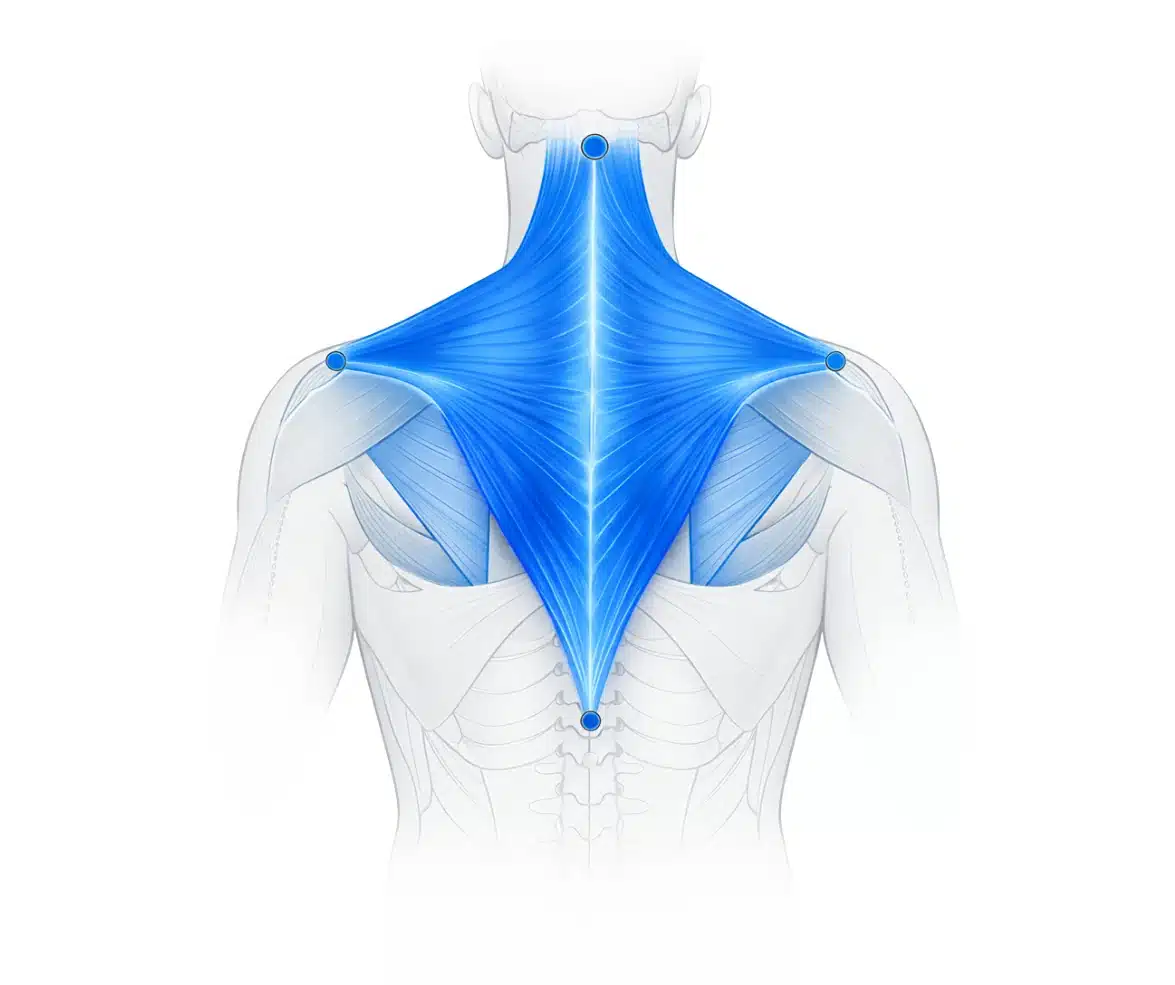
The trapezius is a large, diamond-shaped muscle covering the upper back. It spans from the base of the skull down to the middle of the spine and extends outward to the shoulder blade.
It has three functional regions: upper, middle, and lower fibres.
What it does
• Upper fibres assist with elevation and upward rotation
• Middle fibres help retract the scapula
• Lower fibres contribute to depression and controlled upward rotation
Together, these fibres guide how the shoulder blade moves during overhead activity.
In gymnastics
The trapezius helps organise the shoulder blade when arms lift overhead.
You will see it working in:
• Wall-supported handstand shapes
• Planks and box supports
• Active hanging positions
The lower fibres are especially important in keeping shoulders controlled rather than excessively shrugged.
Common misunderstanding
Shrugging the shoulders is not the same as stabilising them.
True stability involves coordinated movement, not tension alone.
Movement Lens
When the trapezius is well-coordinated, children often look steadier overhead. Their shoulders do not creep towards their ears, and their handstand shapes appear calmer and more organised.
Parent takeaway
In a well-coached class, overhead positions look controlled rather than strained.
Rhomboids (Rhomboideus major et minor)
Where they sit
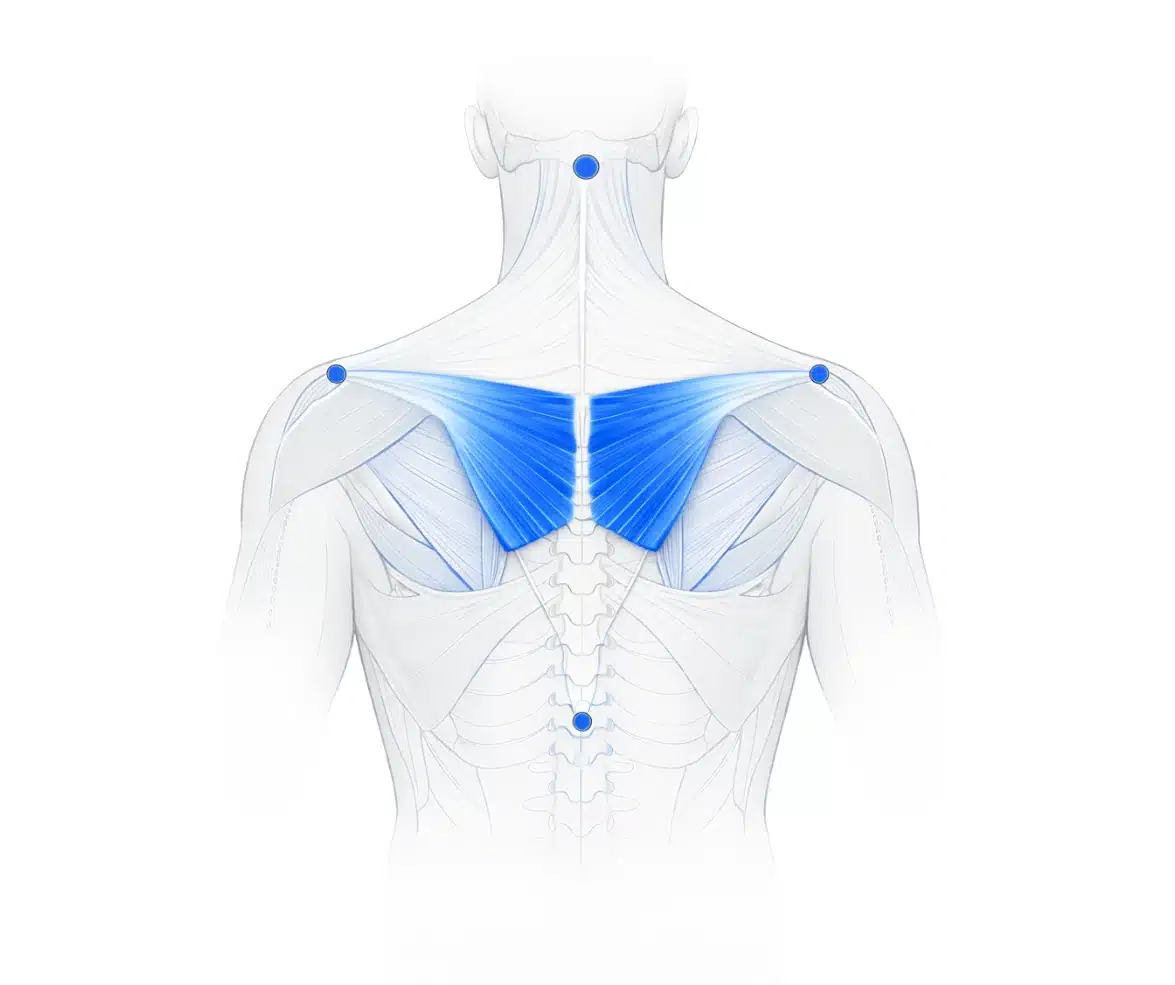
The rhomboids sit between the shoulder blades, beneath the trapezius.
What they do
They draw the shoulder blades gently inward (retraction) and contribute to upper-back stability.
In gymnastics
They assist in maintaining organised shoulder positioning during:
• Active hangs
• Ring basics
• Support transitions
They help prevent excessive rounding of the upper back.
Common misunderstanding
Good posture is not forcing the chest forward. It is controlled alignment supported by coordinated muscle activity.
Movement Lens
When the rhomboids contribute effectively, hanging positions appear more stable and transitions look smoother rather than collapsing through the shoulders.
Parent takeaway
Subtle upper-back control is a sign of developing strength and coordination.
Serratus Anterior
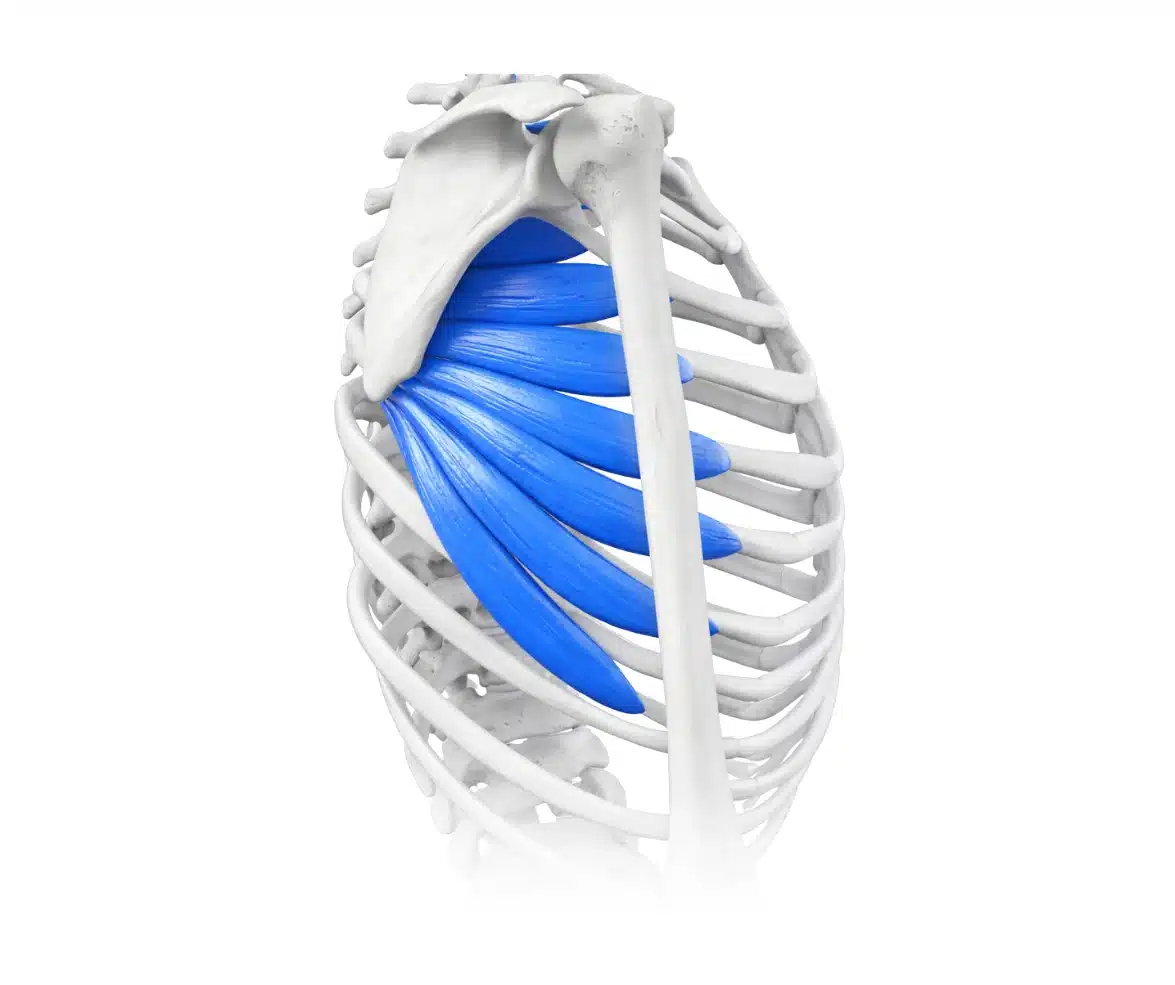
Where it sits
The serratus anterior wraps from the ribs around to the inner border of the shoulder blade.
What it does
• Protracts the scapula (moves it slightly forward)
• Assists upward rotation
• Prevents “winging” of the shoulder blade
It helps the shoulder blade stay flush against the ribcage during movement.
In gymnastics
This muscle is essential for active straight-arm support. It allows children to push the floor away rather than sink into their shoulders.
You will see it working in:
• Planks
• Bear walks
• Handstand preparation
• Cartwheel entry
Common misunderstanding
Shoulder stability does not come from the upper back alone. The serratus anterior plays a central role in organised support.
Movement Lens
When serratus anterior is well-coordinated, children look lighter in support. They appear to push tall through their shoulders rather than collapsing downward.
Parent takeaway
A stable shoulder blade often makes weight-bearing positions look confident rather than effortful.
The Rotator Cuff
The Deep Stabilisation System
Beneath the larger shoulder muscles lies a smaller group of four muscles known collectively as the rotator cuff.
Their role is precision rather than power.
They help keep the head of the upper arm bone centred within the shoulder socket during movement.
In growing gymnasts, this deep stability is particularly important when arms move overhead or when weight is transferred through the hands.
Supraspinatus
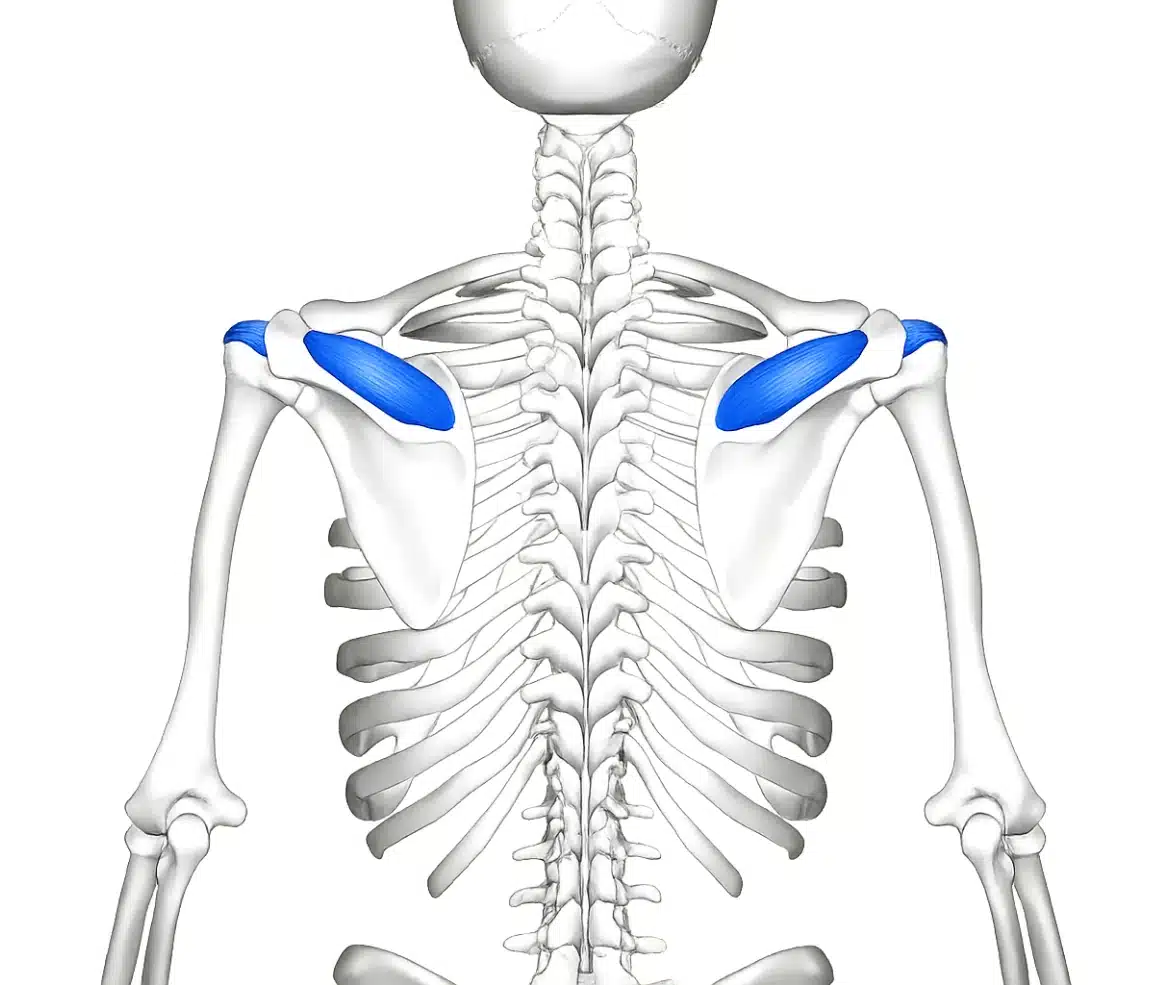
Initiates the early phase of arm lifting and contributes to joint compression for stability.
In gymnastics
It supports the first phase of arm elevation and assists during transitions into hanging or support positions.
Infraspinatus
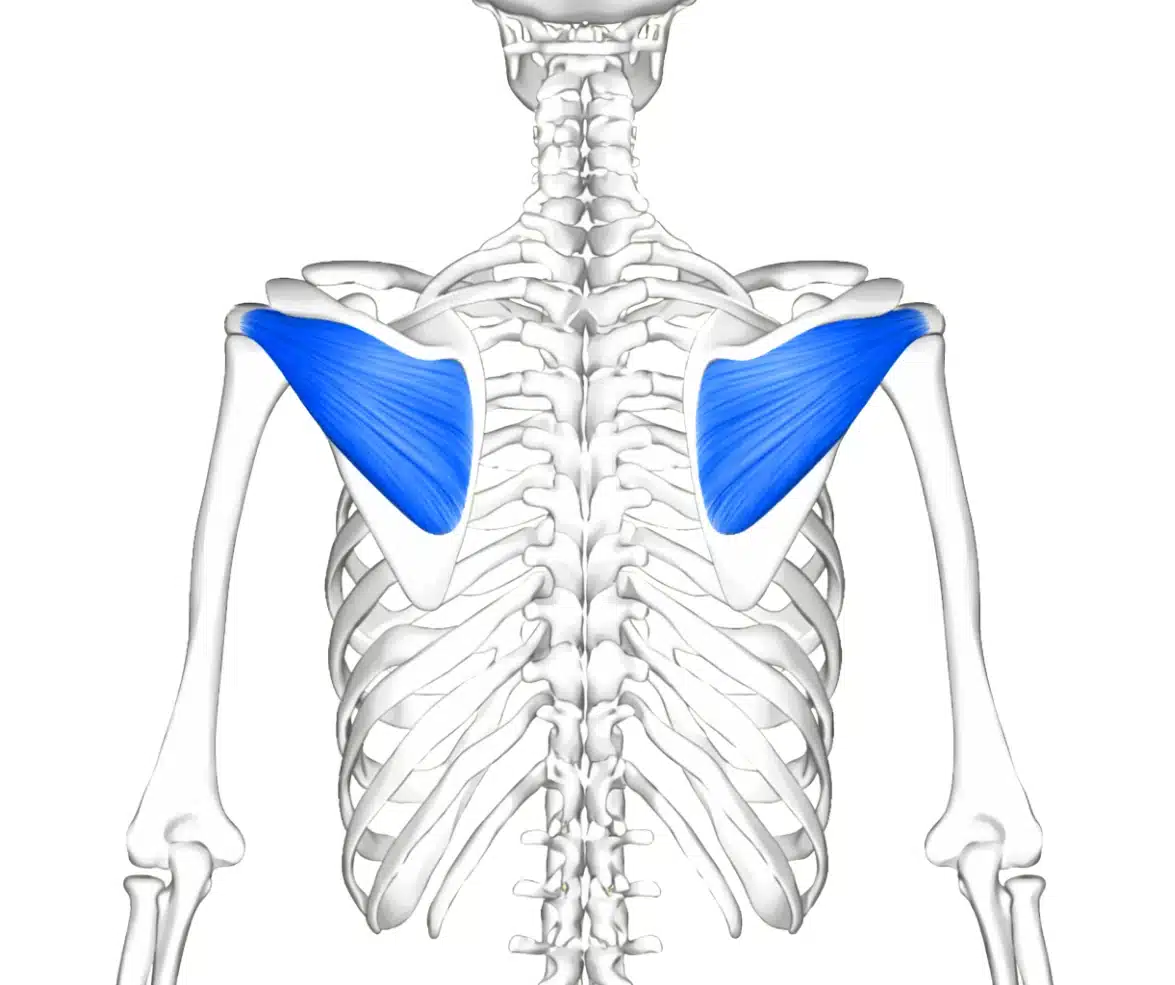
Supports external rotation and posterior shoulder stability.
In gymnastics
It helps maintain organised overhead positioning when the arms are bearing load.
Teres Minor
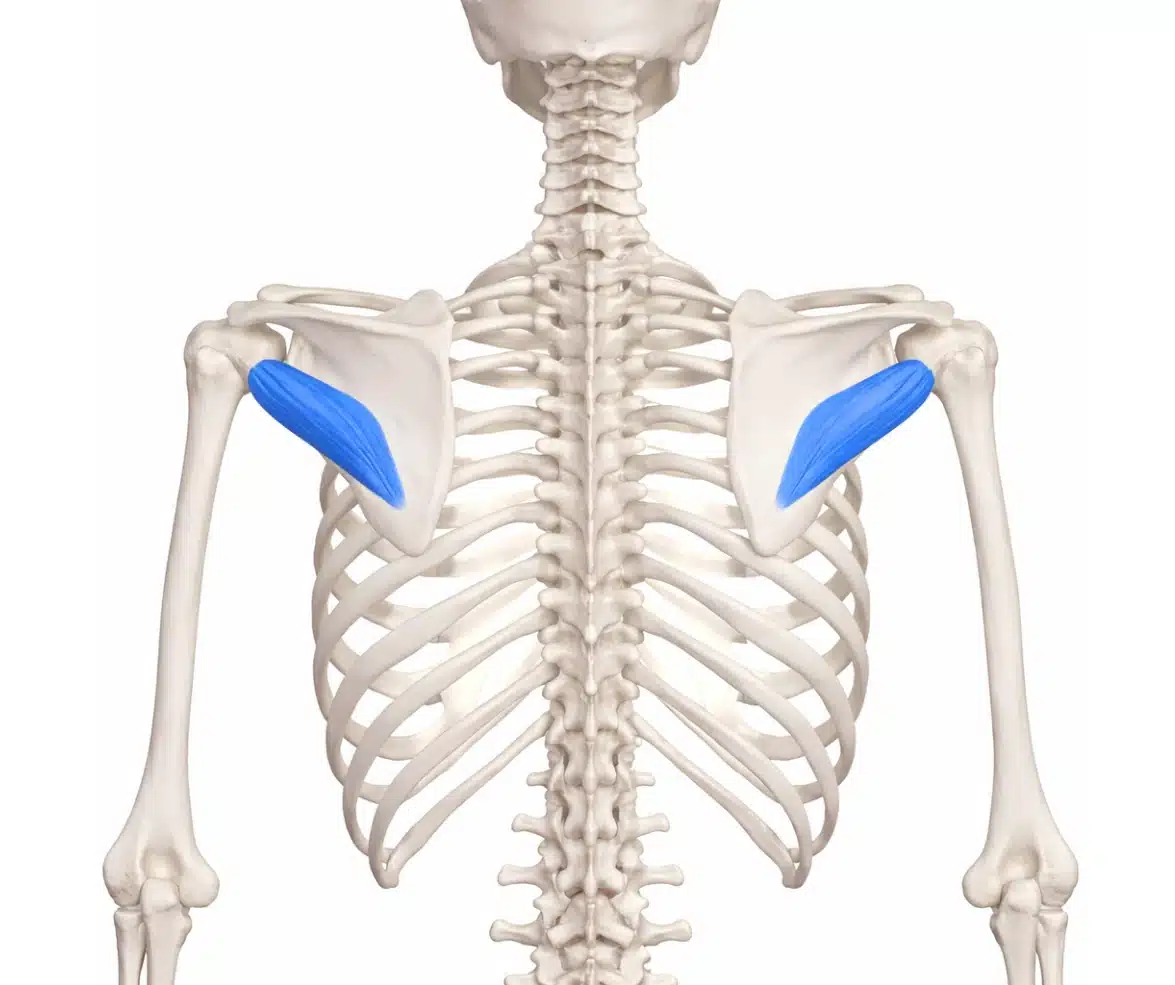
Assists external rotation and fine control of shoulder positioning.
In gymnastics
It contributes to controlled overhead support and smooth transitions.
Subscapularis
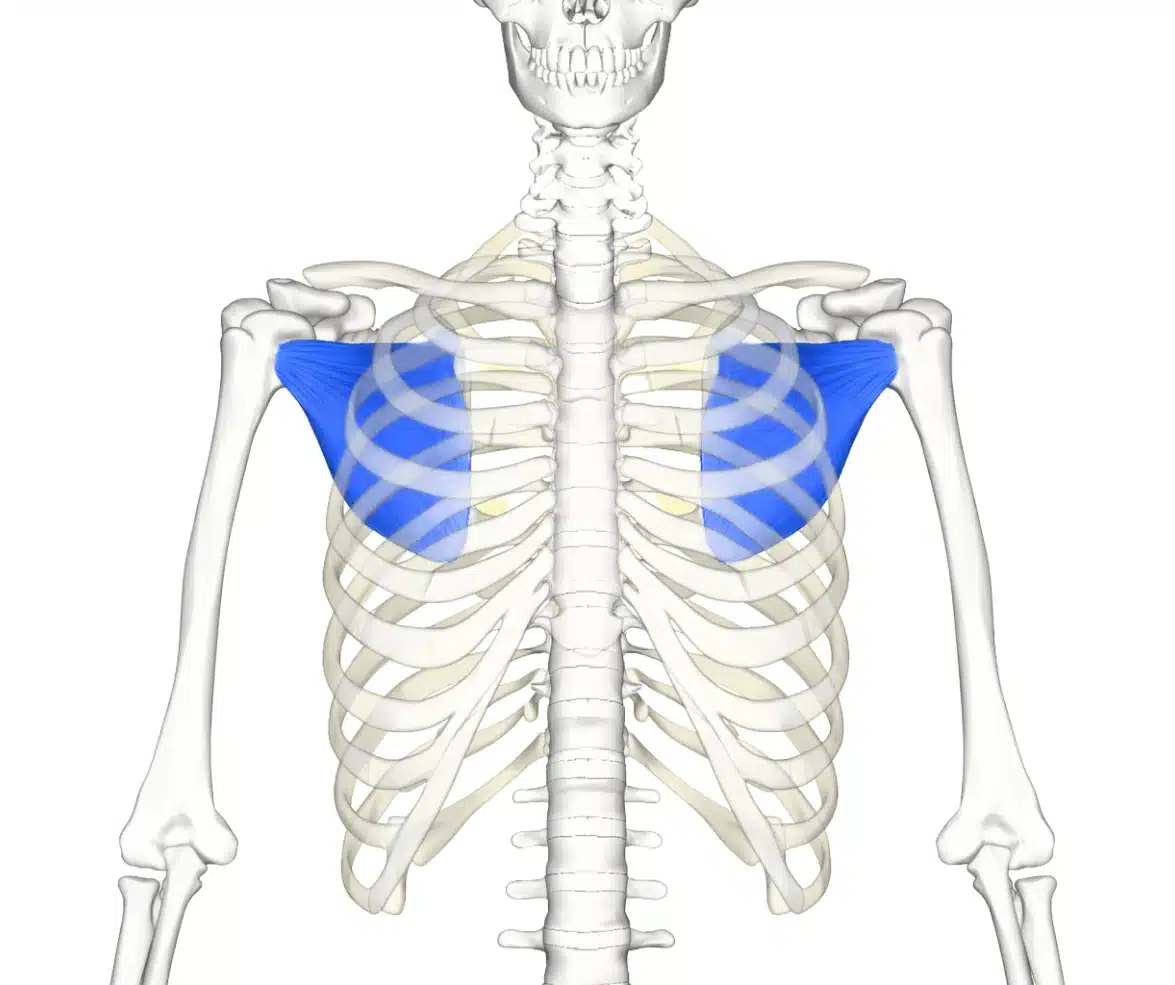
Provides internal rotation and anterior shoulder stability.
In gymnastics
It helps prevent the shoulder from drifting forward under load.
Movement Lens
Deep stability: When the rotator cuff functions well, overhead positions appear centred rather than strained. The shoulder looks stable and controlled, even during weight-bearing.
Parent takeaway
Where Children Commonly Compensate
During early development, you may notice:
• Shoulders collapsing towards the ears
• Shoulder blades lifting away from the ribcage
• Excessive arching of the lower back during support
• Bent elbows replacing scapular control
These patterns are common during learning.
They are not signs of failure — they are part of coordination development. A structured programme adjusts progressions rather than pushing intensity.
Training Notice
Exercises and support positions should be adapted to the individual’s age, experience, and readiness. Gymnastics skills involving weight-bearing through the arms require qualified supervision and appropriate equipment. Stop if pain occurs and seek professional advice if symptoms persist.
Research Context
Scapular coordination and controlled progressive loading are widely recognised as central to overhead sports and youth shoulder health.
Kibler WB, Sciascia A, Wilkes T. (2012). Scapular dyskinesis and its relation to shoulder injury. Journal of the American Academy of Orthopaedic Surgeons. DOI: 10.5435/JAAOS-20-06-364