Local parent guide · Kensington & Chelsea
Best Sports for Children in Kensington and Chelsea
A fair, practical guide to gymnastics, swimming, football, tennis, dance and martial arts—so you can choose for your child, not for a league table.
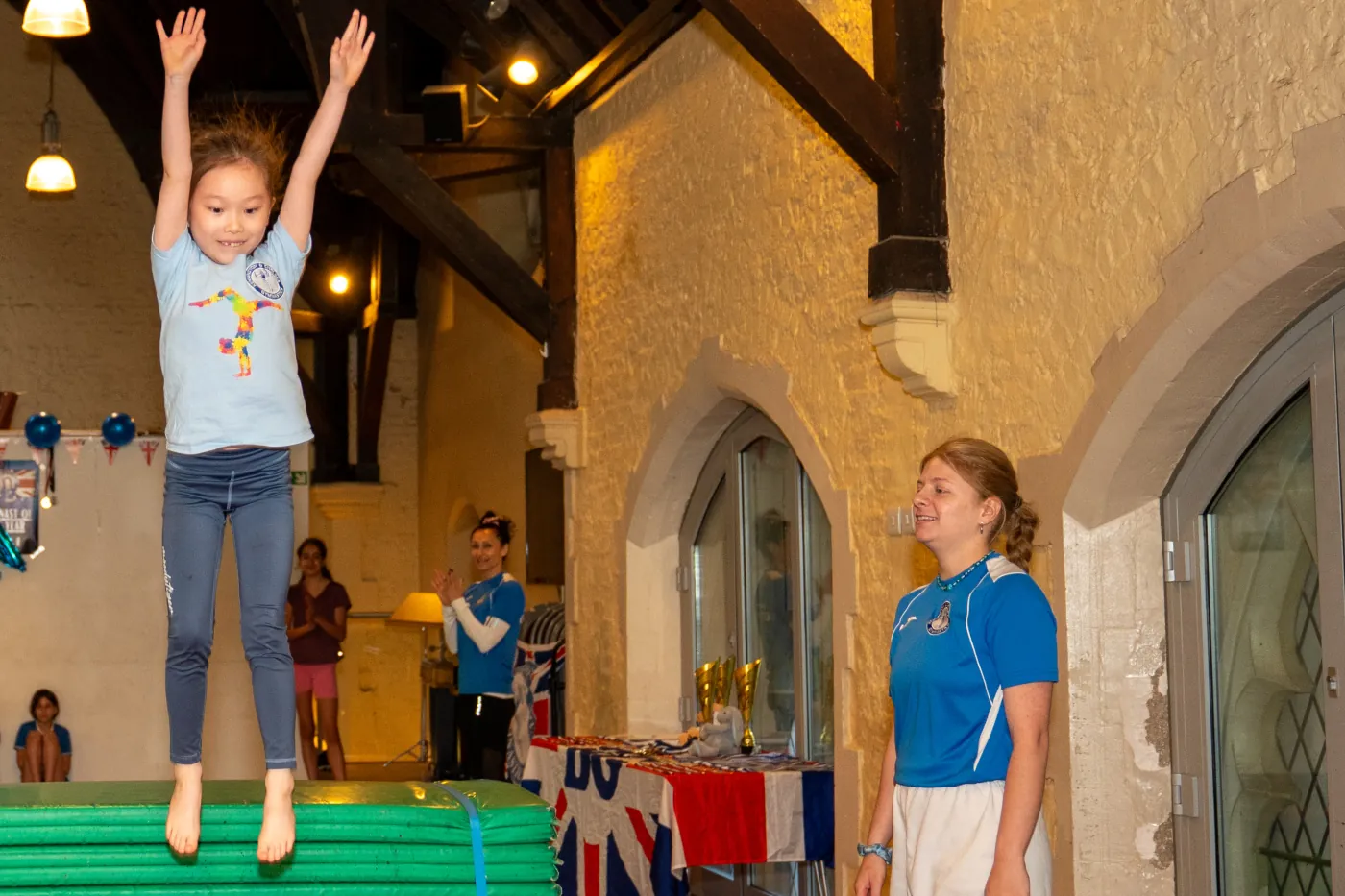
There is no single best sport for every child. A strong choice combines the child’s interest, a safe and supportive coach, a manageable family routine and opportunities to experience varied movement.
Parents often ask, “What is the best sport?” A more useful question is: which activity gives this child a positive reason to move, learn and return?
What you will take away
- A balanced comparison of six popular activity types
- A way to match the setting to your child’s current interests
- Why variety is more useful than declaring one sport superior
- What to check about coaching, safeguarding and progression
- How gymnastics can contribute without needing to be the only activity
Fit before fashion
Four parts of a good decision
The name of the sport is only one part of the experience. A brilliant activity in the wrong environment may be less useful than a simpler activity delivered well.
Child
Interest, readiness, temperament and what they want to try.
START WITH CURIOSITYEnvironment
Noise, group size, space, pace and whether the child feels included.
WATCH THE SETTINGCoaching
Clear instruction, suitable challenge, safeguarding and respectful feedback.
QUALITY CHANGES THE EXPERIENCERoutine
Travel, timetable, cost and whether attendance can be consistent.
MAKE IT SUSTAINABLEPopularity is not proof of fit. The aim is not to predict a child’s future sport. It is to find a worthwhile next experience.
Six useful starting points
Compare the experience, not the marketing
Each activity can be taught in many ways. The descriptions below show common demands and possibilities—not guaranteed outcomes.
Gymnastics
Shapes, balance, landing, rotation, strength, flexibility and control of the body in space.
- May appeal when
- skill milestones and whole-body challenges feel motivating
- Ask about
- progressions, apparatus, supervision and how fear is handled
Swimming
Water competence, repeated whole-body movement, breathing control and an important life skill.
- May appeal when
- the child enjoys water and repeating clear technical tasks
- Ask about
- pool environment, water confidence, group ratio and safety instruction
Football
Running, changing direction, ball control, shared decisions and game-based teamwork.
- May appeal when
- the child enjoys games, peers and unpredictable play
- Ask about
- playing time, group culture, position rotation and seasonal weather
Tennis
Tracking a moving object, striking, footwork, timing and individual or doubles play.
- May appeal when
- points, precision and object-control challenges are engaging
- Ask about
- age-sized equipment, court ratio and indoor or outdoor arrangements
Dance
Rhythm, sequences, musical interpretation, mobility and expressive movement with others.
- May appeal when
- music, creativity, performance or choreography is motivating
- Ask about
- style, performance expectations, class culture and progression
Martial arts
Balance, coordination, structured sequences and—depending on the discipline—partner practice.
- May appeal when
- clear routines, levels and repeated technical patterns are attractive
- Ask about
- contact policy, protective equipment, coaching tone and safeguarding
Important: a sport does not automatically create discipline, confidence, resilience or friendship. Those experiences depend on the child, the people, the culture and how the activity is taught.
See the practical differences
What changes from one activity to another?
This is an orientation tool, not a ranking. Individual clubs and class formats vary.
The evidence favours breadth
Children need varied movement—not a winning label
UK guidance for ages 5–18 recommends an average of at least 60 minutes of moderate-to-vigorous activity per day across the week, with a variety of activity types and intensities to develop movement skills, muscular fitness and bone strength1. This includes play, active travel, PE and sport—not only formal classes.
Move in different ways
Run, jump, land, balance, throw, catch, climb, strike, rotate and move to rhythm.
Experience different settings
Independent tasks, cooperative play, teams, water, indoor and outdoor environments.
Protect enjoyment
Build a routine the child can sustain without crowding out rest, family life and free play.
EVIDENCE CHECK
Early specialisation should not be the default
The International Olympic Committee’s youth-development consensus encourages diverse and variable athletic exposure and cautions against premature specialisation3. That does not mean every child must enrol in several paid clubs. Variety can also come through school PE, playgrounds, active travel, family activity and varied tasks within one well-designed programme.
One strong option—not the only option
Where gymnastics can fit
Gymnastics can give children repeated experience of shapes, balance, landing, rotation, support positions and body control. Those are useful movement experiences, but it would be inaccurate to claim that gymnastics is uniquely capable of developing them or that participation guarantees transfer to another sport.

GYMNASTICS MAY BE WORTH TRYING WHEN
- the child enjoys learning visible, step-by-step skills
- whole-body movement and apparatus create curiosity
- an indoor, individual-skill format suits the family
- the programme makes progressions and safety clear
ANOTHER ACTIVITY MAY FIT BETTER WHEN
- team games are the child’s strongest motivation
- water, music, rackets or outdoor play create more enthusiasm
- the available class environment does not feel supportive
- travel, timing or cost make regular attendance unrealistic
Central London changes the calculation
The local reality in Kensington and Chelsea
Families may have many activities nearby, yet a short map distance can still mean a difficult school-day journey. The best theoretical programme is not useful if the weekly routine is consistently stressful.
Door-to-door time
Test the actual journey at the relevant hour, including school collection and changing time.
Space around the class
Allow time for food, homework, rest and a calm arrival—not only the lesson itself.
Indoor and outdoor trade-offs
Outdoor sport can be excellent; consider season, kit, cancellations and what your child enjoys.
Can the routine last?
A manageable activity attended consistently may be more valuable than an idealised option that rarely works.
Local does not mean automatically suitable. Compare the provider, session and child’s response—not just the postcode.
The provider matters as much as the activity
Five checks before you enrol
Department for Education guidance explains the safeguarding arrangements parents should expect in out-of-school settings2. The NSPCC also recommends asking clubs direct questions about staff checks, safeguarding, accidents, contacts and training4.
Who is responsible for safeguarding?Ask for the policy and the named person to contact with a concern.
How are coaches recruited and trained?Ask about qualifications, role-appropriate DBS checks, safeguarding and first aid.
How are challenge and behaviour managed?Look for clear boundaries without humiliation, fear or unnecessary pressure.
What happens after an accident or concern?The provider should explain reporting, emergency and communication procedures.
Can we understand the session before committing?Ask whether you can observe, trial or receive a clear description of the format.
A certificate alone does not tell the whole story. Safe participation also depends on supervision, equipment, task selection, communication and a culture in which concerns can be raised.
Read the KCGA safety guide →Turn comparison into a decision
A simple four-step choice method
Start with the child
Which movements, games, stories or environments already create interest?
DO NOT CHOOSE ONLY FROM ADULT PREFERENCEChoose two realistic options
Filter by travel, timetable, cost, age range and current availability.
REALISTIC BEATS PERFECT ON PAPERObserve or trial
Notice the coach, atmosphere, task design and the child’s response.
ONE NERVOUS START IS NOT A FINAL VERDICTAsk what is becoming possible
Consider enjoyment, participation, recovery from mistakes and willingness to return.
REVIEW FIT, NOT ONLY PERFORMANCEThe best first choice does not need to reveal a child’s future. It only needs to offer a safe, worthwhile reason to keep moving.
DR STEFAN KOLIMECHKOVCommon parent questions
Choosing a children’s sport: FAQs
What is the best first sport for a young child?
There is no universal first sport. Look for age-appropriate activity that the child is interested in, delivered by a safe provider with suitable coaching. Active play, PE and everyday movement remain important alongside any organised class.
Is gymnastics the best foundation sport?
Gymnastics can provide varied experience of balance, landing, rotation, strength, flexibility and body control. It is one useful foundation activity, not the only route to movement competence and not automatically the best fit for every child.
Should my child choose one sport or try several?
Varied movement experiences are valuable. That does not require several paid clubs at once: variety can come from play, school PE, active travel, family activity and a programme that includes different movement tasks. Avoid an overloaded timetable.
How long should we give a new activity?
There is no fixed number of sessions. A child may need time to understand a new environment, but persistent distress, poor communication or an unsuitable coaching culture should not be ignored. Agree a sensible review point with the provider.
What if my child changes their mind?
Changing interests are normal. Explore whether the issue is the activity, the coach, the group, the timetable or a specific challenge. Finishing a reasonable commitment can be useful, but staying in an unsafe or harmful environment is not a lesson in resilience.
Are indoor sports better for London children?
Indoor activities can make weather and winter routines more predictable. Outdoor sport adds different spaces, surfaces and experiences. The better option is the one that fits the child and family while contributing to a varied active week.
Evidence checked
Sources and limitations
- Department of Health and Social Care. UK Chief Medical Officers’ physical activity guidelines. Children and young people aged 5–18. Updated July 2026.
- Department for Education. Using after-school clubs, tuition and community activities: guidance for parents and carers. Updated February 2026.
- Bergeron MF, et al. International Olympic Committee consensus statement on youth athletic development. British Journal of Sports Medicine. 2015;49:843–851.
- NSPCC Child Protection in Sport Unit. Five questions parents should ask a sports club. Updated November 2025.
- NHS. Physical activity guidelines for children under five. Guidance for active play and varied movement.
- Kensington & Chelsea Gymnastics Academy. Children’s gymnastics classes. Current KCGA programme information. Accessed October 2026.
This guide compares common activity characteristics; it does not rank individual local providers or claim that one sport causes a particular developmental outcome. Classes vary by coach, format, age group and setting. Current schedules, prices and availability should be checked directly with each provider.

One option worth experiencing
Would your child enjoy a gymnastics class?
Explore KCGA’s current children’s programmes in Kensington, Knightsbridge, South Kensington and Chelsea. Check the age group, venue, timetable and class format before enquiring.
0 Comments