Kensington Gymnastics Magazine
Issue 2 · March 2026
FOUNDATIONS
Food, Growth & Gymnastics
Carbohydrates: Why Growing Gymnasts Need Energy
When families think about food and gymnastics, they often think first about protein. Protein seems to receive all the attention in sport. Yet for most primary school-aged gymnasts, the nutrient that matters most during a normal school and gymnastics day is usually carbohydrate.
Carbohydrates are the body’s main source of energy. They help children think in the classroom, concentrate during homework, and still have enough energy left for gymnastics in the evening. They are especially important for children because children are not small adults. A growing body needs energy not only for movement, but also for growth, learning, and development.
For many London families, this is very familiar. A child leaves school tired, travels across London to gymnastics, perhaps eats only a small snack on the way, and then suddenly seems flat, moody, or lacking concentration in class. Often the problem is not motivation. The child may simply need more energy.
What Are Carbohydrates?
Carbohydrates are one of the three main nutrients in food, alongside protein and fat. Their main job is to provide energy.
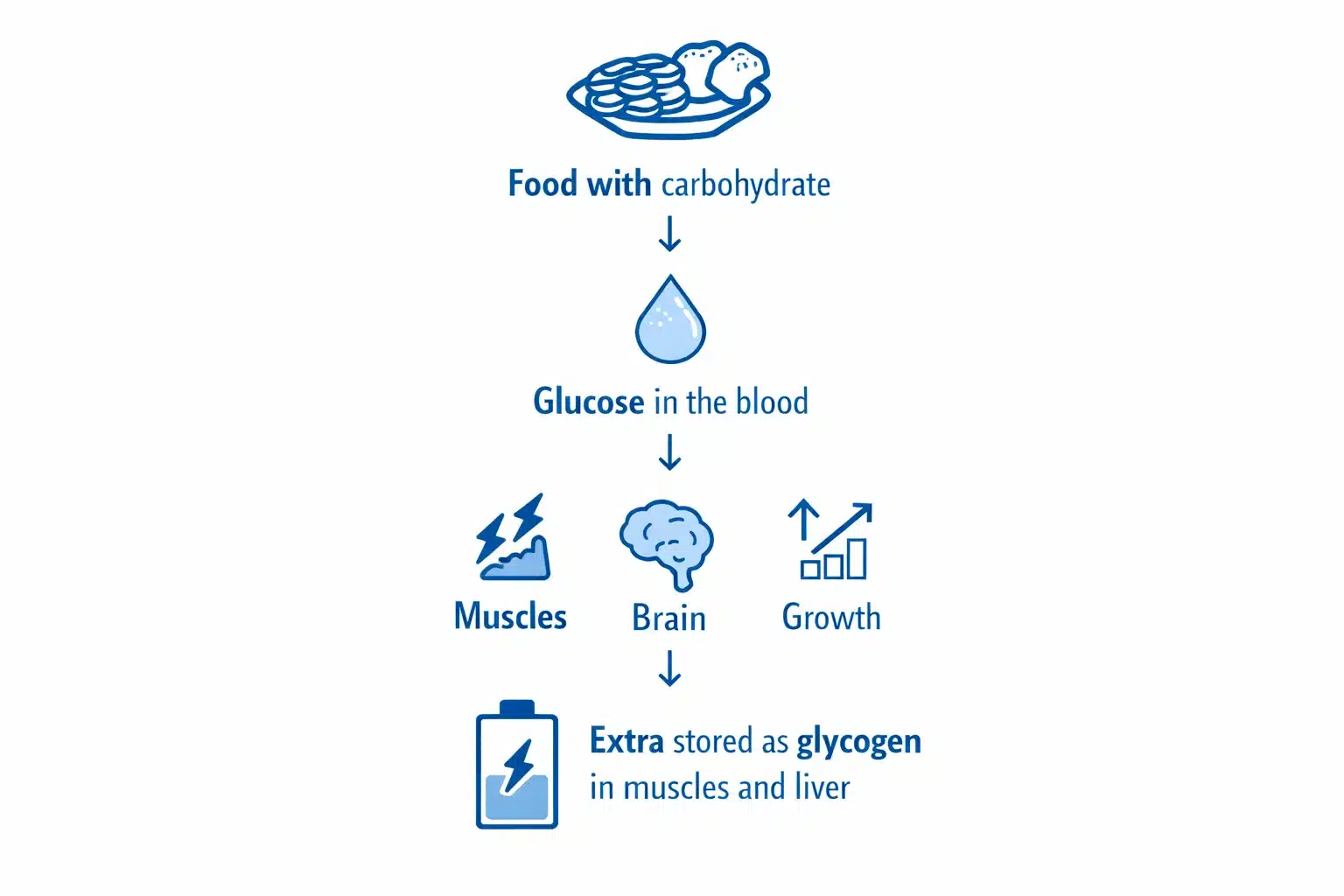
When children eat carbohydrates, the body breaks them down into glucose. Glucose travels in the blood and is used by the brain, muscles, and other organs as fuel.
Some of this glucose is used immediately. The rest is stored in the muscles and liver in a form called glycogen. Glycogen is like the body’s “energy reserve” for later.
Children use carbohydrate constantly:
- during the school day
- when running and playing
- during gymnastics
- while thinking and concentrating
- even while growing
Because of this, active children often need more carbohydrate than many adults realise.
Simple and Complex Carbohydrates
Not all carbohydrates behave in exactly the same way.
Simple Carbohydrates
Simple carbohydrates are broken down quickly. They provide fast energy.
Examples include:
- fruit
- milk
- yoghurt
- honey
- jam
- white bread
- fruit juice
These foods can be useful before gymnastics or when a child needs quick energy.
Complex Carbohydrates
Complex carbohydrates are broken down more slowly. They provide steadier, longer-lasting energy.
Examples include:
- porridge
- oats
- wholegrain bread
- potatoes
- rice
- pasta
- beans
- breakfast cereals with less added sugar
These foods help children stay full for longer and provide more stable energy throughout the day.
A child who eats only quick, sugary foods may feel energetic for a short time and then suddenly become tired again. A child who has more complex carbohydrates earlier in the day often has more consistent energy for school and gymnastics.
Why Fibre Matters Too
Fibre is a type of carbohydrate that the body cannot fully digest.
It does not provide much energy, but it helps in other ways:
- supports healthy digestion
- helps children feel comfortably full
- slows down how quickly energy is released
- supports gut health
Foods rich in fibre include:
- fruit
- vegetables
- oats
- wholegrain bread
- beans
- brown rice
However, balance matters. A child who fills up only on very high-fibre foods before gymnastics may feel too full or uncomfortable during class. For this reason, many children do better with lighter, easier-to-digest foods shortly before training.
Why the Brain Needs Carbohydrate
The brain uses glucose as its main source of fuel.
This is one reason why some children struggle to concentrate after school or during gymnastics when they have not eaten enough. They may seem distracted, emotional, or low in energy, when in reality they are simply under-fuelled.
Gymnastics requires concentration as much as movement. A child learning a cartwheel, handstand, or sequence on the beam needs to:
- listen carefully
- remember instructions
- react quickly
- coordinate their body
All of these depend on the brain having enough energy.
Food supports learning, not only training.
Why Carbohydrates Matter in Gymnastics
Gymnastics may not look like a long-distance sport, but it still uses a great deal of energy.
Children in gymnastics are constantly:
- running
- jumping
- climbing
- supporting their body weight
- repeating skills
- thinking and concentrating
Carbohydrates help provide the energy for all of this.
If a child does not eat enough carbohydrate, they may:
- seem unusually tired during class
- lose concentration more quickly
- become irritable or emotional
- struggle to finish the class strongly
- say that their legs “feel heavy”
- appear less confident than usual
This does not mean that every child needs a “sports diet”. Most young gymnasts simply need regular meals and snacks that provide enough energy across the day.
Foods That Give Fast Energy and Slower Energy
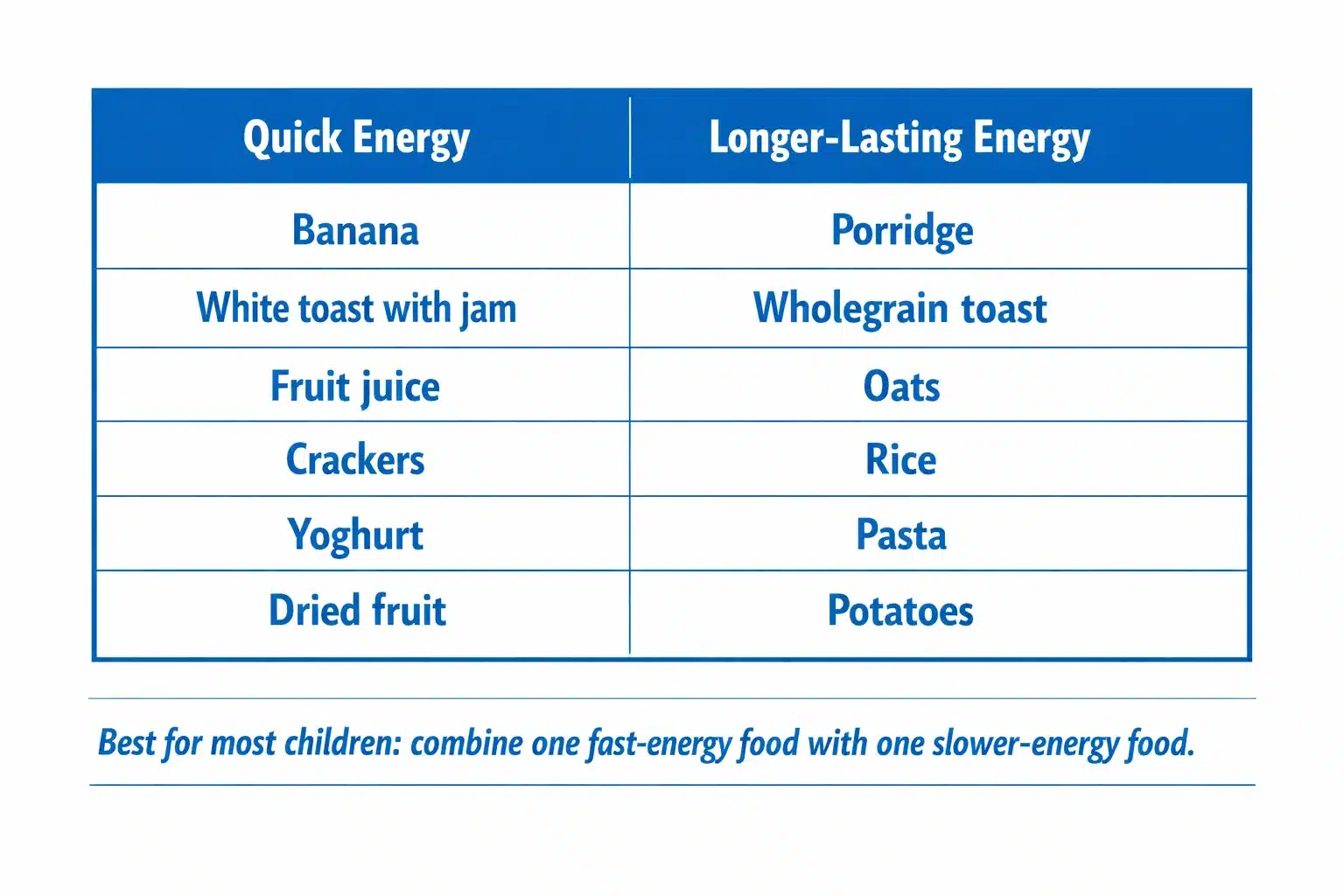
Faster Energy
Banana
Toast with jam
Fruit juice
Crackers
White bread sandwich
Yoghurt
Dried fruit
Longer-Lasting Energy
Porridge
Wholegrain toast
Oats
Rice
Pasta
Potatoes
Beans
The best approach is often to combine the two.
For example:
- banana and porridge
- toast with peanut butter
- yoghurt and fruit
- sandwich and fruit
This gives children some quick energy straight away and some steadier energy for later.
What Families Often Misunderstand
“Carbohydrates are unhealthy.”
Carbohydrates are not bad. They are the body’s preferred source of energy, especially for growing children.
“My child does not need carbohydrates because they only do one gymnastics class.”
Even one class after a full school day can require a great deal of energy.
“Healthy eating means eating less bread, rice, or pasta.”
For children, eating too little can sometimes be more of a problem than eating too much. Growth comes before performance.
“If my child is tired, they probably just need more sleep.”
Sleep is important, but tiredness can also happen when a child has not eaten enough during the day.
London Reality Box
From school to gymnastics in London
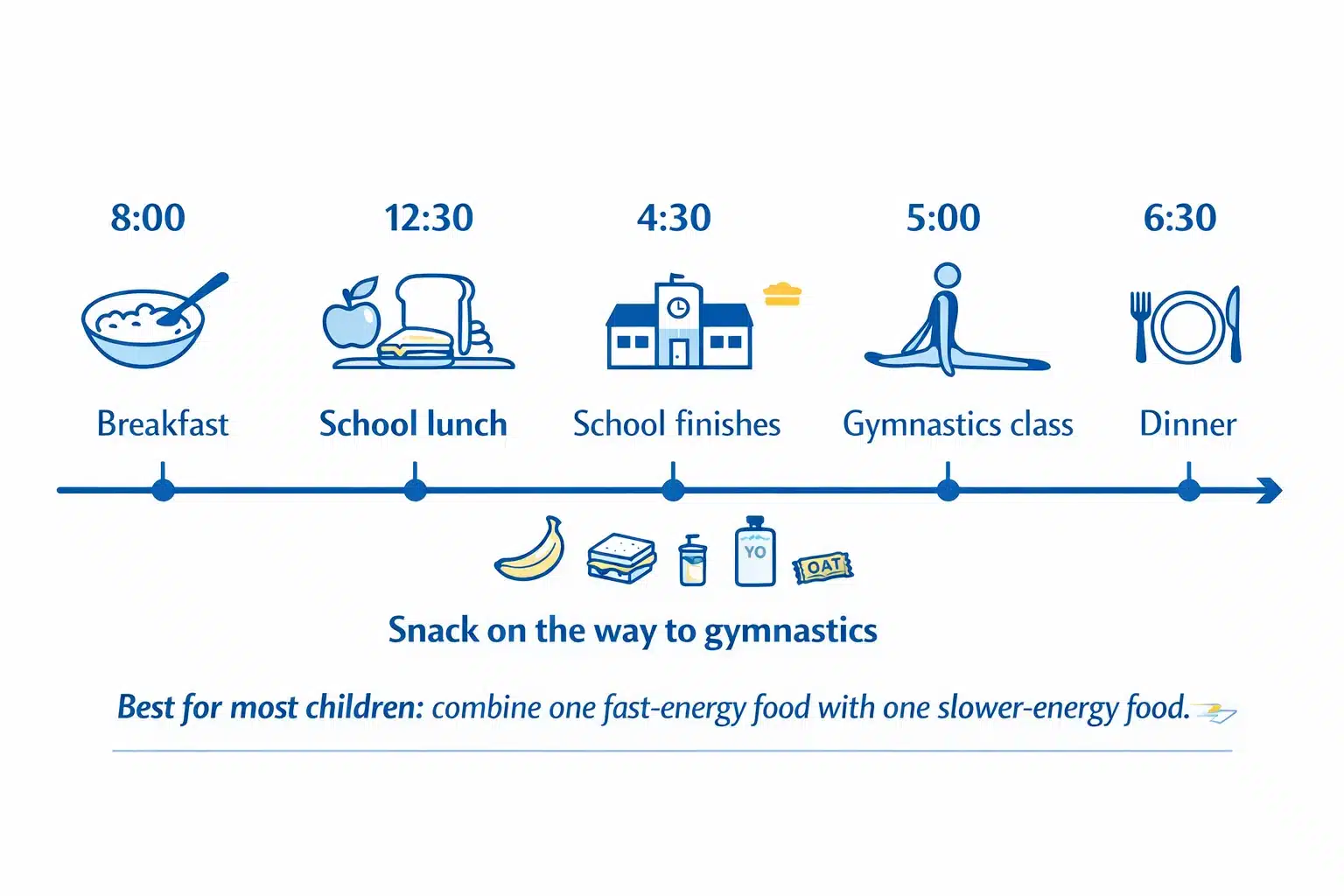
Many children travel straight from school to gymnastics. By the time they arrive at class, it may have been several hours since lunch.
For children attending classes in Kensington, Chelsea, or Knightsbridge after school, a small snack on the way can make a huge difference.
Simple ideas include:
- banana
- small sandwich
- oat bar
- yoghurt pouch
- crackers and cheese
- fruit and a few rice cakes
The goal is not a ‘perfect’ snack; it is simply to help children arrive at gymnastics with enough energy to enjoy and benefit from the class.
What Families May Notice
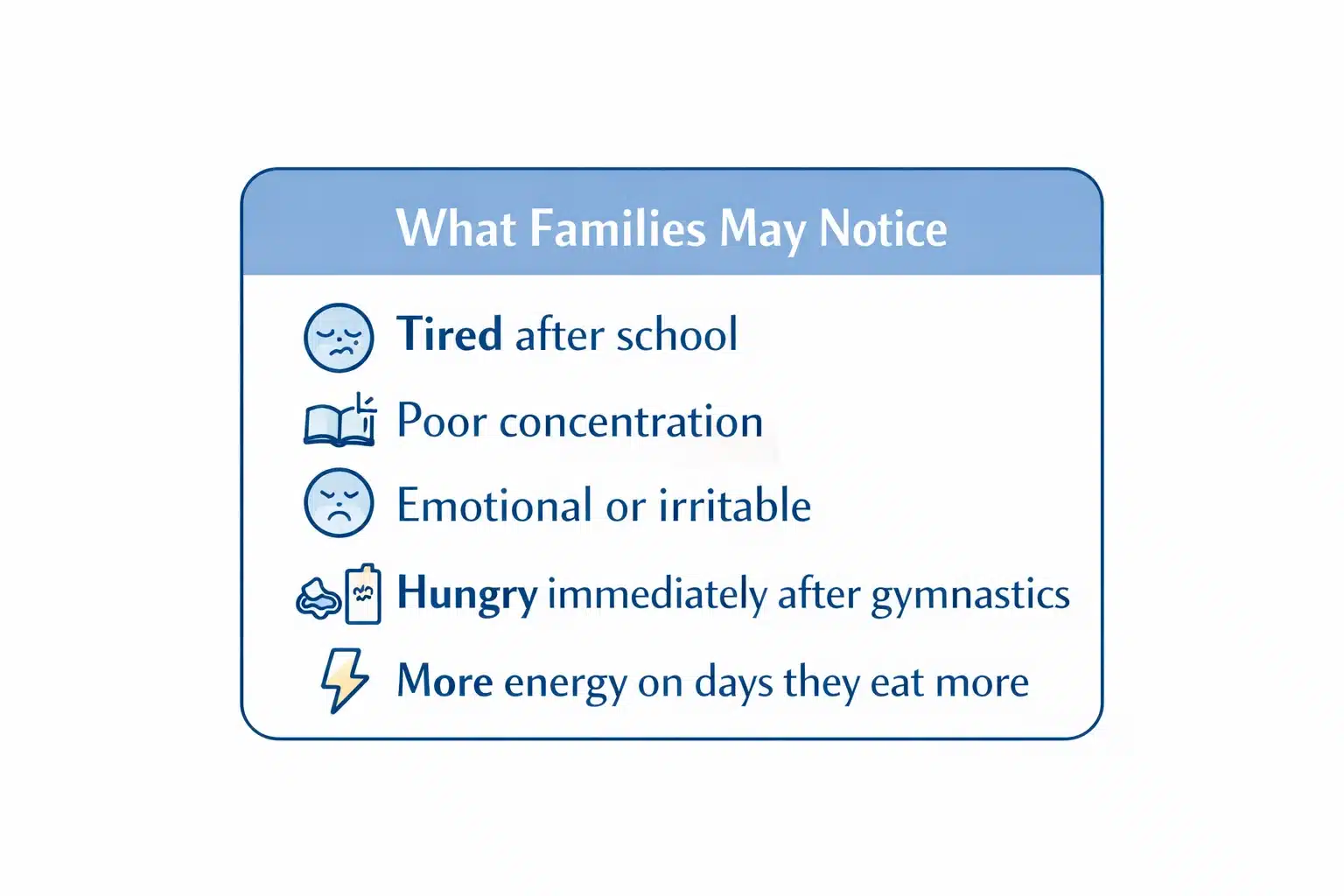
Children who are not eating enough carbohydrate may sometimes:
- become tired very quickly after school
- ask for food immediately after gymnastics
- lose concentration during class
- seem unusually emotional or irritable
- struggle more during evening activities
- have much more energy on days when they eat better
These signs do not necessarily mean that anything is wrong. They are simply reminders that growing children often need more energy than adults expect.
Healthy eating in gymnastics is not about strict rules or avoiding certain foods. It is about helping children have enough energy to grow, think, move, and enjoy being active.
For primary school-aged gymnasts, carbohydrates are usually the most important source of that energy. When children eat enough across the day, they often feel more confident, more focused, and more able to enjoy gymnastics.
Growth comes before performance.
The goal is consistency, not perfection.
Looking Ahead
In the next issue, we will explore protein: how it helps build the growing body, why children need it for growth and repair, and why most young gymnasts need much less protein than social media often suggests.