Parent guide · Benefits of gymnastics
When Is the Right Age to Start Gymnastics?
A reassuring, evidence-informed guide to readiness, recreational and competitive goals, and why children who begin later have not “missed their chance”.
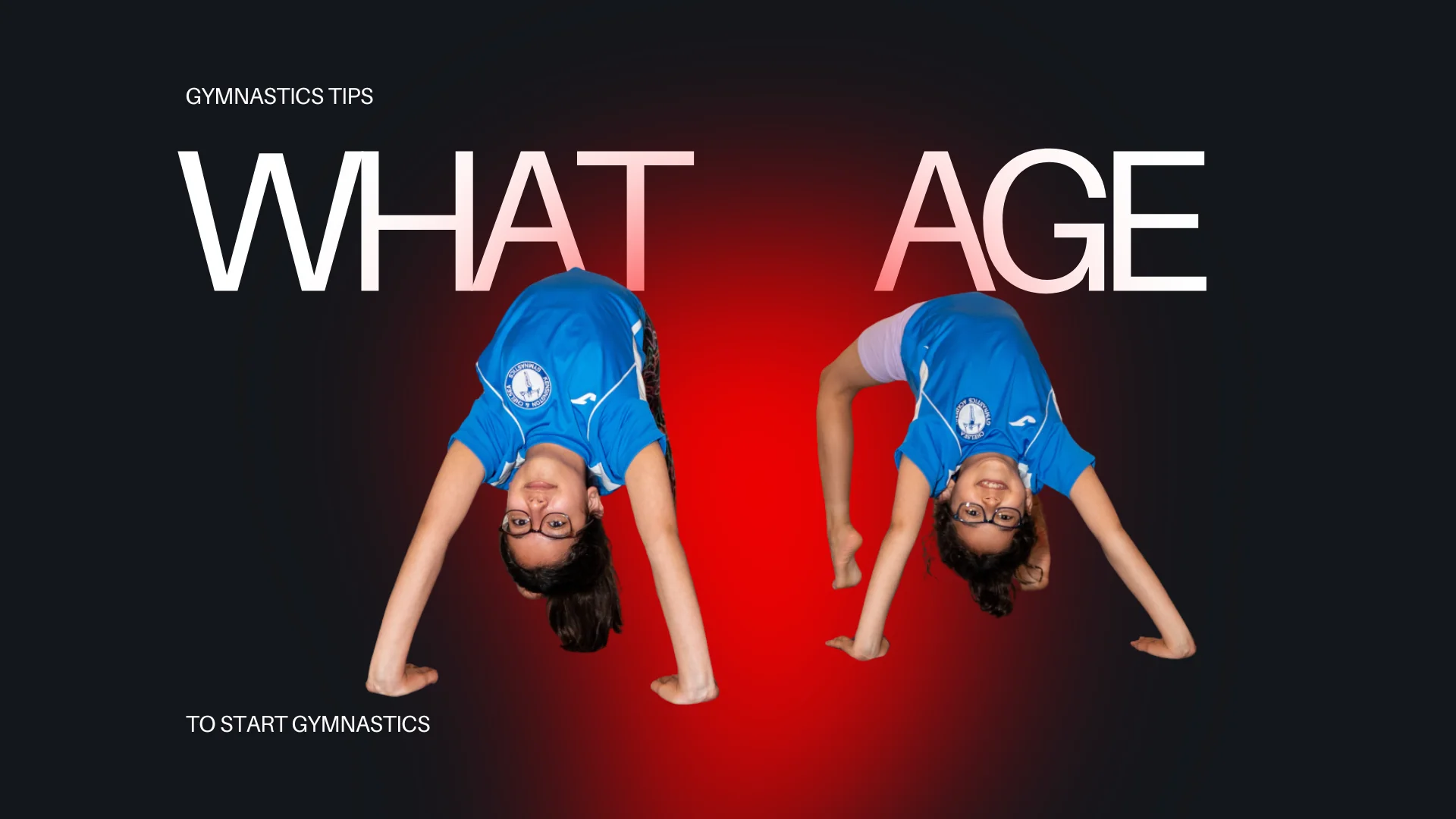
There is no single perfect age. For many families, ages 4–6 are a practical time to begin structured recreational gymnastics—but children starting at 7, 10 or later can still learn, progress and gain meaningful benefits.
Parents often ask whether age 4 is ideal, whether 7 is too late, or whether an older child has already missed the opportunity. The more useful question is: what kind of gymnastics experience is right for this child now?
What you will understand
- Why there is no evidence-based universal “best age” for every child
- Why readiness, interest and the quality of the programme matter
- How recreational goals differ from elite-performance pathways
- Why beginning at 7, 10 or later can still be valuable
- What to look for before choosing a gymnastics class
British Gymnastics’ recreational pathway spans preschool children from walking age through school-age beginners and experienced recreational gymnasts1. That breadth is important: gymnastics can be adapted for different ages, abilities and reasons for taking part.
The International Olympic Committee’s guidance on youth development likewise recommends flexible, age-appropriate sport experiences that respond to the individual child’s development, readiness and perspective2. A date of birth alone cannot tell a parent whether a child is ready to enjoy a class.
A practical answer—not a talent-selection rule
This guide is about beginning recreational gymnastics positively. It does not predict elite potential or prescribe an individual training pathway. Children develop at different rates, and health or developmental concerns should be discussed with an appropriately qualified professional.
What starting can look like at different ages
There is no need to treat these age bands as deadlines. They are a way to understand how the experience and coaching approach may change as children grow.
Under 4
Movement is best developed through safe, supervised play: climbing, balancing, rolling, jumping and exploring. Formal instruction is not essential. NHS guidance encourages varied daily physical activity for under-fives3.
Ages 4–6
Many children are becoming ready to listen briefly, take turns and enjoy a structured group. A good class should still feel playful and should build simple movement foundations without pressure.
Ages 7–11
School-age beginners may understand instructions more easily and arrive with experience from other activities. British Gymnastics explicitly includes school-age children participating for the first time in its recreational pathway1.
Age 12 and beyond
Older children, teenagers and adults can begin recreational gymnastics too. Their goals, mobility, strength, learning pace and programme should be individualised rather than compared with younger starters.
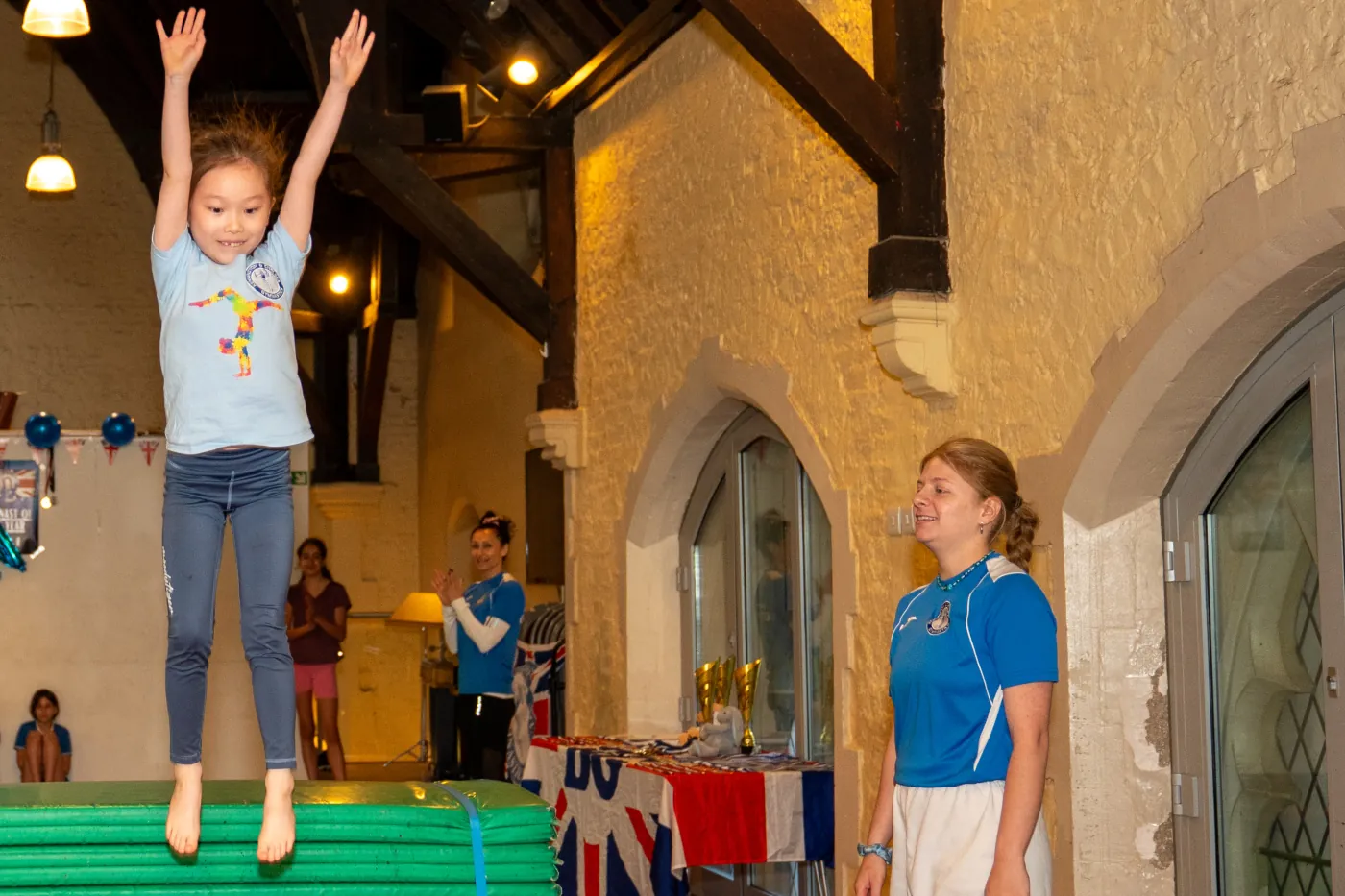
Children do not all arrive with the same experience. A strong programme meets them where they are and builds from there.
Readiness matters more than chasing a number
A child does not need to be confident at everything before starting. The point of a supportive class is to help confidence grow. Parents can nevertheless look for a few practical signs that the environment and timing may be suitable.
Useful signs of readiness
- Your child shows interest in climbing, balancing, jumping or learning new movements
- They can engage with short, simple instructions—with support appropriate to their age
- They can take turns or are beginning to practise this skill
- The idea of attending creates curiosity or manageable nervousness, rather than sustained distress
- The provider can explain how activities are adapted for age, confidence and experience
- Any additional needs or health considerations can be discussed before participation
Being nervous before a first class is normal. Readiness does not mean the absence of uncertainty; it means there is an appropriate environment in which the child can begin gradually.
The answer changes with the goal
Many worries about “starting too late” come from applying elite-performance expectations to ordinary recreational participation. These are different journeys.
Recreational gymnastics
- Enjoyment and confidence
- Movement skills and body awareness
- Progress relative to the individual
- Participation at many starting ages
- A foundation for an active life
Elite-performance pathways
- Sport-specific selection and competition goals
- Higher training volumes and technical demands
- Longer skill-development timelines
- Individual maturation and opportunity matter
- A distinct coaching, health and support context
The IOC advises against treating youth development as a rigid age prescription. It recommends individually responsive pathways, varied athletic exposure and an enjoyable climate focused on long-term development2.
“The best age to start gymnastics is not the age somebody else says. It is the age when your child begins.”
Dr Stefan Kolimechkov · Kensington Gymnastics Podcast, Episode 002Can children who start later still progress?
Yes. Children starting at 7, 10 or later are not automatically “behind”. Older beginners may bring better concentration, clearer motivation, greater strength or experience from swimming, dance, football and other activities. Other elements—such as flexibility, confidence upside down or unfamiliar movement patterns—may take more patience.
Progress cannot be promised on a timetable. It depends on the child, the frequency and quality of practice, previous experience, motivation, coaching and the complexity of the skill. The objective should be meaningful individual development, not catching up with somebody else.
For children aged 5–18, NHS guidance recommends varied physical activity across the week to develop movement skills, muscles and bones4. Gymnastics can form one part of that broader active life; it does not need to be a child’s only activity.
Starting at 15: Dr Stefan Kolimechkov’s experience
Stefan began gymnastics in Bulgaria on 1 October 2002, aged 15—after several coaches had told him he was too old. He started with foundations, trained patiently and went on to compete nationally, become a gymnastics coach and sports scientist, and continue competing in masters gymnastics.
His experience is not a promise that every late starter will follow the same path. It is a genuine example of why age should not be used to close the door on participation before a person has had the opportunity to begin.
Explore Stefan’s documented gymnastics career ↗How to choose the right first programme
The quality of the first experience matters more than finding a supposedly perfect age. Ask how the programme responds to different starting points.
Ask who the class is designed for
Check the age range, expected experience and whether first-time gymnasts are welcome.
Look for age-appropriate coaching
Younger children need playful foundations; older beginners still need careful progressions rather than rushed difficulty.
Understand the pathway
Ask how coaches observe readiness, communicate progress and adapt for confidence or additional needs.
Protect enjoyment
A first class should invite curiosity and effort without making a child feel behind or compared unfairly with others.
For one child that may be a playful preschool class. For another it may be a first school-age session, a teenage beginner programme or an adult class. The aim is a positive beginning that can grow into confidence, skill and a lasting relationship with movement.
To understand the wider developmental value of the sport, continue with Why Gymnastics? — the Benefits of Gymnastics for Children. If you prefer listening, Podcast Episode 002 explores this same question in depth.
Once you are ready to explore lessons, How to Choose the Right Gymnastics Class for Your Child explains KCGA’s group, personal and home coaching options and the age, experience and routine details that help us recommend a suitable starting point.
Common questions
Starting gymnastics FAQs
What is the best age to start gymnastics?
There is no universal best age. Ages 4–6 are a practical starting point for many families, but the right time depends on the child’s interest, readiness, goals and the quality of the programme.
Is 7 years old too late to start gymnastics?
No. Seven is a very normal age to begin recreational gymnastics. School-age beginners may learn well because they can often concentrate for longer and understand instructions more clearly.
Can a child start gymnastics at 10 or 12?
Yes. Older children can develop strength, coordination, confidence and gymnastics skills. Their programme should begin with foundations and respond to their experience rather than treating them as if they must catch up with younger gymnasts.
Does a child need to start very young to compete?
Some high-performance pathways favour an earlier start because advanced gymnastics takes years to develop. That is different from saying every child must begin young. Competitive possibilities depend on the individual, the discipline, access, maturation and many other factors.
How often should a beginner attend gymnastics?
There is no single frequency for every beginner. Many recreational gymnasts start with one regular weekly session. Coaching quality, consistency, enjoyment and the child’s wider activity and recovery matter more than adding sessions without a clear reason.
What if my child has a health condition or additional need?
Speak with the provider before the first session so that appropriate support can be considered. If there is a medical concern about participation, seek advice from the child’s healthcare team. The NHS notes that activity may need to be adapted for children with long-term conditions or disabilities3.
Evidence used
Selected guidance and research
- British Gymnastics. Rise Gymnastics FAQ Centre. Official information on recreational pathways from preschool to experienced recreational participation. Accessed October 2026.
- Bergeron MF et al. International Olympic Committee consensus statement on youth athletic development. British Journal of Sports Medicine. 2015;49:843–851.
- NHS. Physical activity guidelines for children under 5 years. Reviewed October 2026.
- NHS. Physical activity guidelines for children and young people aged 5 to 18. Reviewed October 2026.
These sources support the developmental and participation principles explained above. They do not establish one ideal starting age for every child and do not constitute an individual assessment.

Is your child ready to begin?
Explore KCGA’s children’s gymnastics classes across Central London, or listen to the full podcast episode before deciding on the next step.
0 Comments