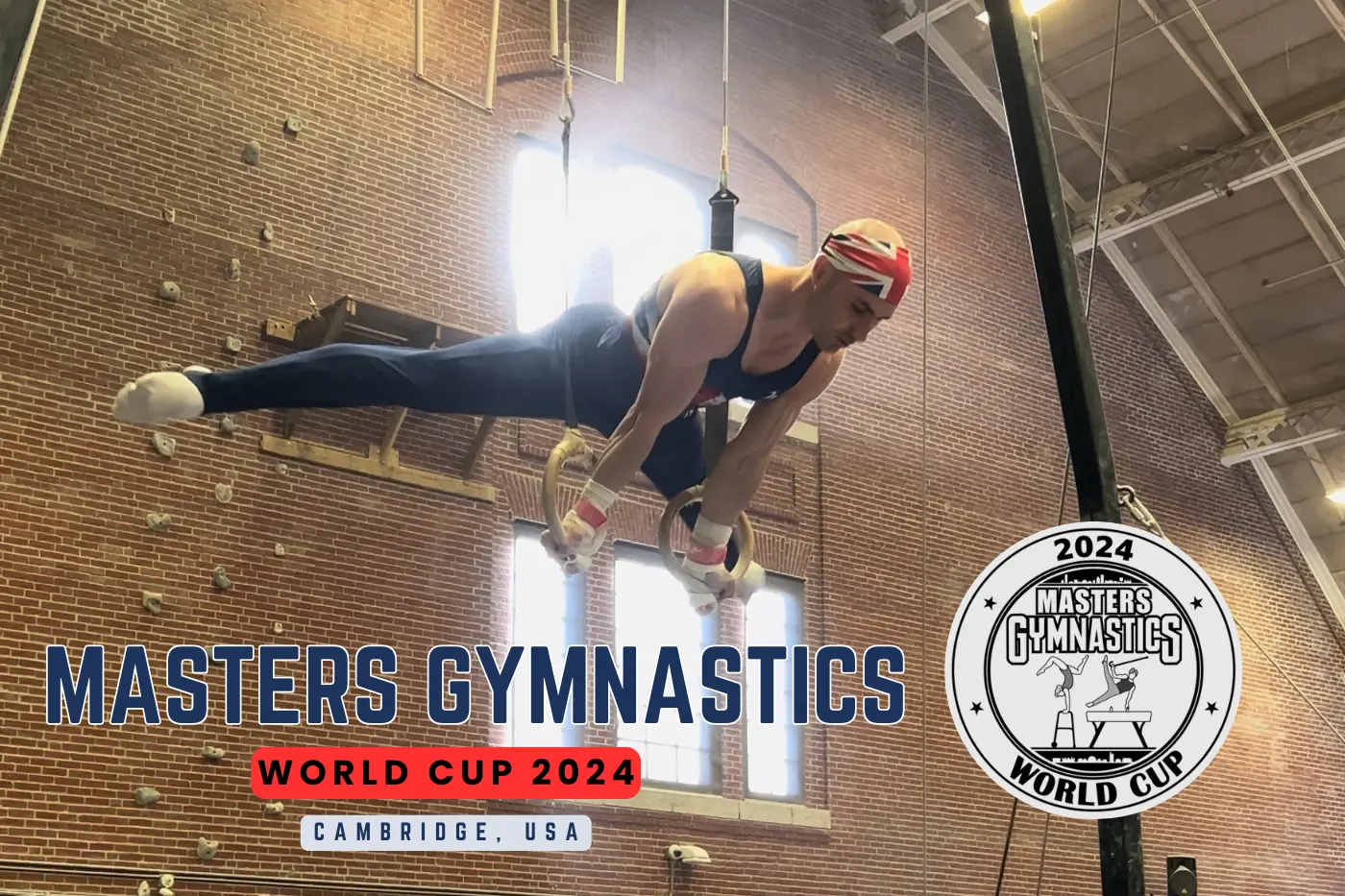
Competing at the 2024 Masters Gymnastics World Cup
A Sports Scientist’s Perspective on Lifelong Gymnastics and Healthy Ageing
In 2024, I competed at the Masters Gymnastics World Cup, an international event bringing together experienced gymnasts, coaches, and lifelong practitioners from around the world.
For some parents, it may seem unusual that the founder and CEO of a children’s gymnastics academy continues to train and compete internationally. For me, this is not incidental, it reflects the intersection of my work as a gymnast, coach, and published sports scientist.
At Kensington & Chelsea Gymnastics Academy (KCGA), we view gymnastics not as a short childhood activity, but as a lifelong foundation for health, movement quality, confidence, and successful ageing.
Competing as an Athlete, Coach, and Researcher
Preparing for the Masters Gymnastics World Cup requires far more than physical strength. It demands:
-
Long-term training structure
-
Intelligent management of load and recovery
-
Technical precision under fatigue
-
Psychological resilience and consistency
These challenges closely align with my academic research interests in health-related fitness, performance across the lifespan, masters athletes, and successful ageing.
My peer-reviewed research has been published in international scientific journals and explores how physical fitness, movement quality, and lifestyle behaviours influence health and performance at different stages of life. This work is publicly available via:
Remaining an active competitor allows me to apply this research in real-world conditions, not in theory, but under the genuine physical and psychological demands of training and competition.
Why Lifelong Gymnastics Matters — Scientifically
From a sports science perspective, gymnastics is uniquely valuable across the lifespan.
Research consistently shows that activities combining:
-
Strength relative to body mass
-
Balance and coordination
-
Joint stability and mobility
-
Cognitive and motor control
are strongly associated with healthy ageing, injury resilience, and long-term physical independence.
Gymnastics develops all of these qualities in a structured, progressive way. This is why it can support:
-
Children developing fundamental movement skills
-
Adults maintaining movement confidence
-
Masters athletes sustaining performance and health
This scientific understanding directly informs how KCGA programmes are designed: age-appropriate, progressive, and sustainable.
Many of the principles discussed here are explored in more detail in our science-based gymnastics articles, where research on children’s development, health-related fitness, and long-term movement quality is translated into parent-friendly guidance.
“Gymnastics is one of the few physical disciplines that meaningfully supports performance, health, and confidence across the entire lifespan.
When taught correctly, it is not something we grow out of — it is something we grow with.”
— Dr Stefan Kolimechkov, PhD
This rings routine was performed by Dr Stefan Kolimechkov at the 2024 Masters Gymnastics World Cup. The performance highlights long-term strength development, joint stability, and movement control built through consistent, evidence-based training. These same principles underpin KCGA’s approach to safe, progressive gymnastics for children and adults.
What This Means for Children’s Gymnastics in Kensington & Chelsea
Parents often ask what differentiates KCGA from larger, commercial gymnastics programmes.
One key difference is that KCGA is led by someone who:
-
Actively practises gymnastics
-
Coaches children and adults
-
Publishes sports science research on health and performance
This directly informs our work across our venues:
-
Kensington (W8)
-
Knightsbridge (SW1X)
-
Chelsea – King’s Road (SW3 / SW10)
We prioritise:
-
Safe technical progressions
-
Long-term joint health
-
Confidence over comparison
-
Quality over volume
This is why we operate with very small groups (maximum 8 children) and a 1:4 coach–student ratio.
At Kensington & Chelsea Gymnastics Academy, this philosophy is shaped by both lived coaching experience and academic research, which you can explore further on our About the KCGA Academy page.
Successful Ageing Starts in Childhood
One of the most consistent findings in ageing research is that movement habits established early strongly influence health outcomes later in life.
When gymnastics is taught correctly: with patience, clarity, and scientific understanding, children develop:
-
Physical literacy
-
Body awareness
-
Confidence in movement
These qualities persist long after specific skills are forgotten.
At KCGA, gymnastics is viewed as a long-term investment in physical wellbeing, not a short-term activity.
Bringing International and Academic Standards Back to KCGA
International competition and peer-reviewed research serve the same purpose: they enforce honesty.
They reveal what works, what does not, and what must be refined.
Every KCGA class reflects this mindset, whether it is a child’s first forward roll or an adult rediscovering gymnastics later in life.
Competing at the 2024 Masters Gymnastics World Cup was not separate from our mission.
It was an expression of it.
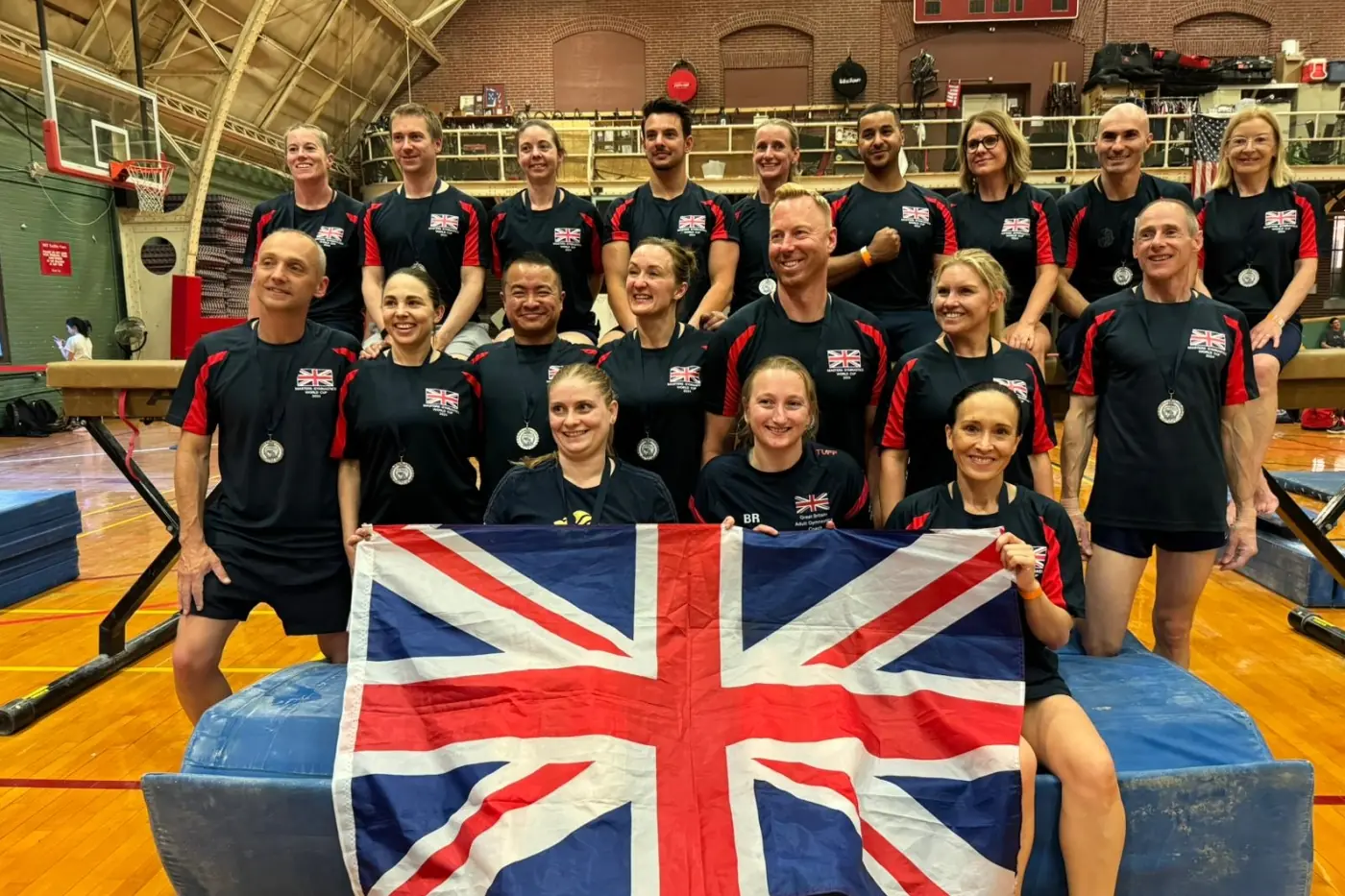
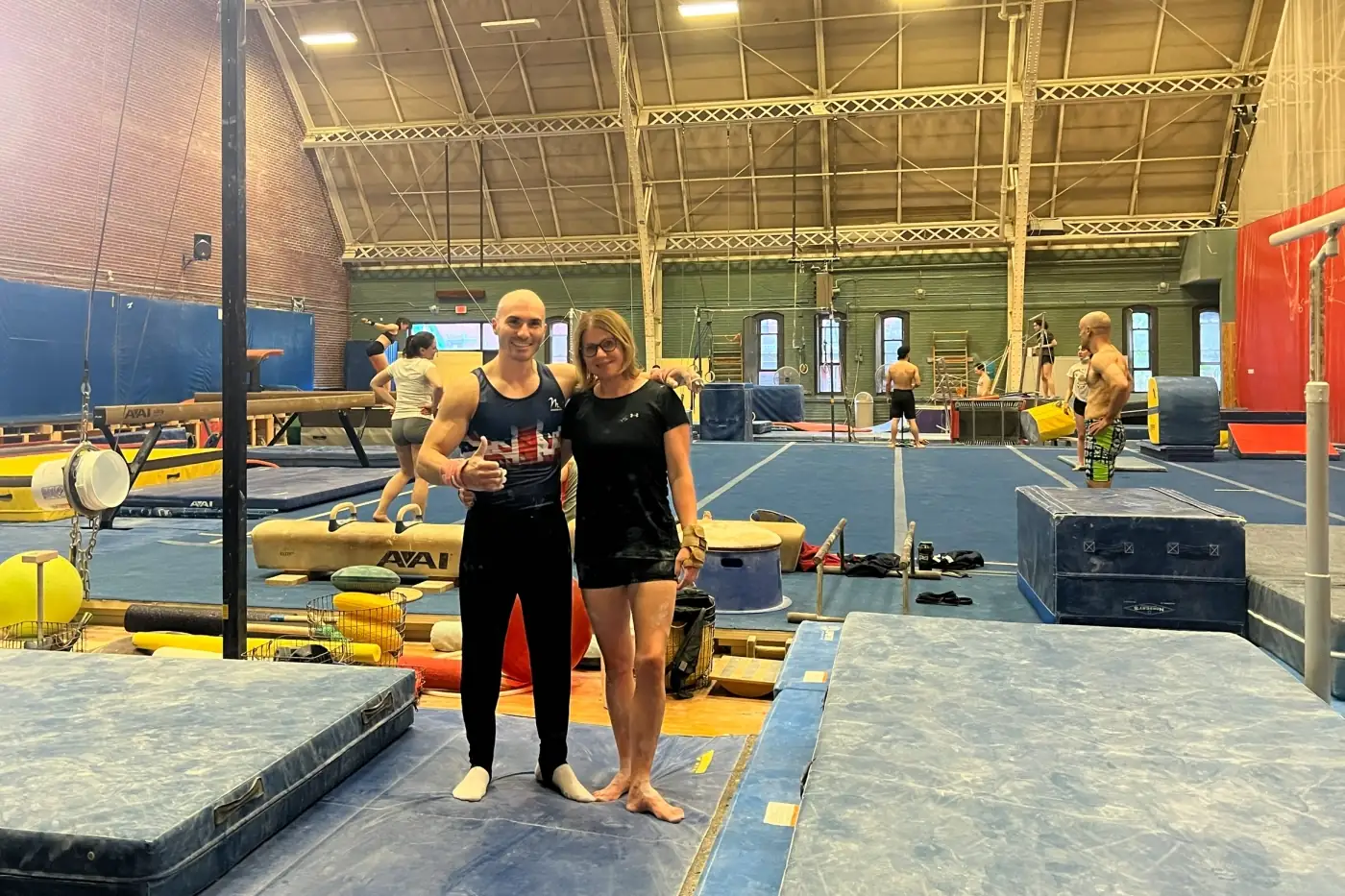
Dr Stefan Kolimechkov with the Great Britain Masters Gymnastics team at the 2024 Masters World Cup, demonstrating lifelong engagement and community in high-level sport. Moments like this are part of a wider culture of lifelong participation in gymnastics, which you can see reflected in our competitions and events gallery.
FREQUENTLY ASKED QUESTIONS (FAQ)
Is gymnastics safe throughout life?
Yes, when taught progressively and appropriately. Well-structured gymnastics supports strength, balance, coordination, and joint health across the lifespan.
Can adults or older athletes start gymnastics?
Yes. With correct progressions and supervision, adults and masters athletes can safely begin or return to gymnastics.
How does sports science influence KCGA’s coaching?
KCGA programmes are informed by peer-reviewed research on physical development, health-related fitness, and ageing.
Does the founder of KCGA actively practise gymnastics?
Yes. Dr Stefan Kolimechkov continues to train and compete internationally, including at the Masters Gymnastics World Cup.
Why are KCGA classes kept small?
Small groups allow individual attention, safer progressions, and better long-term outcomes.
What is Masters Gymnastics?
Masters Gymnastics refers to organised gymnastics participation for adults, typically aged 30 and over, with age-group competitions extending well into later adulthood. It allows former gymnasts and newcomers alike to train and compete in a structured, age-appropriate environment that prioritises safety, longevity, and enjoyment. Masters gymnastics demonstrates that high-quality movement, strength, and coordination can be maintained throughout life when training is progressive and well managed.
How does scientific research influence children’s gymnastics safety?
Scientific research helps coaches understand how children grow, adapt, and respond to physical training at different ages. At KCGA, peer-reviewed research on physical development, injury prevention, and health-related fitness informs how skills are introduced, progressed, and adapted for each child. This evidence-based approach supports safer training, reduces unnecessary physical stress, and promotes long-term confidence and enjoyment in movement.
How does Masters Gymnastics differ from elite competitive gymnastics?
Masters Gymnastics is designed for adults and prioritises long-term health, safety, and enjoyment alongside performance. While elite competitive gymnastics focuses on early specialisation, high training volumes, and peak performance at a young age, masters gymnastics emphasises age-appropriate progressions, recovery, and sustainability. The goal is not to push physical limits prematurely, but to support lifelong participation, confidence, and high-quality movement across adulthood.
👤 About the Author
Dr Stefan Kolimechkov is a sports scientist, British Gymnastics coach, and Founder of Kensington & Chelsea Gymnastics Academy. He specialises in children’s physical development, health-related fitness, and lifelong participation in sport, with particular research interests in successful ageing and masters athletes.
Dr Kolimechkov has published peer-reviewed research in international scientific journals and regularly presents at leading conferences in sports science and health. Alongside his academic work, he remains actively involved in gymnastics as an international masters competitor, ensuring his coaching philosophy is grounded in both evidence and lived experience.
0 Comments