A New Competition Pathway for London
Can recreational gymnasts have a meaningful route into competition?
Expert Voice · Lorenzo Ribecca · Community Technical Committee Chair
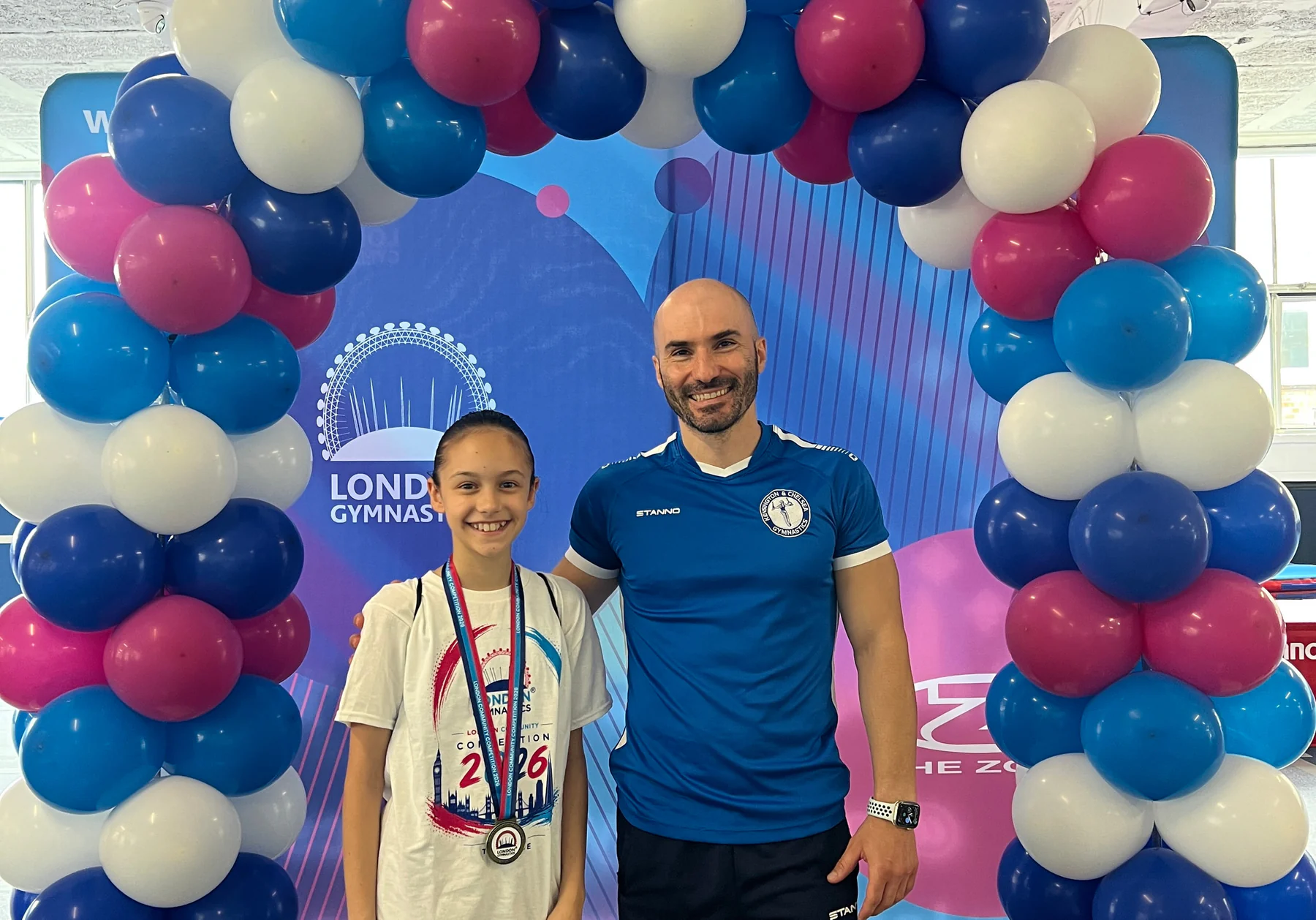
Competition is not the destination of every gymnast.
Some children are happiest learning week by week, enjoying movement, friendships and the quiet satisfaction of doing something today that felt impossible a few months ago. Others become curious about competition: wearing club kit, performing in front of judges, sharing the floor with gymnasts from other clubs and discovering what it feels like to work towards a particular day.
Both experiences belong in gymnastics. The important question is whether a community gymnast who wants to compete can enter an experience that is appropriate, understandable and connected to what may come next.
From one event towards something connected
An isolated competition can provide a goal, a stage and a memorable day. A pathway should also help gymnasts, coaches and families understand what may come next.
During 2026, London began testing one possible answer.
The London Community Competition Programme—titled Community Competition Programme in its June 2026 handbook and described there as a regional competition pathway delivered under London Gymnastics—has been designed to offer positive, inclusive and accessible competition opportunities for gymnasts at community and recreational level [1].
That framework is not yet complete. On 5 July 2026, the London Community Competition took place at Anima Gymnastics Club in Barnet. It was a pilot or test event. There was no operating five-zone series, no zonal qualification system and no functioning zonal-to-Regional-Final pathway.
The five zones and Regional Final concept belong to what may be built next. KGM is documenting a programme at the point when an idea has entered the gym, met real children, coaches and families, and begun to reveal what it could become.
- Current handbook and rules
- Eligibility and Community Levels
- One July 2026 pilot
- Committee oversight
- Five organisational zones
- More local opportunities
- Clearer routes for clubs and coaches
- A possible wider London structure
- Regular opportunities in all zones
- Settled qualification mechanics
- An annual local-to-London rhythm
- Evidence that access has improved
Where the idea began
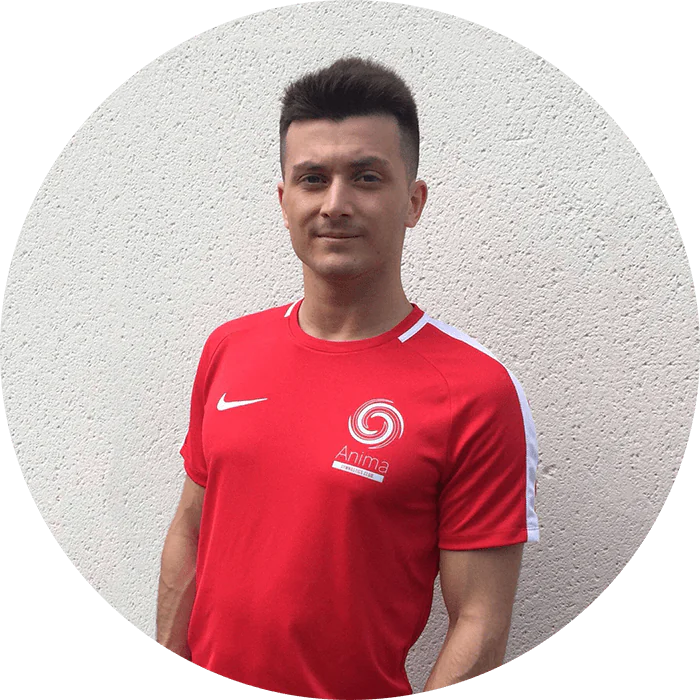
Lorenzo Ribecca · Community Technical Committee Chair
Lorenzo Ribecca chairs the Community Technical Committee named in the programme’s June 2026 handbook. He co-founded Anima Gymnastics Club with Julienne Ribecca in 2018 and is the club’s head coach.
Anima’s current official profile describes him as an International Men’s Artistic Judge; World Gymnastics also lists him within the 2025–2028 Men’s Artistic international-judge course registrations [2], [3].
Lorenzo organised the July pilot and has been directly involved in developing the Community Levels and wider programme [1], [4], [5].
“There were competitions available, but often it wasn’t obvious how the skills or levels connected to anything beyond that particular event” [5].
A question that started inside a club
The idea grew from a practical problem at Anima. Lorenzo and his colleagues were looking for suitable competitions for recreational gymnasts. Opportunities existed, but he felt that the connection between one event and a longer developmental route was often unclear.
That experience led him to ask whether grassroots competition could be organised differently: not simply as a collection of routines for one day, but as part of a progressive framework in which the purpose of each level was easier for a coach, gymnast and family to understand.
KGM welcomes the growing attention now being given to recreational gymnastics. This matters especially because published research led by KGM editor Dr Stefan Kolimechkov has examined health-related physical fitness in primary-school children practising artistic and recreational gymnastics [11], [12]. KGM therefore welcomes seeing London’s Community Competition Programme turn that attention into practice, with a structured competition pathway now being built for recreational gymnasts across the capital.
Moving the idea through London Gymnastics
Lorenzo identifies Maria McLoughlin, Chair of London Gymnastics, as a major source of support in developing the idea and moving it forward through the regional organisation. London Gymnastics is the Regional Governing Body for gymnastics and is affiliated to British Gymnastics [5], [6].
The current handbook now gives the programme a formal structure. It places oversight with the Community Technical Committee and defines rules concerning membership, age, training hours, levels, categories, coaches, judges, awards and the intended competition pathway [1].
The July event then moved that structure from paper into practice.
Not a smaller version of elite competition
Lorenzo is clear that the programme is not based on the assumption that every community gymnast should eventually become a high-performance athlete.
Its deeper purpose is to make the gymnastics learned in a few weekly hours developmentally meaningful. A gymnast may remain within community gymnastics, progress through its levels, enjoy competition occasionally or never compete at all. Another gymnast may later show the ability, desire and opportunity to enter MAG, WAG or a different pathway.
The aim is not to predetermine that destination. It is to avoid making early gymnastics feel disconnected from what may follow.
It is about making sure the gymnastics they are learning still makes sense developmentally. — Lorenzo Ribecca [5].
Evidence labels used in this chapter
Training hours affect eligibility—not ability
The word community can describe many forms of gymnastics. In this programme it also has a specific practical meaning.
The current handbook says that a gymnast must hold British Gymnastics Community membership, be at least seven during the competition year and train no more than four hours per week, calculated as an average across all gymnastics disciplines and all clubs attended [1]. These requirements define entry to this framework. They do not define every recreational gymnast in London.
Eligibility
Who may enter this programme?- Community membership
- Age seven or older in the competition year
- Maximum four average weekly gymnastics hours
- Total counted across disciplines and clubs
- Entry through an eligible London club
Level
Which competition framework is appropriate?- The discipline being entered
- The gymnast’s current skill content
- Relevant performance requirements
- The club’s judgement that the level is appropriate
They do not determine level by themselves.
Why four hours?
The four-hour limit is not a scientific dividing line. It does not suggest that a child training three hours lacks ability, or that a child training five hours is elite. Lorenzo explains it as a programme-design decision intended to preserve a recognisable community environment—broadly reflecting gymnasts attending once or twice each week rather than children with substantially greater training time.
A pathway that gives training direction
The supplied handbook sets out four General Gymnastics Community Levels. Earlier levels use a shorter apparatus format; later levels introduce a broader apparatus choice. General Gymnastics uses a simplified Difficulty and Execution approach so that completed content and performance quality remain visible parts of the score [1].
Acrobatic and Rhythmic Gymnastics use the relevant London discipline rules named in the handbook rather than rewritten Community skill lists.
KGM is deliberately not reproducing the detailed element lists. They belong within qualified club coaching and the governing rule documents, not in a family magazine as a remote training programme.
What families need to understand is the organising principle: a level should reflect what a gymnast is prepared to perform, and the levels are intended to connect.
That does not make the Community Levels equivalent to established national MAG or WAG pathways. It means that the developers have tried to borrow an underlying idea—sound foundations and connected progression—and make it realistic for gymnasts with fewer weekly training hours [5].
Level, category and age ranking are not the same
All participants are intended to receive a certificate. The handbook provides medals for first to third within a category and ribbons for fourth to sixth, with all-around awards rather than separate apparatus medals [1].
Participation and placing can both be recognised without pretending they mean the same thing. A child may value performing, completing a routine, representing a club, reaching a personal goal or earning a result. One medal should not become the only story.
Five Zones · One Developing London Structure
London is too large to think about competition access as though every family begins from the same place.
The programme’s developing model divides the region into five organisational zones: Central, East, North, South and West [1].
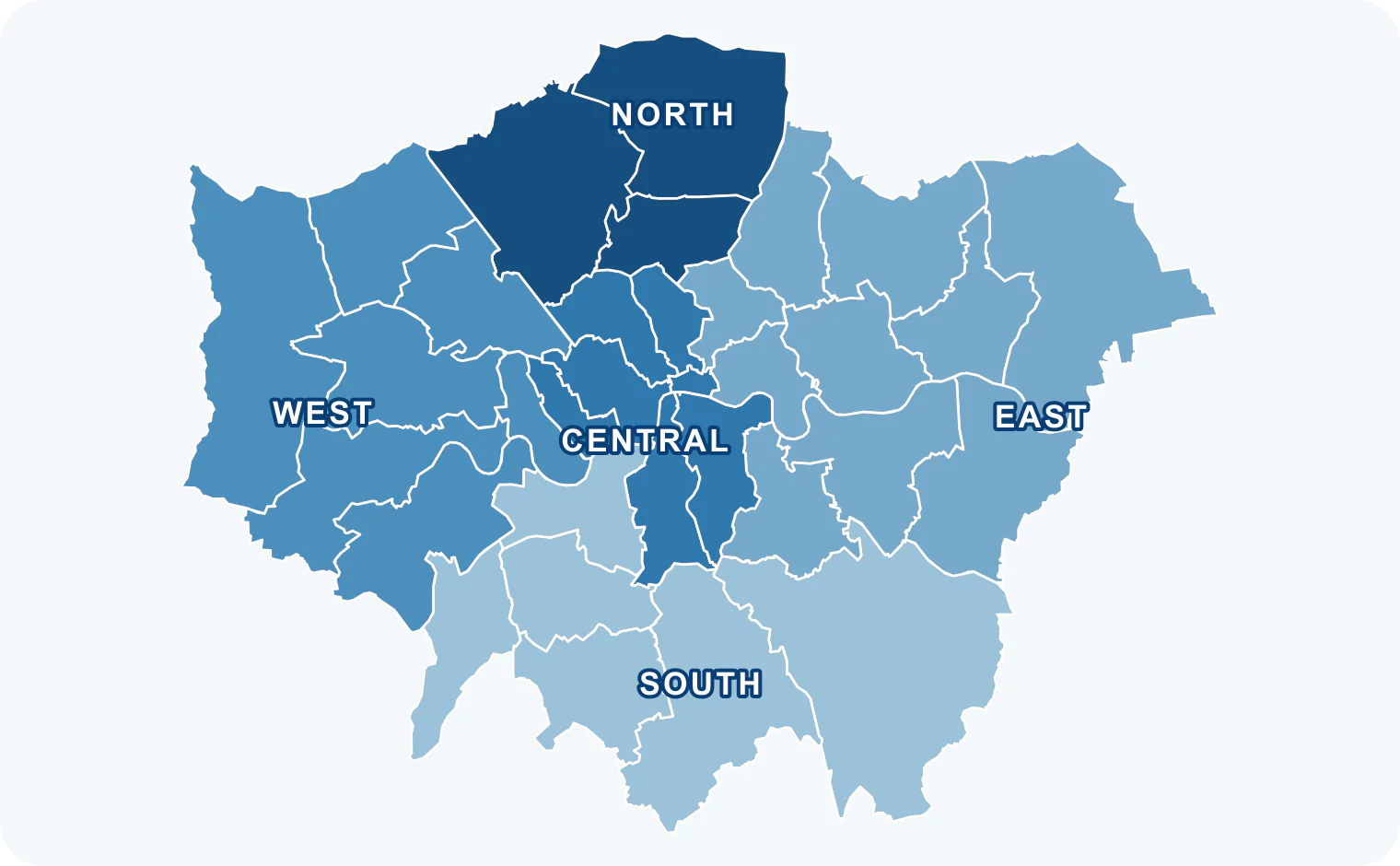
The zones show the programme’s developing organisational structure. They do not show provider density, gymnast numbers, current participation, equal access, travel time or competition frequency. Zonal competitions were not operating in 2026.
Programme allocation: Community Competition Programme, Version 2, June 2026 [1]. Borough boundaries: Greater London Authority / Ordnance Survey Boundary-Line [7]. Original KGM graphic.
A development sequence—not a qualification flowchart
The concept, levels, rules and practical event delivery were tested in one live competition.
Central, East, North, South and West form an organisational model for future local opportunities.
The model may create more reachable competition opportunities, but no operating zonal series existed in 2026.
The final qualification mechanics, event frequency and implementation timetable remain unsettled.
A club in Barnet, a family in Greenwich and a gymnast in Kensington may all belong to the same region, but a journey across London can still carry substantial cost, time and practical difficulty.
The zones are an organisational geography: a possible way to create more local competition opportunities while retaining wider London events. They are not a claim that opportunity is equal inside each area.
Lorenzo’s longer-term hope is that gymnasts might eventually have one or two zonal opportunities and one or two wider regional opportunities during a year [5]. That is an aspiration, not a published calendar or current entitlement.
In September 2026, no operating five-zone competition series had taken place. The July pilot was open more widely and was not a zonal qualifier. The exact mechanics connecting future zone events with a Regional Final remain under development. That uncertainty is part of the historical record.
5 July 2026 · The Pilot in Barnet
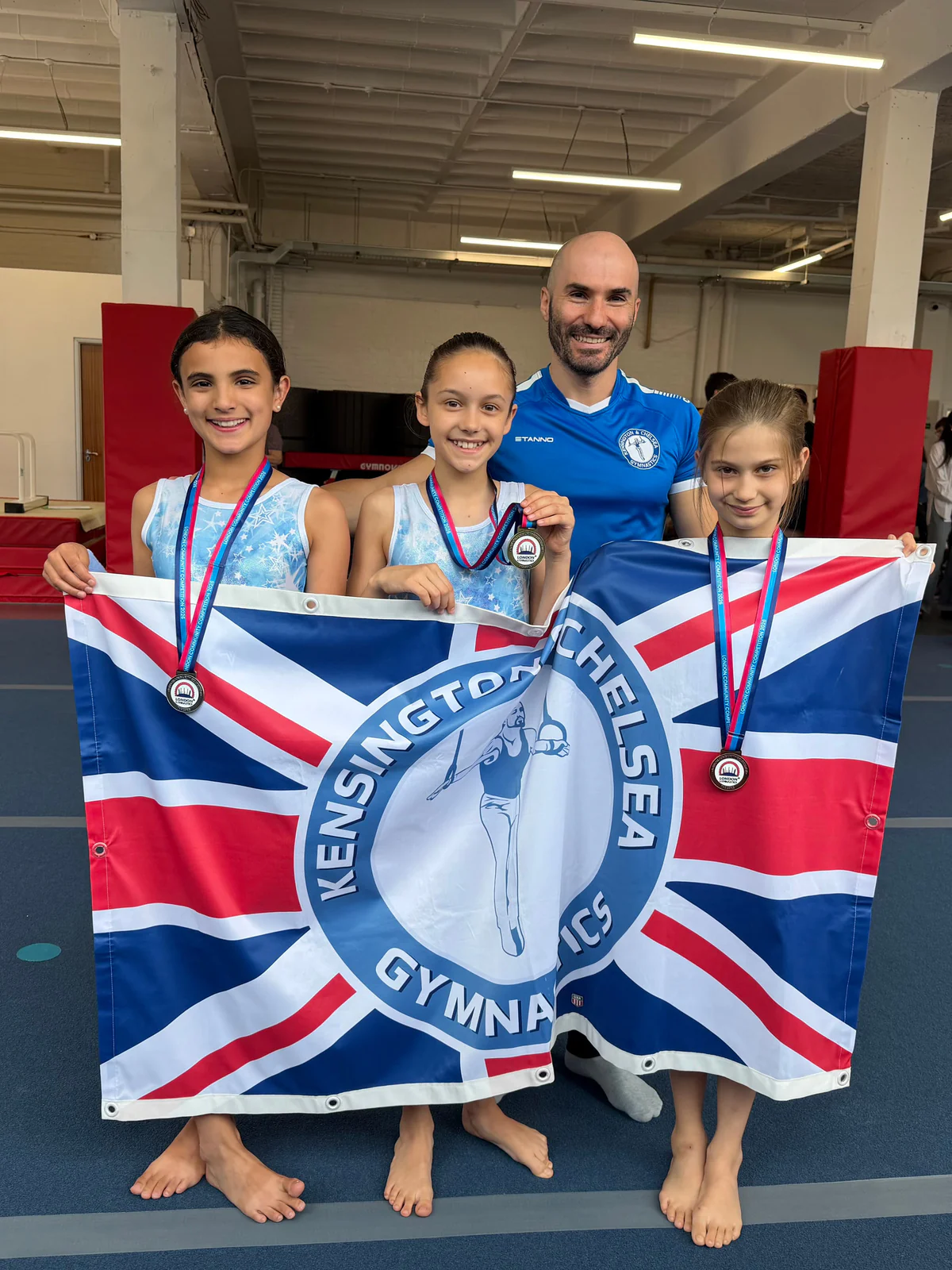
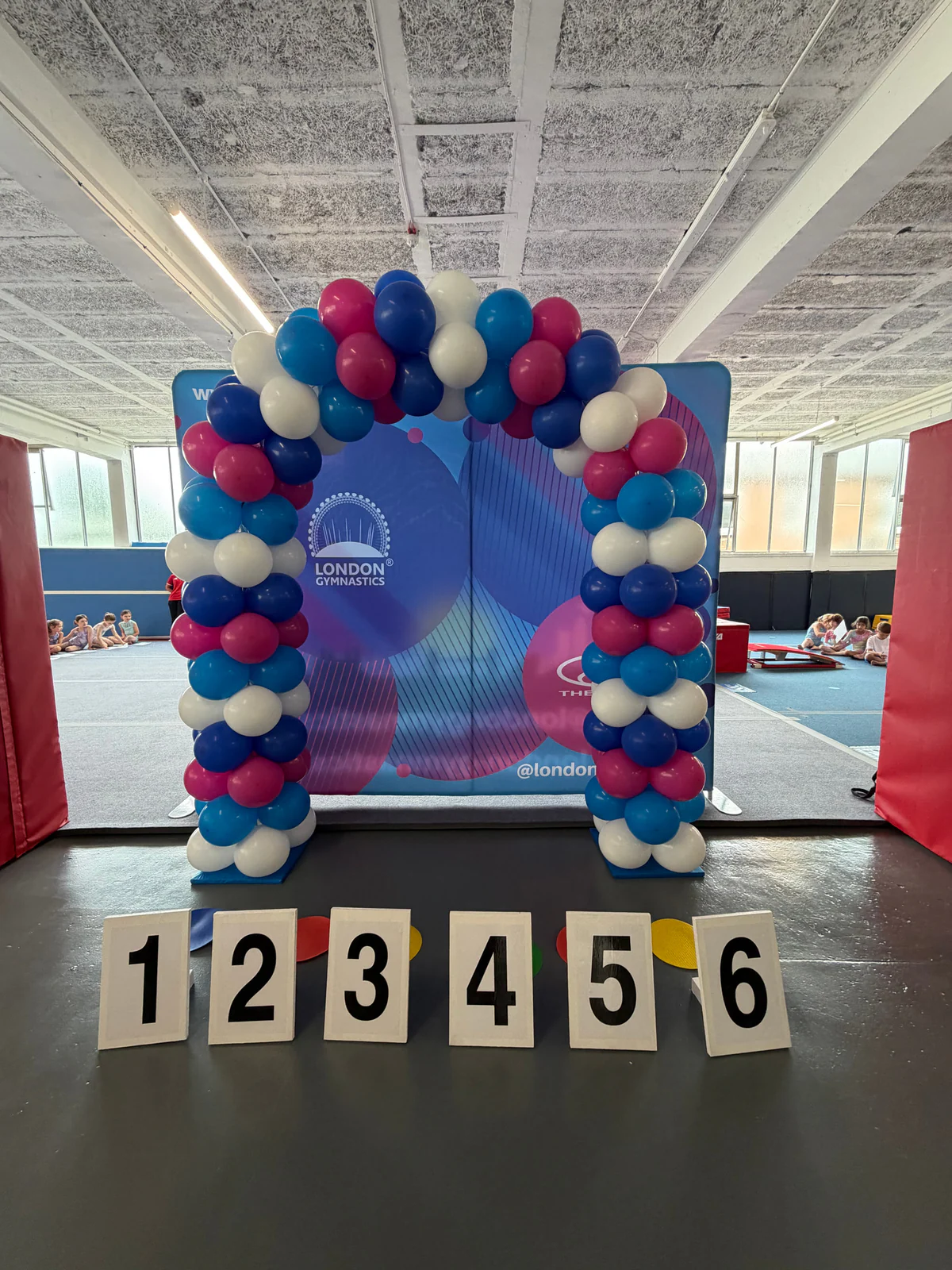
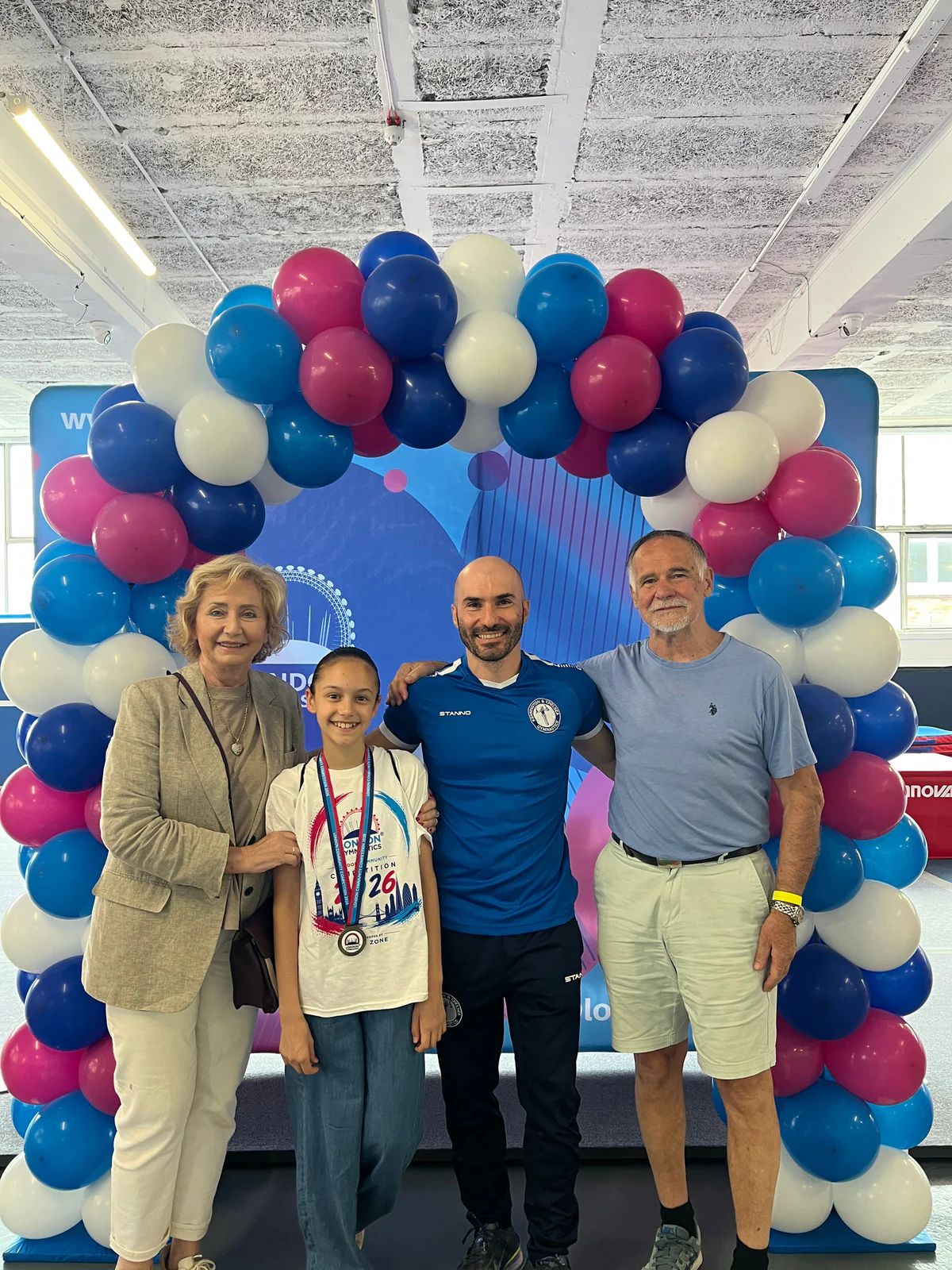
The event work plan records a full competition operation: organiser, judging coordination, welfare, first aid, health and safety, scoring, club accreditation and coach/judge requirements [4]. Public Gymdata pages independently record the event name, date and host venue [8].
What was being tested?
What the public record confirms
Public result pages reviewed by KGM confirm competition activity at Levels 2 and 4 [9], [10]. They are used here as documentary checks, not as a reconstructed account of the complete field.
The results also show how the programme’s levels appeared in practice: shorter floor-and-vault formats at earlier levels and broader apparatus formats in later groups.
What Lorenzo says was learned
Lorenzo’s assessment is that there was nothing fundamental about the levels, rules or grouping that made the organisers believe the concept was wrong. The main learning concerned logistics—particularly making the first round run more smoothly—and smaller organisational refinements [5].
He also reports that the response from gymnasts, parents and coaches was more positive than he expected and that there appeared to be genuine appetite for further opportunities [5].
That is valuable first-hand testimony. It is not a formal participant survey or evidence of long-term programme success.
A structure for coaches as well as children
The pilot tested a competition. The larger ambition is to build an environment in which community gymnastics has clearer direction. That would involve more than gymnasts.
The programme already requires qualified coaches, relevant judges, standardised rules and committee oversight [1]. These are delivery requirements. They do not prove that coaching quality has improved.
Lorenzo’s hope is that the progressive structure can also influence the questions coaches ask. Instead of preparing a child only for the skills listed in the next event, a coach might think more deliberately about foundations, prerequisites, how one skill connects with another and what should come next [5].
Longer term, Lorenzo sees possibilities for workshops, shared knowledge, communication between clubs and more competition experience for coaches and judges [5]. Those remain aspirations unless and until they are formally implemented.
The programme requires
Lorenzo believes it can encourage
- clearer thinking about foundations;
- understanding why a skill is taught;
- better awareness of prerequisites;
- longer-term curriculum direction;
- future learning between clubs [5].
Designed to improve access—not proof that access is equal
Several features are intended to make community competition more understandable and reachable: a clear eligibility rule, multiple levels, age- and ability-aware categories, disability categories where applicable, simplified General Gymnastics scoring, participation certificates and the developing five-zone structure [1].
But London barriers do not disappear because a framework exists. Clubs have different facilities, equipment, staffing, finances and access to judges. Families face different journeys, costs and available time. Affiliation, membership and qualification rules create important standards, but also require resources.
The programme can therefore be described as designed to improve accessibility. It cannot yet be described as having made community competition accessible across London.
Competition should remain an invitation, not an obligation
The fourth is not the only successful ending.
Lorenzo would like the Community Levels to become widely understood across London, with clubs in all five zones able to reach regular opportunities. He also hopes the programme may help develop more coaches and judges and strengthen communication between clubs [5].
In September 2026, the historical record remains one pilot event and a developing framework.
A first competition does not decide whether a child will become an elite gymnast. It can simply be a chance to work towards something, perform what has been learned, represent a club and feel proud of progress. For other children, weekly gymnastics without competition remains exactly the right experience.
London has not yet completed this route. But the pilot moved the question beyond theory. The rules were tried, gymnasts competed and the programme’s developers now have something real to refine.
References
- London Gymnastics. (2026, June). Community Competition Programme: A regional competition pathway delivered under London Gymnastics (Version 2). Programme handbook supplied to affiliated London clubs.
- Anima Gymnastics Club. (n.d.). Anima Gymnastics Club. Retrieved 29 September 2026. Official website.
- World Gymnastics. (n.d.). MAG 2025–2028 international judges’ courses: Registrations. Retrieved 29 September 2026. Official registration list.
- London Gymnastics. (2026). Competition work plan: London Community Competition, 5 July 2026. Event document supplied to participating clubs.
- Ribecca, L. (2026). Written interview and approved contributor biography supplied to Kensington Gymnastics Magazine. Unpublished contributor material.
- London Gymnastics. (n.d.). London Gymnastics. British Gymnastics. Retrieved 29 September 2026. Official regional page.
- Greater London Authority. (2018). London Boroughs. Official Ordnance Survey Boundary-Line polygons. London Datastore.
- Gymdata. (2026, July 5). 2026 London Community Competition: Event information. Event record.
- Gymdata. (2026, July 5). 2026 London Community Competition: Level 2 overall all-around rankings. Results page.
- Gymdata. (2026, July 5). 2026 London Community Competition: Level 4 overall all-around rankings. Results page.
- Kolimechkov, S., Petrov, L., & Alexandrova, A. (2021). Artistic gymnastics improves biomarkers related to physical fitness and health at primary school age. International Journal of Applied Exercise Physiology, 10(1), 115–128. Full article.
- Kolimechkov, S., & Monacis, D. (2025). Recreational gymnastics improves health-related physical fitness in primary school children. In Proceedings of the 4th International Scientific Congress “Applied Sports Sciences” (pp. 212–219). DOI.