Feature
From Lausanne
to London
What new sport science can—and cannot—tell gymnastics families.
This Feature follows four signals: childhood activity and movement competence; strength without detected change in measured muscle thickness; consistency and adaptability in a gymnastics skill; and KGM's own recreational-gymnastics poster.
Their differences in size, design, population and publication stage are the point. Responsible reading begins before the headline.
Inside ECSS Lausanne 2026
A congress of many conversations
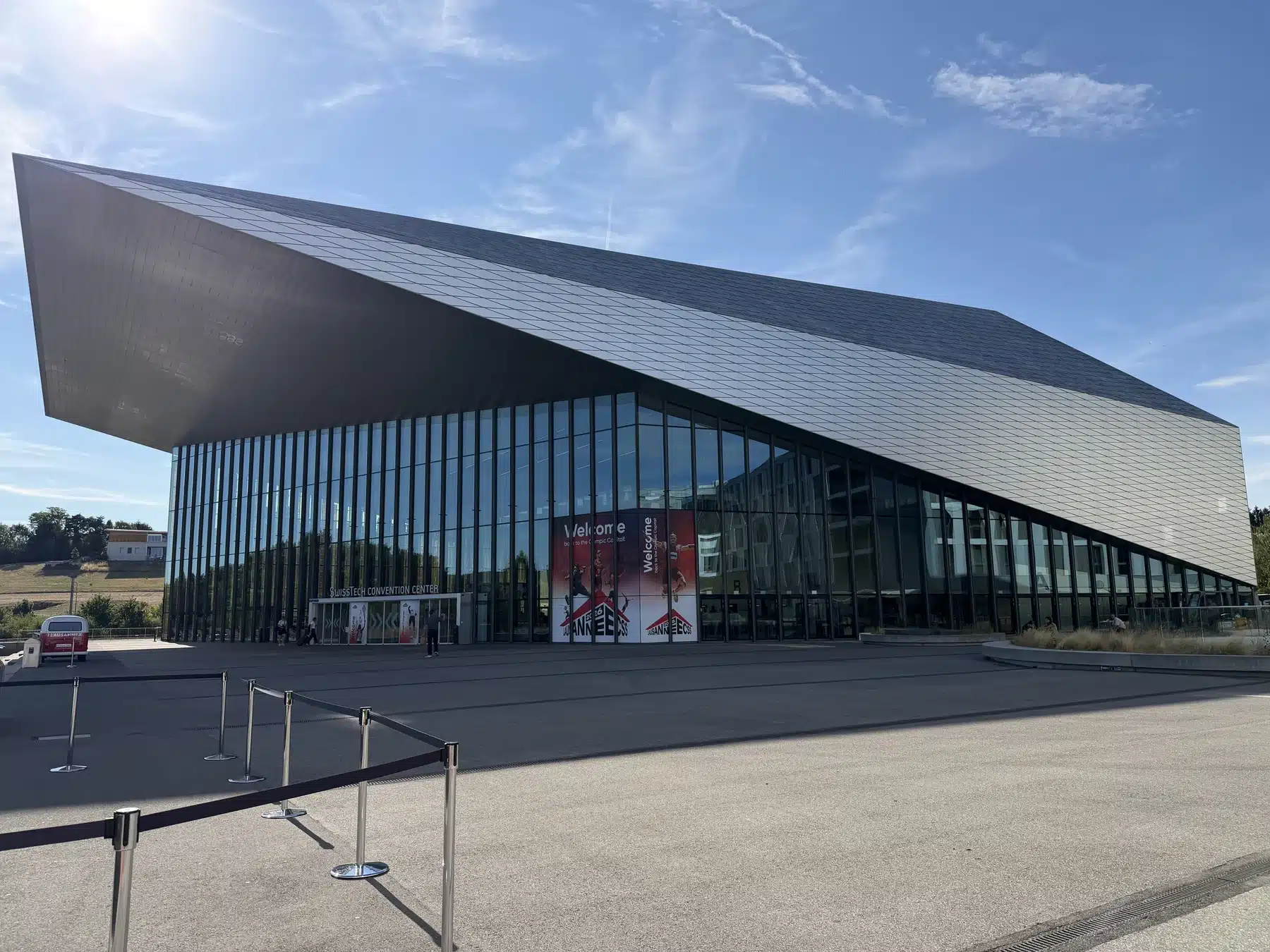
The 31st Annual Congress of the European College of Sport Science brought researchers, practitioners and students from many countries to Lausanne. Hosted by the University of Lausanne and EPFL, it was not a meeting about one branch of sport or one age group. It placed performance, health, medicine, coaching, psychology, biomechanics, physiology, nutrition, technology and physical activity inside the same four-day conversation [1].
The formal programme moved between large plenary lectures, invited and exchange symposia, parallel oral sessions, print-poster discussions and e-posters. Around them were masterclasses, special-interest groups, an exhibition, professional meetings and social gatherings. The 1,097-page Book of Abstracts shows the breadth of work assembled; the pages that follow select only a few questions with a direct family or gymnastics connection [22].
One congress, many formats. The official programme combined plenaries, invited and exchange symposia, oral and print presentations, e-posters and wider professional activity [1, 22]. This Feature discusses only a small, family-relevant selection.
Why this belongs in a family gymnastics magazine
A congress supplies questions, methods and early signals. Families still need help deciding what each one can honestly mean.
How to read a scientific congress
A conference is where knowledge moves
One abstract may report a new association. Another may test an intervention. A third may offer an exploratory idea. They can sound equally confident on a programme page, but they do not carry equal certainty or answer the same question.
KGM reporting rule
Describe what was studied, identify the evidence stage and keep the limitations beside the conclusion. A crowded congress programme makes this discipline more important, not less.
Before the answer, read the study
A result belongs to a group of people, a design and a measurement. Before applying it to a child, walk through five equal questions.
Activity and movement competence
1Children need more than "move more"
Study finding - activity across the primary-school years
The Health Oriented Pedagogical Project, or HOPP, followed activity and sedentary behaviour among 2,123 children aged six to twelve in Norway. Children wore accelerometers at the hip, allowing researchers to examine patterns across several years [2].
Moderate-to-vigorous activity declined by an average of about 2.2 minutes per day for each year, while sedentary time increased. Seven schools used an active-learning approach and two acted as controls, but the analysis did not find a statistically clear difference in their overall trajectories [2].
That does not mean "active learning does not work". Schools were not randomly assigned, the groups differed at the start and children's lives outside school were not controlled. The supported claim is narrower: activity declined and sedentary behaviour rose in this cohort, and the study did not detect a clear difference in the overall trajectories of the two school groups.
A full peer-reviewed paper permits more scrutiny than a conference abstract, but its population and design still set limits.
Study boundary
Observed: activity and sedentary behaviour across several years in one Norwegian cohort.
Not established: a universal childhood trajectory or a definitive causal verdict on active learning.
Conference finding - minutes are not movement competence
Nie, You and Zhang assessed 239 Year 1 pupils aged seven to eight on running, jumping, hopping, throwing, kicking and balance. Parents reported activity over the previous seven days. In this preliminary, cross-sectional Lausanne abstract, reported activity did not predict performance in the six skills after the analysis accounted for reported coordination difficulties [3].
This does not show that activity is unimportant. It used parent reports over a short window, observed one group at one time and did not test movement teaching. Its useful point is that time spent active and competence in particular movement tasks are not the same measurement.
A useful early signal from one cross-sectional sample, not a settled causal conclusion.
Broader evidence - the parts should not be collapsed
Neither HOPP nor the Year 1 abstract measured a child's complete physical literacy, confidence, enjoyment or access to activities. Those ideas come from broader evidence. The World Health Organization recommends regular activity and less sedentary time, while its school guidance takes a whole-school view [4, 5]. A 2025 meta-analysis found that actual and perceived competence each had largely independent, small associations with physical activity [6]. A 2024 review found promising but inconsistent results from school-based physical-literacy programmes [7].
Activity, measured competence and perceived competence are related, but one should not stand in for the others.
Professor Asgeir Mamen
Expert Lens - Professor Asgeir Mamen
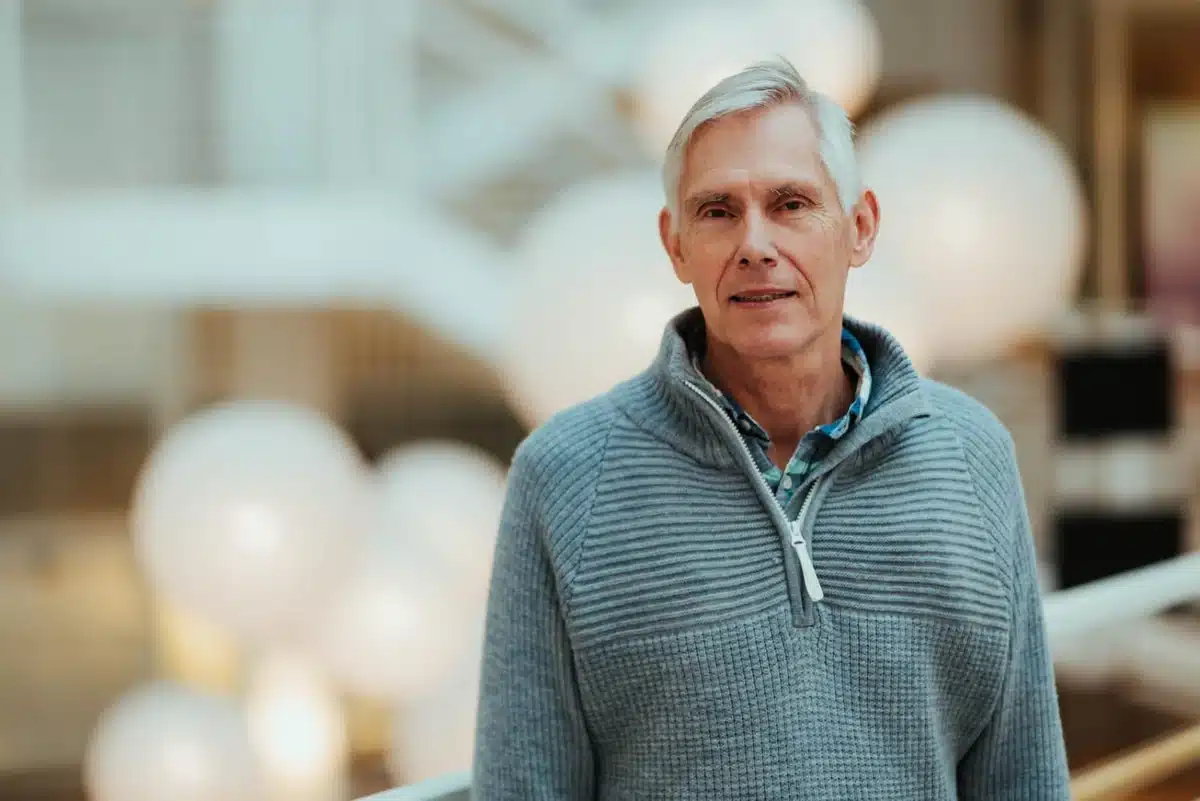
Professor Asgeir Mamen is Professor of Physical Activity and Health in the Department of Health and Exercise at Kristiania University College. He is a HOPP researcher and co-author of the longitudinal paper discussed here [2, 9].
He holds a master's degree in physiology from the Norwegian School of Sport Sciences and a PhD from the University of Bergen; his doctoral work concerned physical training among people with substance dependence and additional mental distress [9, 10].
His answers bring decades of research and congress experience into a practical family conversation about opportunity, enjoyment and mastery.
KGM editorial interpretation - making opportunity findable
For KGM, opportunity begins before a child enters a gym, playground or class. Families need to discover what activities exist, where they happen and how a child can enter them. Time, space, equipment, community and a welcoming route in can determine whether the instruction to "move more" becomes possible.
Gymnastics can be one useful opportunity when it is enjoyable, appropriately taught and accessible. That is KGM's family-facing interpretation of the wider evidence and Professor Mamen's perspective - not a finding produced by HOPP, and not proof that gymnastics is necessary for every child.
Keep separate: HOPP tracked activity over time; Abstract 1168 measured six movement skills at one time; wider literature addresses competence and physical literacy; Professor Mamen interprets opportunity; KGM translates those ideas for families. None measured the complete chain.
What this does not establish: that active learning is ineffective, that activity is unrelated to skill, or that gymnastics prevents sedentary behaviour.
Strength and measured muscle thickness
2Stronger does not simply mean bigger
Strength, appearance and measured thickness are different
Strength describes the capacity to produce force. Muscle thickness is a structural measurement made at a defined site. Visible muscle size is an appearance. They can be related, but they are not interchangeable.
Force also depends on coordination, understanding the task and how the nervous system recruits muscles. A young person may improve in a strength test without looking different, and ultrasound at a few muscle sites cannot describe the whole body.
Four different questions
Force: what can the body produce in this test?
Measured thickness: what did ultrasound show at these sites?
Appearance: what does the body look like?
Individual explanation: why did this child change?
What the Lausanne trial reported
Komm and colleagues randomly assigned 68 previously untrained boys to resistance training or an active-control group. Thirty-nine were classified as prepubertal and 29 as pubertal. The programme lasted nine weeks, with two supervised sessions each week [11].
The training group improved more in absolute peak force during an isometric mid-thigh pull - pulling as hard as possible against an immovable bar. Researchers did not detect a statistically clear training-related change in the thickness of three measured thigh-muscle sites. They also found no clear evidence that the response differed between the two maturity groups [11].
This does not mean that young people cannot increase muscle size, that puberty is irrelevant or that every kind of strength improved. It describes one programme, one force test, three ultrasound sites and previously untrained boys. The force result expressed relative to body mass was not statistically clear, which is another reason to keep the family conclusion narrow.
Random assignment strengthens the intervention test within this sample. The result was still available only as a conference abstract at drafting, and the population, duration and measurements remain firm boundaries.
What established guidance adds
The broader evidence is more mature. The American Academy of Pediatrics says appropriately designed and supervised resistance training can form part of children's and adolescents' physical development, and that prepubertal strength gains are commonly driven substantially by neurological adaptation rather than muscle enlargement alone [12].
A 2025 scoping review also found that studies of muscle morphology in children and adolescents remain limited and varied [13].
This context supports the general distinction between strength and size. It does not supply an individual explanation for one child.
Capability is not appearance
Force and measured thickness
Greater improvement detected in the training group
No statistically clear training-related change detected
Why this matters in gymnastics
Gymnastics asks children to create and control force when they support, hang, climb, jump, land and hold shapes. A child may become more capable before looking different. Practice, coordination, confidence, growth and muscular or neural changes may all contribute.
The family lesson is interpretive, not a programme to copy: capability can improve without a matching visible change, and appearance is a poor substitute for a properly chosen measure.
Strength is something the body can do. Muscle size is only one part of how it does it.
Keep separate: performance on one force test; ultrasound thickness at three sites; visible appearance; and the explanation for an individual child.
What this does not establish: that all strength gains are neural, that young people do not increase muscle size, that maturity never matters, or that the result applies to girls, trained gymnasts or longer programmes.
Consistency and adaptability
3New science asks how skills adapt
From the ECSS programme to a wider scientific question
Consistency matters in gymnastics. A gymnast must find the bar, arrive in a controlled handstand and reproduce safe shapes. But a consistent outcome does not require every joint to move in precisely the same way on every repetition.
Movement scientists use variability for differences across repeated performances. A 2022 scoping review separated three ideas [14]:
Strategy - the overall way of solving the task.
Execution - small adjustments within that strategy.
Outcome - the result achieved.
A stable outcome may coexist with small execution adjustments. More variability is not automatically better: it may reflect useful adaptation, an unsettled skill or loss of the intended result. Ecological-dynamics research adds that skill develops through the relationship between the individual, task and environment; practice must remain representative, purposeful and suitable for the athlete [15]. This mature literature carries the broader interpretation. A small Lausanne abstract, discussed on the next page, is a gymnastics-specific example of that question - not the evidence base for a universal coaching rule.
The goal is not random movement. It is a reliable skill that can cope with small changes.
An exploratory gymnastics example
One exploratory example from Lausanne
Murayama's exploratory Lausanne abstract examined five female university gymnasts performing kip-to-handstands on uneven bars. They practised across several research-controlled conditions. Success meant reaching a stable handstand, and two experienced coaches also made qualitative judgements about adaptability and the variety of solutions used [16].
The abstract reported improved success after the practice period and interpreted the pattern as greater situational adaptability and solution diversity [16]. It is an interesting gymnastics-specific example, not proof of a universal training principle. Five university gymnasts cannot represent children, beginners or the sport as a whole. The abstract reported no control group, inferential statistics or motion-capture evidence showing exactly how movement changed. The responsible family-facing conclusion is therefore qualitative: the study illustrates a question about adaptability that requires larger and more detailed research.
An idea-generating gymnastics example involving five university gymnasts. The broader concept comes from the peer-reviewed variability and ecological-dynamics literature, not from Abstract 967 alone.
Functional - or simply different?
An experienced coach may allow small adjustments for the gymnast's body, timing and information in the moment while keeping the skill recognisable, controlled and safe. Children grow; grip, speed and confidence change. A robust skill may need organisation and adaptability.
Possibly functional
An adjustment helps the gymnast reach the intended outcome safely and effectively.
Possibly dysfunctional
The difference reduces control, moves away from the intended technique or increases risk.
The limit
Variation alone cannot decide. Outcome, context, technique, safety and the individual gymnast all matter.
For families, the useful question is not whether two repetitions look perfectly identical. It is whether the gymnast still solves the task safely, effectively and with appropriate control. The coach must answer that in the full context of the skill.
Keep separate: consistency of outcome, variability of execution and random or unsafe difference.
What this does not establish: that variation is always beneficial, that the five-gymnast result applies to children or every skill, or that families should recreate the study's practice conditions.
KGM original conference evidence
4One local poster. One limited claim.
The same rules apply to our own research
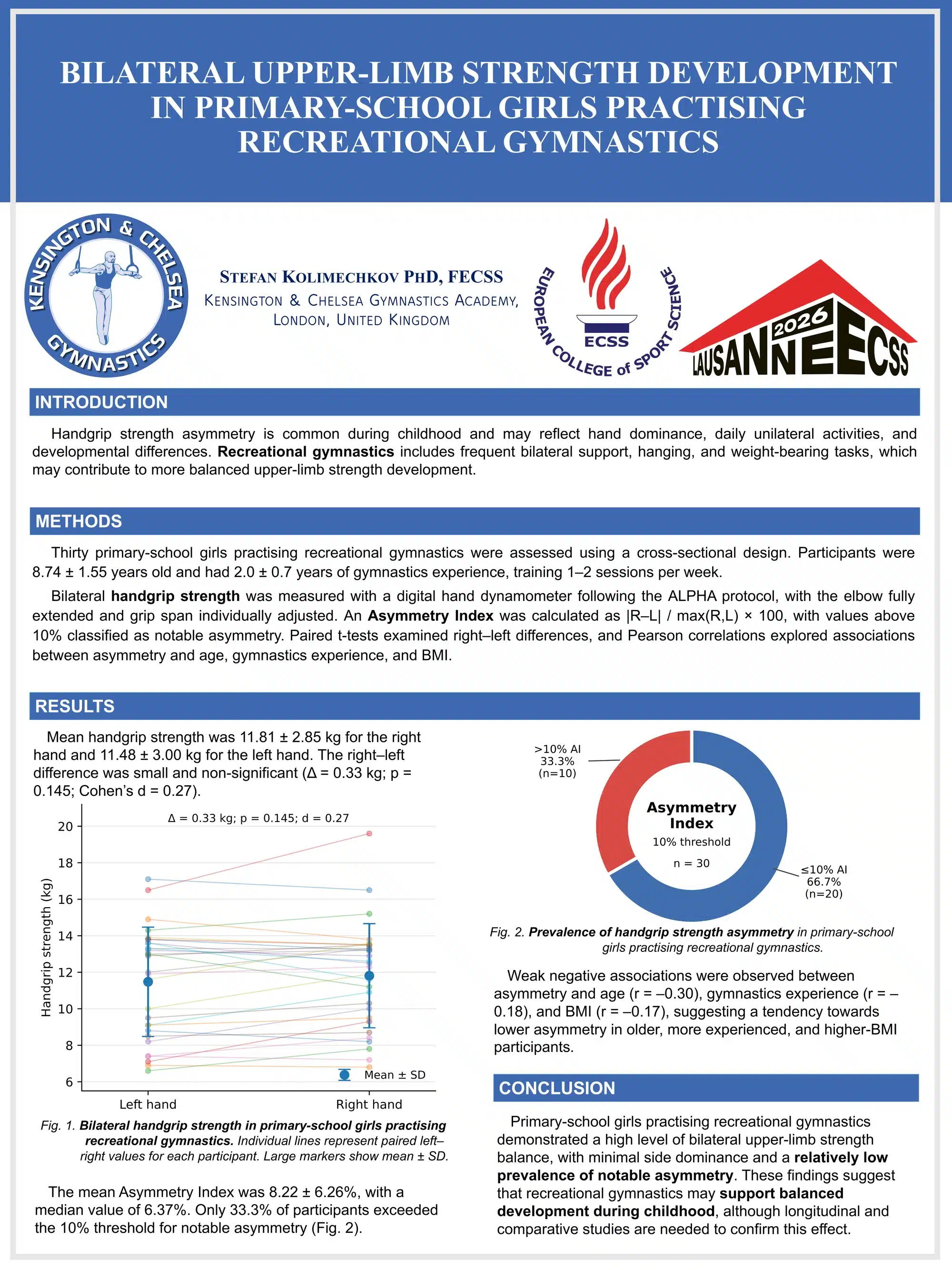
In Lausanne, I presented Bilateral Upper-Limb Strength Development in Primary-School Girls Practising Recreational Gymnastics. The cross-sectional study involved 30 girls, with an average age just under nine, who attended recreational gymnastics once or twice each week [17].
Right and left handgrip strength were measured using an established field-testing approach [18]. The group average showed only a small difference between sides, while individual children still varied. The published congress abstract provides the detailed statistics [17].
The study had no non-gymnastics comparison group and did not follow the girls over time. It cannot show that gymnastics caused the average pattern. Handgrip is one measure, not a complete account of upper-limb strength, whole-body strength or gymnastics ability. A threshold used in the poster was a study rule, not a diagnosis; interpretation of upper-limb differences varies with the comparison, movement and population [19].
Transparency note - KGM original finding
This study was conducted through Kensington & Chelsea Gymnastics Academy and presented by the author of this Feature. It receives the same claim limits as the independent studies discussed here.
Preliminary, cross-sectional poster evidence from one recreational setting; not yet a full peer-reviewed article. Detailed statistics are available in the conference abstract and poster.
Match confidence to the study
Four signals, four kinds of confidence
The four signals are not an evidence leaderboard. Each answers a different question.
Keep separate: a group mean, an individual difference and a causal explanation. What this does not establish: that gymnastics produced the pattern, that a study threshold diagnoses a child, or that handgrip represents all upper-limb function.
| Signal | Visible study-status label | What it can support | Where the claim stops |
|---|---|---|---|
| 1 - Activity over time | Peer-reviewed longitudinal evidence | Describes change across years in the HOPP cohort. | Does not establish a universal trajectory or a definitive causal verdict on active learning. |
| 2 - Strength intervention | Randomized conference evidence | Tests one nine-week programme within the studied sample. | Does not explain every strength gain or generalise to girls, trained gymnasts or longer programmes. |
| 3 - Uneven-bars example | Exploratory conference evidence | Generates and illustrates an adaptability idea inside gymnastics. | Does not establish a coaching rule. |
| 4 - Girls' handgrip poster | KGM original conference evidence | Reports one local group openly and transparently. | Does not establish cause or diagnose an individual child. |
Signal 1 also contains a separate early signal
The Year 1 movement-skills abstract carries its own label - PRELIMINARY CONFERENCE EVIDENCE - within Signal 1. It helps separate reported activity from measured competence but cannot establish cause.
The reading principle
Publication stage is not a stamp saying "true" or "false". Confidence comes from matching the conclusion to the population, design, measure and scrutiny available.
A peer-reviewed longitudinal study, a randomized conference trial, an exploratory abstract and a KGM original poster do not become equivalent because they share a congress programme. The label is part of the finding.
Nice 1996 to Lausanne 2026
From Nice 1996 to Lausanne 2026
31 congresses - 30 years of European sport science
The European College of Sport Science says its Annual Congress has been organised since the College's inauguration in 1995. The first Annual Congress was held in Nice in 1996; Lausanne 2026 was the 31st edition [24].
Each year, a location is selected through a bidding process. ECSS describes the Congress as one of the world's leading sport-science events and says it welcomes approximately 3,000 international participants each year across lectures, symposia, oral presentations, workshops and posters [24]. Those descriptions belong to ECSS; this chronology records the completed congresses.
Edition numbers, places and years follow the live official ECSS congress history checked on 9 September 2026.
| Edition | Year | Host city | Country |
|---|---|---|---|
| 1ST | 1996 | Nice | France |
| 2ND | 1997 | Copenhagen | Denmark |
| 3RD | 1998 | Manchester | United Kingdom |
| 4TH | 1999 | Rome | Italy |
| 5TH | 2000 | Jyväskylä | Finland |
| 6TH | 2001 | Cologne | Germany |
| 7TH | 2002 | Athens | Greece |
| 8TH | 2003 | Salzburg | Austria |
| 9TH | 2004 | Clermont-Ferrand | France |
| 10TH | 2005 | Belgrade | Serbia |
| 11TH | 2006 | Lausanne | Switzerland |
| 12TH | 2007 | Jyväskylä | Finland |
| 13TH | 2008 | Estoril | Portugal |
| 14TH | 2009 | Oslo | Norway |
| 15TH | 2010 | Antalya | Türkiye |
| 16TH | 2011 | Liverpool | United Kingdom |
| 17TH | 2012 | Brussels | Belgium |
| 18TH | 2013 | Barcelona | Spain |
| 19TH | 2014 | Amsterdam | Netherlands |
| 20TH | 2015 | Malmö | Sweden |
| 21ST | 2016 | Vienna | Austria |
| 22ND | 2017 | MetropolisRuhr | Germany |
| 23RD | 2018 | Dublin | Ireland |
| 24TH | 2019 | Prague | Czech Republic |
| 25TH | 2020 | Virtual | Online · no host country |
| 26TH | 2021 | Virtual | Online · no host country |
| 27TH | 2022 | Seville | Spain |
| 28TH | 2023 | Paris | France |
| 29TH | 2024 | Glasgow | United Kingdom |
| 30TH | 2025 | Rimini | Italy |
| 31ST | 2026 | Lausanne | Switzerland |
ECSS congress history, completed. All 31 completed ECSS Annual Congresses from Nice 1996 to Lausanne 2026, using official ECSS edition numbers and English city names [24]. National flags identify physical host countries; a globe marks each virtual edition.
The completed-congress record
The completed-congress record
Three decades seen from inside ECSS
Professor Asgeir Mamen has attended every ECSS Annual Congress from Nice 1996 through Lausanne 2026. In his view, the College now knows far more about the benefits of physical activity, while important questions remain about the lower and upper limits of activity and sedentary time for health [8]. His perspective captures what a long-running congress can do: accumulate knowledge while making the next uncertainty more precise.
What families can carry home
What families can carry home
1 - Look beyond the total minutes
Activity matters, but families can also ask: Did the child have a chance to learn? Was the activity enjoyable? Did they feel able to join in? Could the family find and reach the opportunity? These questions do not replace activity guidance; they help make movement possible and meaningful.
2 - Notice capability, not appearance
A child can become stronger or more skilful without looking different. Strength, muscle thickness, technique and confidence are not interchangeable. A more useful conversation with a coach concerns what the child can now do with appropriate control and what they are ready to learn next.
3 - Ask whether a skill remains dependable
Small adjustments may help a gymnast cope with timing, growth and normal differences between repetitions. The aim is not variation for its own sake. It is a safe, effective skill that remains dependable.
4 - Read the evidence label
Ask whether the source is a peer-reviewed paper, conference abstract, exploratory study or KGM original finding. Then use the Claim Ladder: WHO? - DESIGN? - MEASURE? - RESULT? - CLAIM?
Scientific service
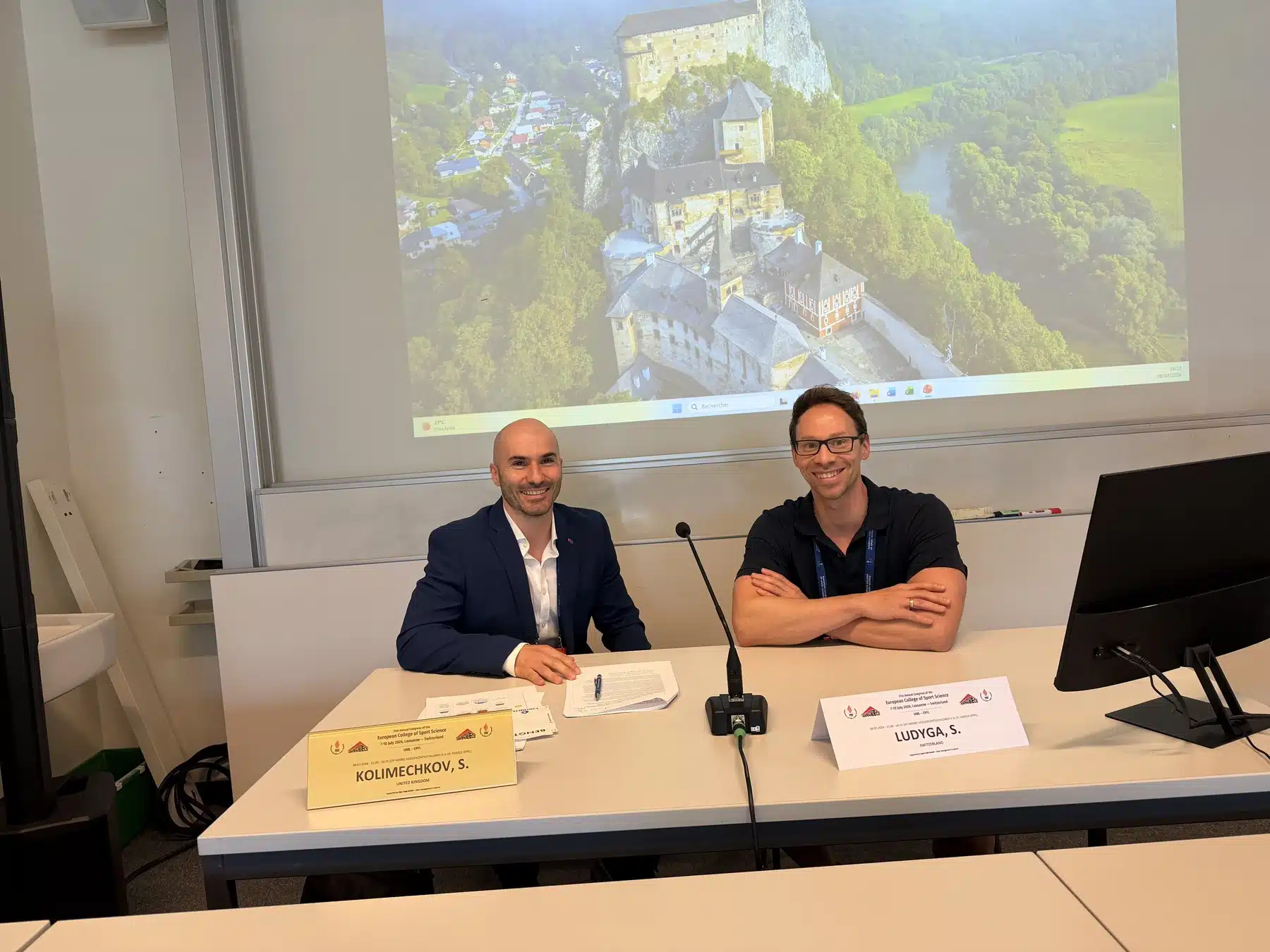
In Lausanne, I co-chaired the podium session Adolescents/Children II with Professor Sebastian Ludyga of the University of Basel [25] and the poster session Health and Fitness / Ageing II with Mikio Hiura of Aomori University.
Chairing is scientific service: welcoming presenters, keeping a session moving, protecting time for questions and helping an audience examine methods and conclusions. Listening closely across a full session is also part of how useful questions travel from an international congress back to family practice.
2019 to 2022
Presenting and serving at ECSS
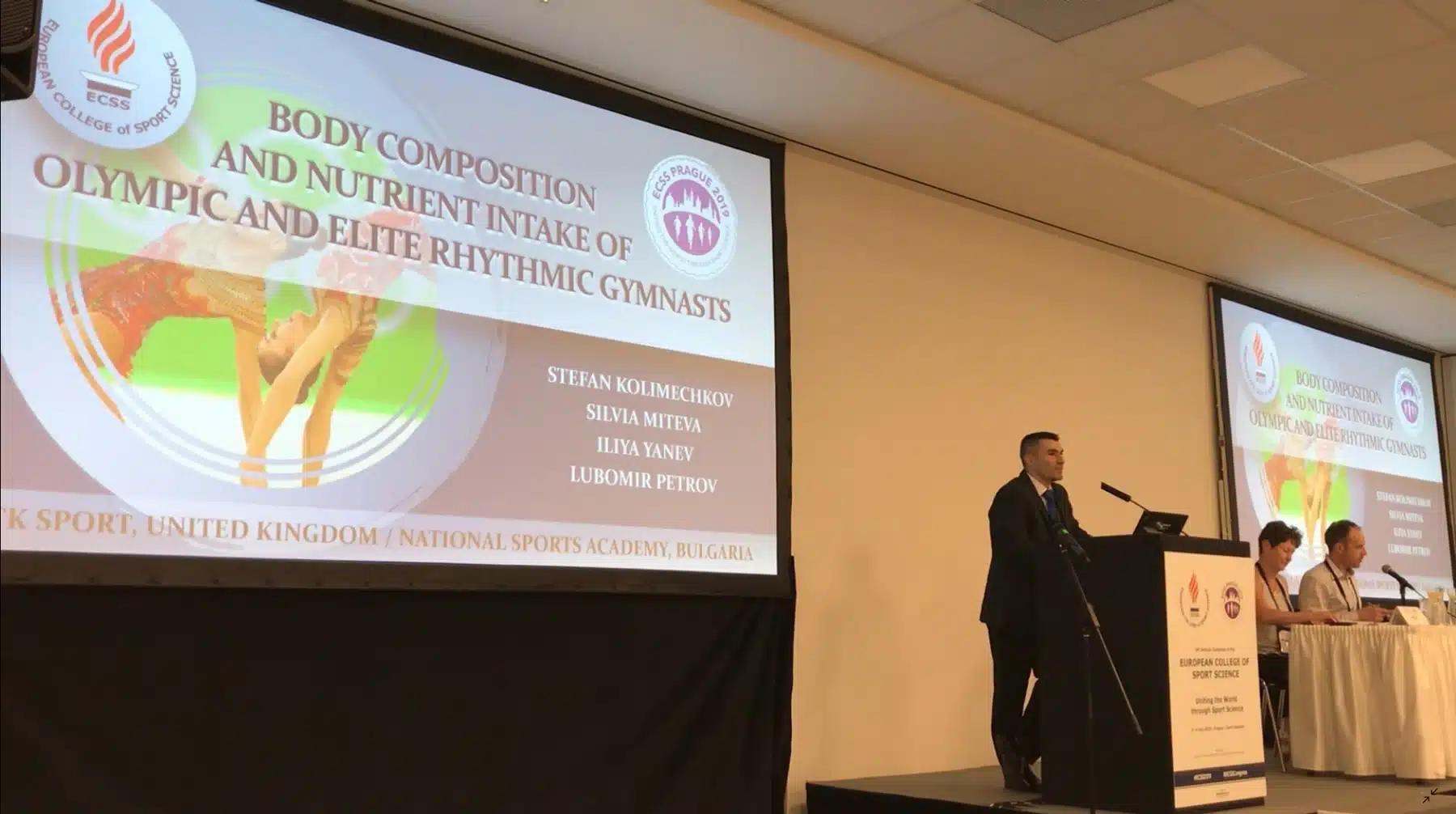
My ECSS membership began in 2017 [23]. The detailed record starts with my first congress presentation in 2019 and gives the full title and format of every presentation I delivered, together with each scientific-session chair role. The vertical line keeps all eight congress years visible at a glance.
First ECSS presentation
Podium presentation
Body composition and nutrient intake of Olympic and elite rhythmic gymnasts.
Research presented online
Virtual presentation
Artistic gymnastics improves health-related biomarkers at primary school age.
Research presented online
Virtual presentation
Relative handgrip strength is a better indicator than absolute handgrip strength for the assessment of health-related musculoskeletal fitness in children.
Presentation and first chair role
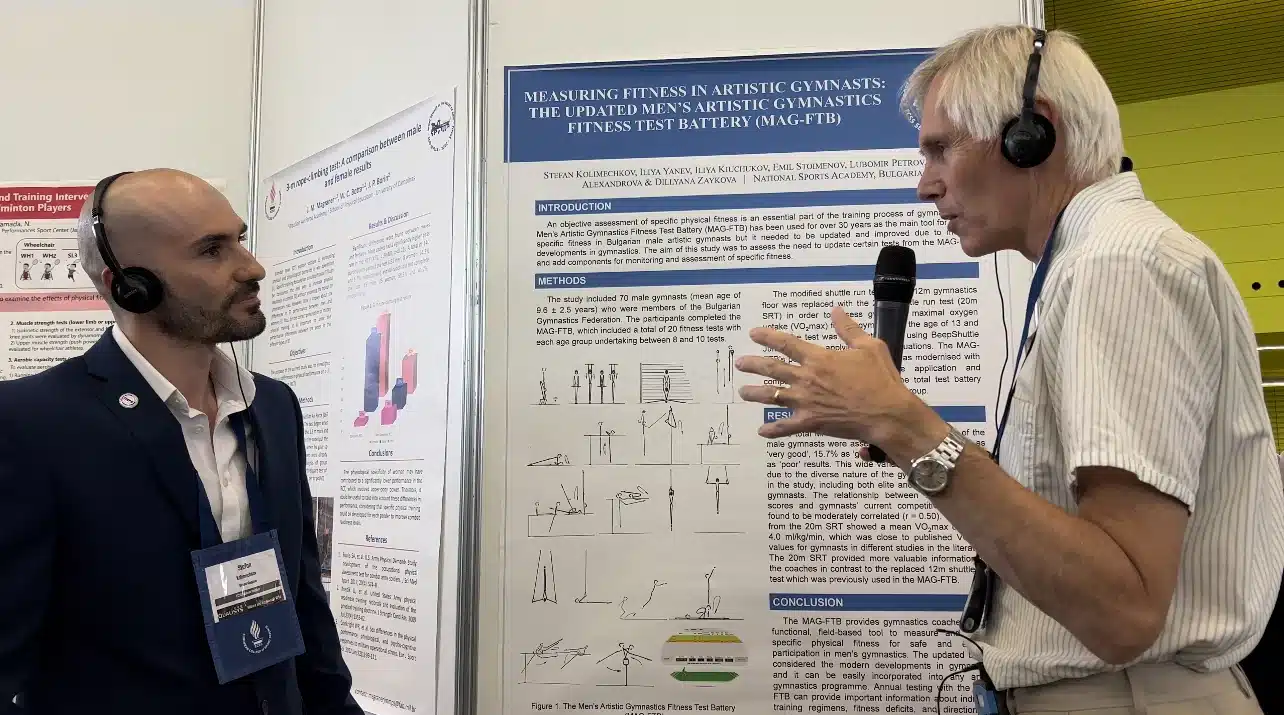
Poster presentation
Measuring fitness in artistic gymnasts: The updated men's artistic gymnastics fitness test battery (MAG-FTB).
Scientific service: chaired the podium session Health and Fitness in Children.
A professional connection begins
Professor Mamen chaired the poster session in which I presented the MAG-FTB research. We first engaged there and have met at every annual ECSS Congress since - Paris, Glasgow, Rimini and Lausanne - continuing conversations that connect research, teaching, physical activity and health [8, 23].
The photograph records two complementary roles at work: presenting a study and chairing the scientific discussion around it.
2023 to 2026
The ECSS line continues
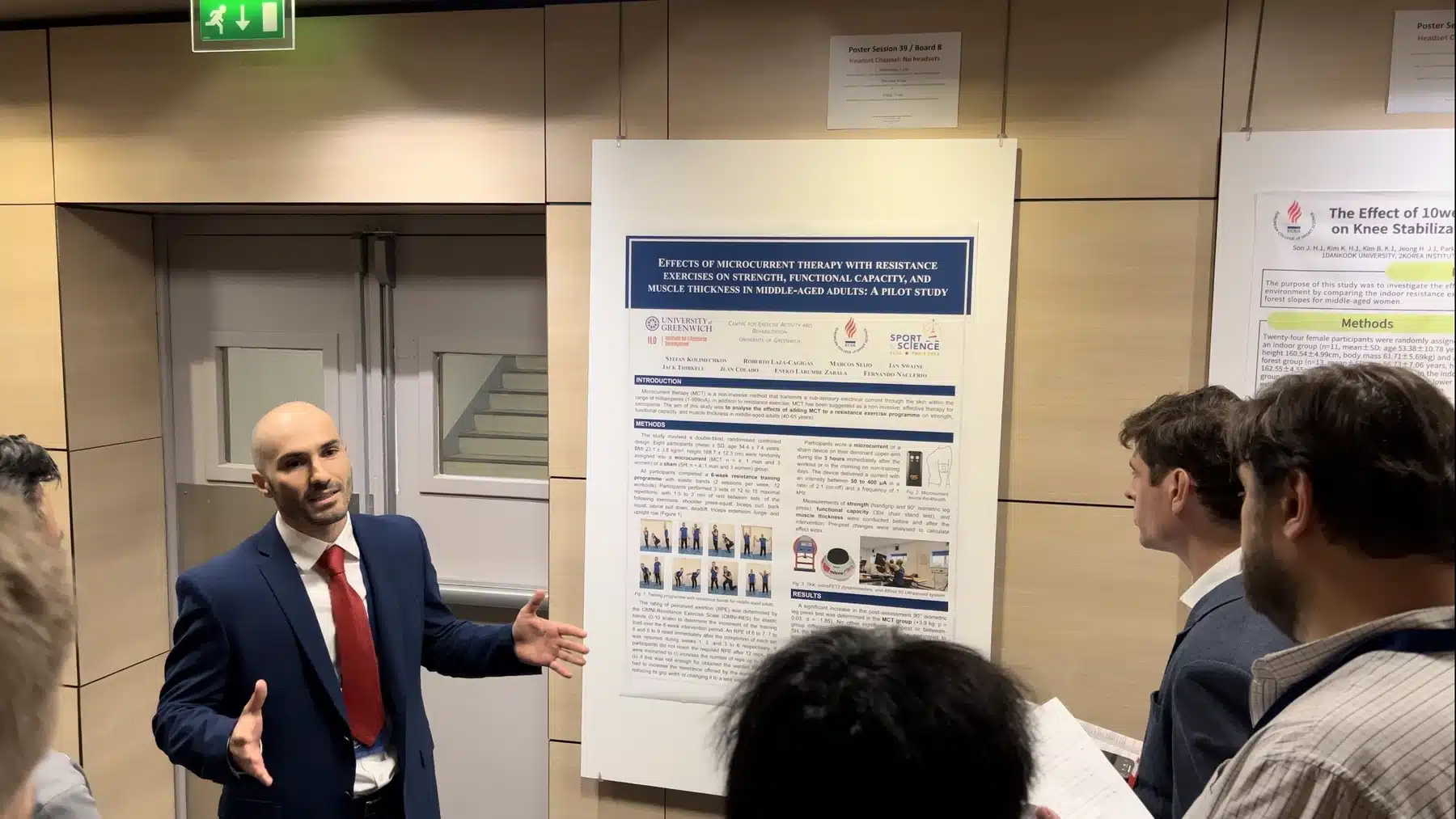
Poster presentation
Effects of microcurrent therapy with resistance exercises on strength, functional capacity and muscle thickness in middle-aged adults: A pilot study.
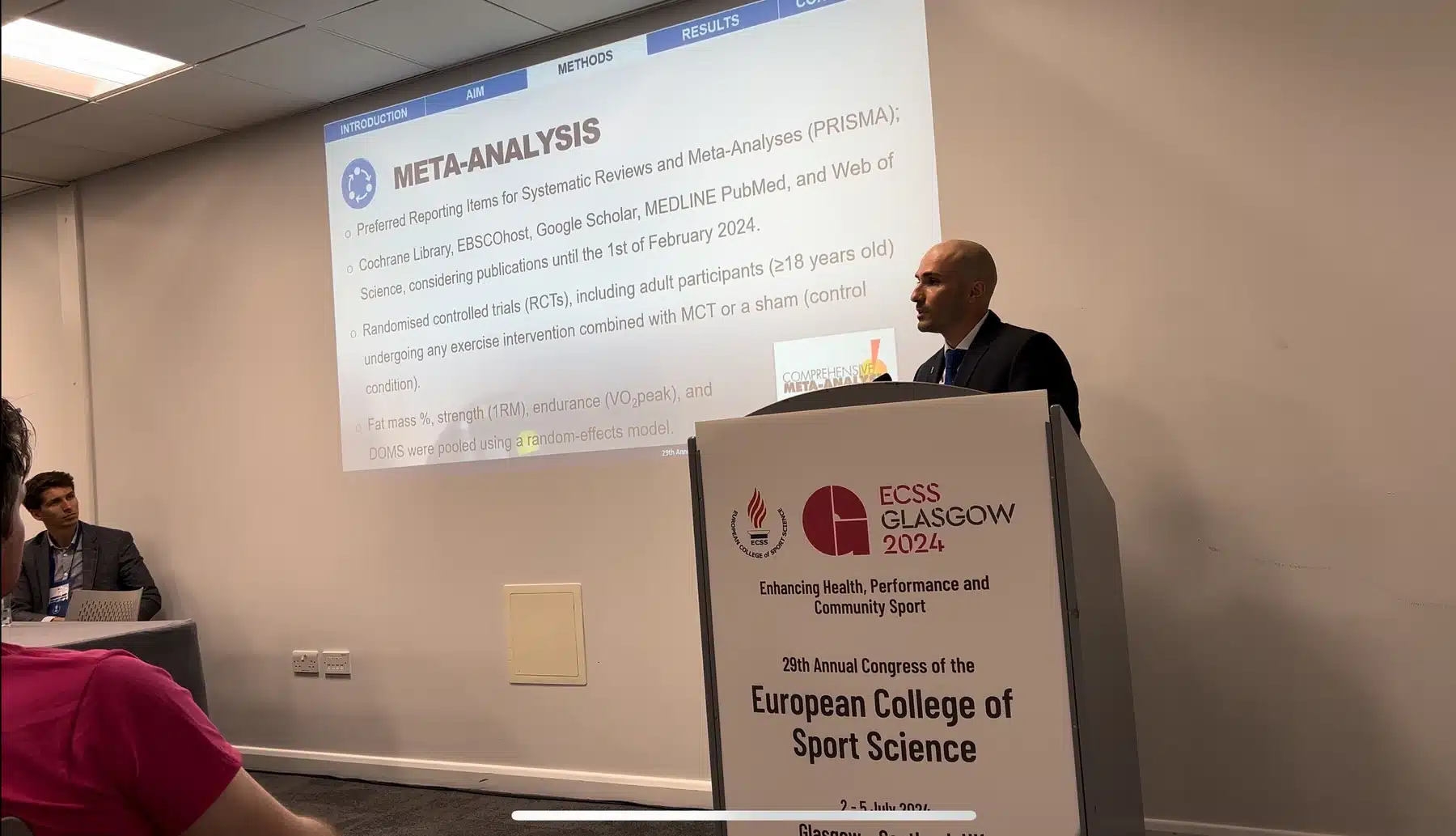
Podium presentation
Effects of microcurrent therapy added to physical exercise on body composition, performance, and muscle soreness: A meta-analysis of randomised controlled trials.
Scientific service: chaired the podium session Physical Education and Pedagogics / Teachers and the poster session Children, Talents and Young Athletes.
ECSS Fellowship: recognised as an ECSS Fellow [23, 26].
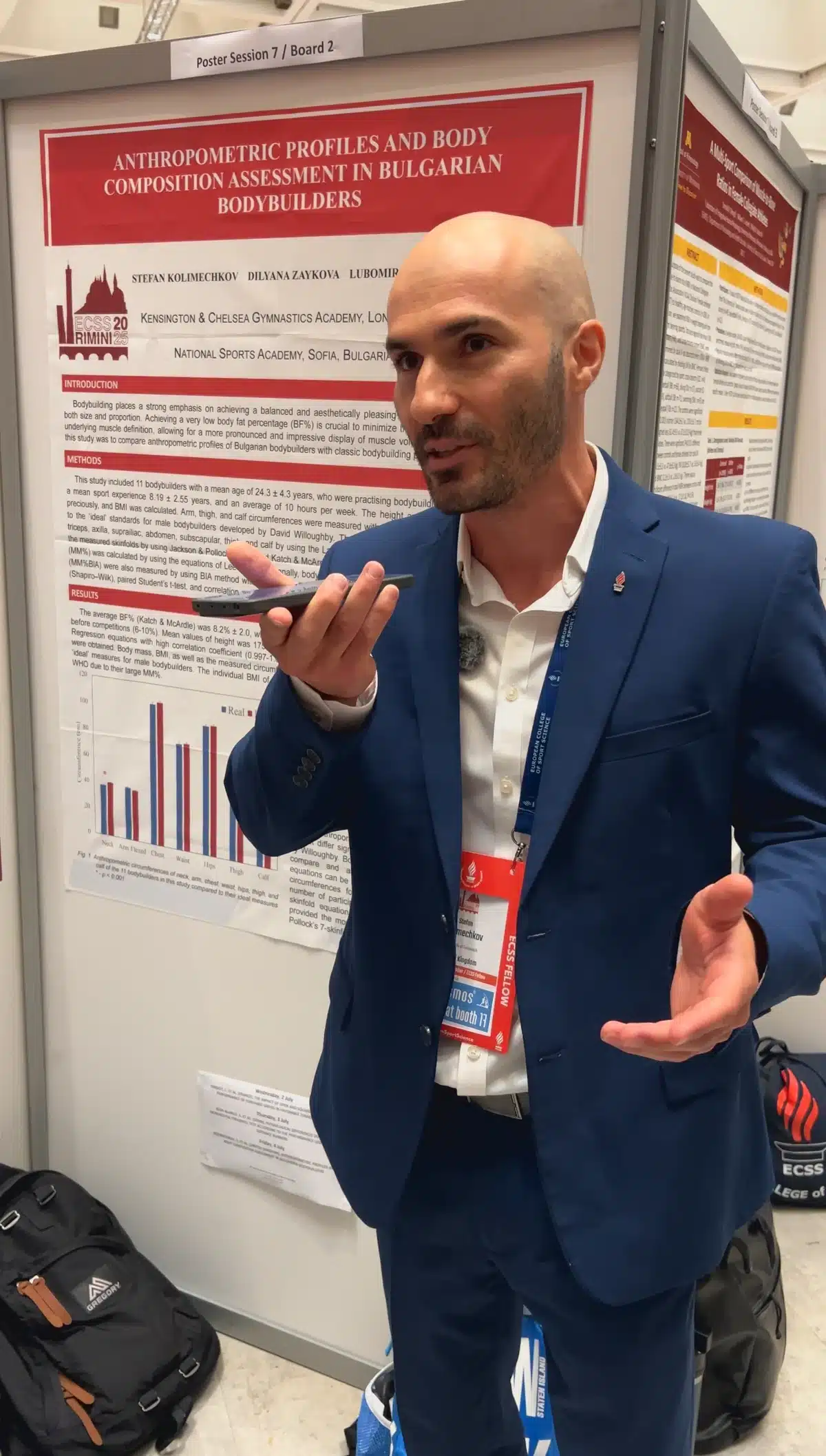
Poster presentation
Anthropometric profiles and body composition assessment in Bulgarian bodybuilders.
Scientific service: chaired the podium session Physical Education II and the poster session Ageing II.
Lausanne 2026
Lausanne 2026
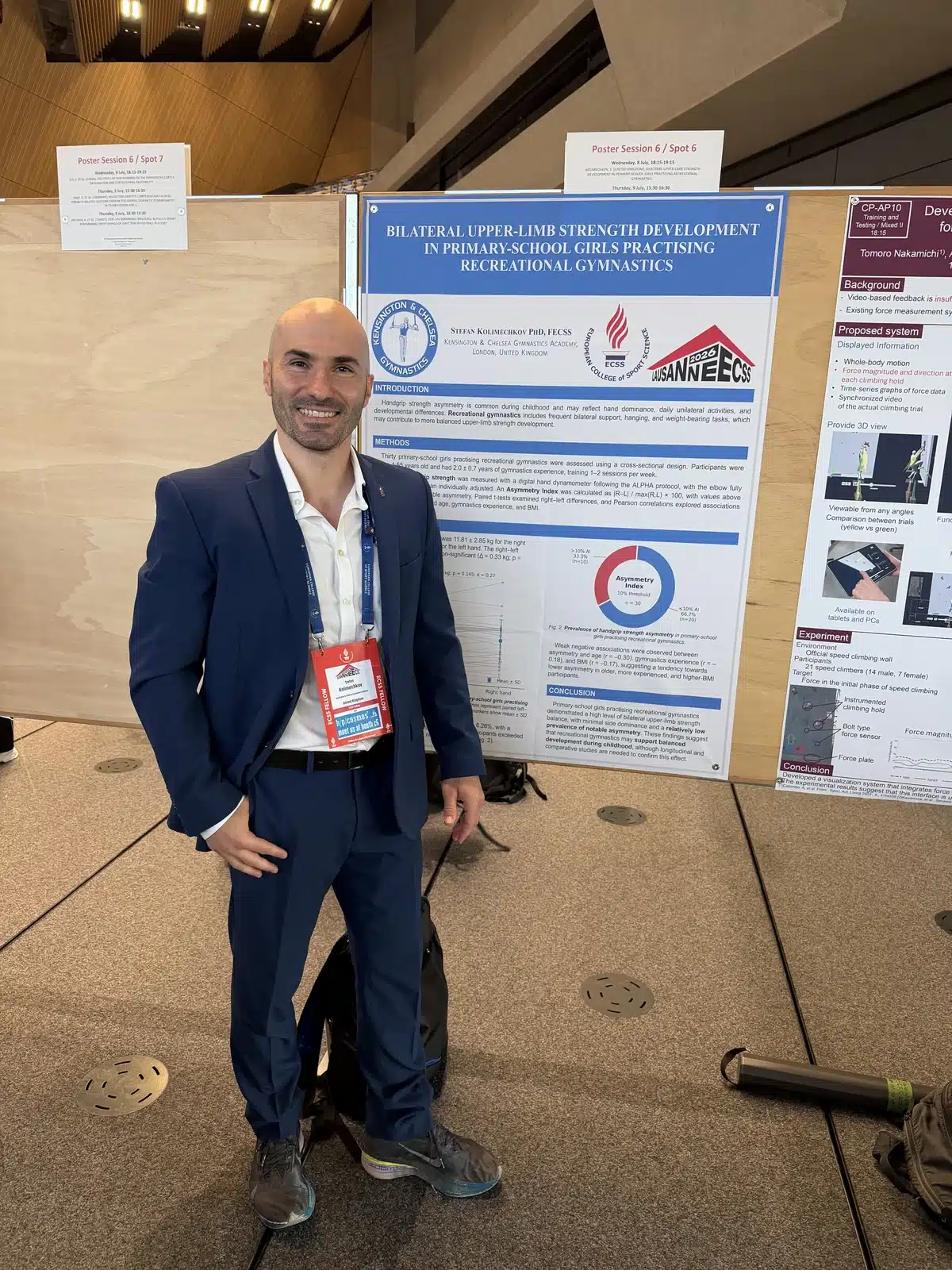
Poster presentation
Bilateral upper-limb strength development in primary-school girls practising recreational gymnastics [17].
Scientific service: chaired the podium session Adolescents/Children II and the poster session Health and Fitness / Ageing II.
What comes home
The value of bringing science from Lausanne to London is not the number of abstracts collected. It is learning to carry each conclusion with its limits still attached.
Across the four signals, the lessons are modest. Activity and movement competence answer different questions. Strength can improve without a matching change in measured muscle thickness. A dependable skill can include adaptable execution. A local poster can contribute when its preliminary status remains visible.
Back in London, every decision concerns a particular child in a particular week. No abstract can know that child completely. Research can still help the adults around them notice more, assume less and ask better questions.
Sources and evidence notes
- European College of Sport Science. (2026). ECSS Lausanne 2026. University of Lausanne and EPFL. Official congress site. Accessed 9 September 2026.
- Fredriksen, P. M., Kharlova, I., Hæhre, M. V., & Mamen, A. (2026). Longitudinal trends in physical activity and sedentary behaviour among school children in Norway: The Health Oriented Pedagogical Project (HOPP). PLOS ONE, 21(4), e0345363. doi:10.1371/journal.pone.0345363. PMID 41950266.
- Nie, Y., You, Z., & Zhang, S. (2026). Unveiling the paradoxical relationship between physical activity and fundamental movement skill in early-year schoolchildren: A preliminary study [Conference abstract 1168]. In B. Kayser, K. Aminian, G. Millet, E. Tsolakidis, A. Jones, J. L. Thompson, & M. F. Piacentini (Eds.), Book of Abstracts of the 31st Annual Congress of the European College of Sport Science (p. 628). European College of Sport Science. Official abstract.
- World Health Organization. (2020). WHO guidelines on physical activity and sedentary behaviour. Official publication.
- World Health Organization. (2021). Promoting physical activity through schools: A toolkit. ISBN 978-92-4-003592-8. Official WHO publication page.
- Bourke, M., Wang, H. F. W., Wicks, H., Barnett, L. M., Cairney, J., & Fortnum, K. (2025). Children's and adolescents' actual motor competence, perceived physical competence and physical activity: A structural equation modelling meta-analysis. Sports Medicine, 55(8), 1923-1936. doi:10.1007/s40279-025-02233-2. PMID 40329142.
- Grauduszus, M., Koch, L., Wessely, S., & Joisten, C. (2024). School-based promotion of physical literacy: A scoping review. Frontiers in Public Health, 12, 1322075. doi:10.3389/fpubh.2024.1322075. PMID 38525332.
- Mamen, A. (2026, 9 September). Expert Lens interview for Kensington Gymnastics Magazine [Written interview].
- Kristiania University College. (2026). Asgeir Mamen: Professor, Department of Health and Exercise. Official staff profile. Accessed 9 September 2026.
- Mamen, A. (2011). Aspects of using physical training on patients with substance dependence and additional mental distress [Doctoral thesis, University of Bergen]. Bergen Open Research Archive.
- Komm, Y., Held, S., Comfort, P., Geisler, S., & Augste, C. (2026). Different age, similar adaptation? A randomized controlled trial comparing training-induced hypertrophy and strength across youth age groups [Conference abstract 1646]. In B. Kayser, K. Aminian, G. Millet, E. Tsolakidis, A. Jones, J. L. Thompson, & M. F. Piacentini (Eds.), Book of Abstracts of the 31st Annual Congress of the European College of Sport Science (p. 63). European College of Sport Science. Official abstract.
- Stricker, P. R., Faigenbaum, A. D., McCambridge, T. M., & Council on Sports Medicine and Fitness. (2020). Resistance training for children and adolescents. Pediatrics, 145(6), e20201011. doi:10.1542/peds.2020-1011. PMID 32457216.
- Enomoto, S., & Tottori, N. (2025). Muscle morphological adaptations to resistance training and sports participation in children and adolescents: A scoping review. Frontiers in Sports and Active Living, 7, 1646835. doi:10.3389/fspor.2025.1646835. PMID 41132552.
- Cowin, J., Nimphius, S., Fell, J., Culhane, P., & Schmidt, M. (2022). A proposed framework to describe movement variability within sporting tasks: A scoping review. Sports Medicine-Open, 8, 85. doi:10.1186/s40798-022-00473-4. PMID 35759128.
- Woods, C. T., McKeown, I., Rothwell, M., Araújo, D., Robertson, S., & Davids, K. (2020). Sport practitioners as sport ecology designers: How ecological dynamics has progressively changed perceptions of skill "acquisition" in the sporting habitat. Frontiers in Psychology, 11, 654. doi:10.3389/fpsyg.2020.00654. PMID 32390904.
- Murayama, D. (2026). Functional adaptive variability in uneven bars skill acquisition: An exploratory study using an ecological dynamics framework [Conference abstract 967]. In B. Kayser, K. Aminian, G. Millet, E. Tsolakidis, A. Jones, J. L. Thompson, & M. F. Piacentini (Eds.), Book of Abstracts of the 31st Annual Congress of the European College of Sport Science (pp. 901-902). European College of Sport Science. Official abstract.
- Kolimechkov, S. (2026). Bilateral upper-limb strength development in primary-school girls practising recreational gymnastics [Conference abstract 219]. In B. Kayser, K. Aminian, G. Millet, E. Tsolakidis, A. Jones, J. L. Thompson, & M. F. Piacentini (Eds.), Book of Abstracts of the 31st Annual Congress of the European College of Sport Science (p. 264). European College of Sport Science. Official abstract.
- España-Romero, V., Artero, E. G., Jiménez-Pavón, D., Cuenca-García, M., Ortega, F. B., Castro-Piñero, J., Sjöström, M., Castillo-Garzón, M. J., & Ruiz, J. R. (2010). Assessing health-related fitness tests in the school setting: Reliability, feasibility and safety; the ALPHA Study. International Journal of Sports Medicine, 31(7), 490-497. doi:10.1055/s-0030-1251990. PMID 20432194.
- Foley, R. C. A., Callaghan, D. H., Forman, G. N., Graham, J. D., Holmes, M. W. R., & La Delfa, N. J. (2025). A comprehensive scoping review and meta-analysis of upper limb strength asymmetry. Scientific Reports, 15, 4636. doi:10.1038/s41598-025-87413-w. PMID 39920213.
- Bajer, S., & Ludyga, S. (2026). Age-dependent associations between muscular strength and executive functioning in youth [Conference abstract 764]. In B. Kayser, K. Aminian, G. Millet, E. Tsolakidis, A. Jones, J. L. Thompson, & M. F. Piacentini (Eds.), Book of Abstracts of the 31st Annual Congress of the European College of Sport Science (p. 204). European College of Sport Science. Official abstract.
- Galantine, P., Maso, F., Leroy, P., Piscione, J., Anthony, S., Dambel, L., Hays, A., Bertin, D., Peyrot, N., & Duché, P. (2026). Influence of maturity status, maturation tempo and relative age effect on sprint performance in youth team sports: A cluster-based approach [Conference abstract 1593]. In B. Kayser, K. Aminian, G. Millet, E. Tsolakidis, A. Jones, J. L. Thompson, & M. F. Piacentini (Eds.), Book of Abstracts of the 31st Annual Congress of the European College of Sport Science (p. 205). European College of Sport Science. Official abstract.
- Kayser, B., Aminian, K., Millet, G., Tsolakidis, E., Jones, A., Thompson, J. L., & Piacentini, M. F. (Eds.). (2026). Book of Abstracts of the 31st Annual Congress of the European College of Sport Science, Lausanne, Switzerland, 7-10 July 2026. European College of Sport Science. ISBN 978-3-9818414-9-7. Official eBook of Abstracts.
- STK SPORT. (2026). European College of Sport Science. STK SPORT website. Accessed 11 September 2026.
- European College of Sport Science. (2026). Where We Meet. Annual Congress history and future host list. Official source. Accessed 9 September 2026.
- University of Basel. (2025, 26 June). Faculty of Medicine: Two new professors. Sebastian Ludyga appointed Professor of Sport Pedagogy and Health Development from 1 July 2025. Official university announcement.
- European College of Sport Science. (2026). Fellowship. Official Fellowship information and Fellows directory. Official ECSS Fellowship page. Accessed 11 September 2026.