Kensington Gymnastics Magazine
Issue 1 · January 2026
LONDON & THE WORLD
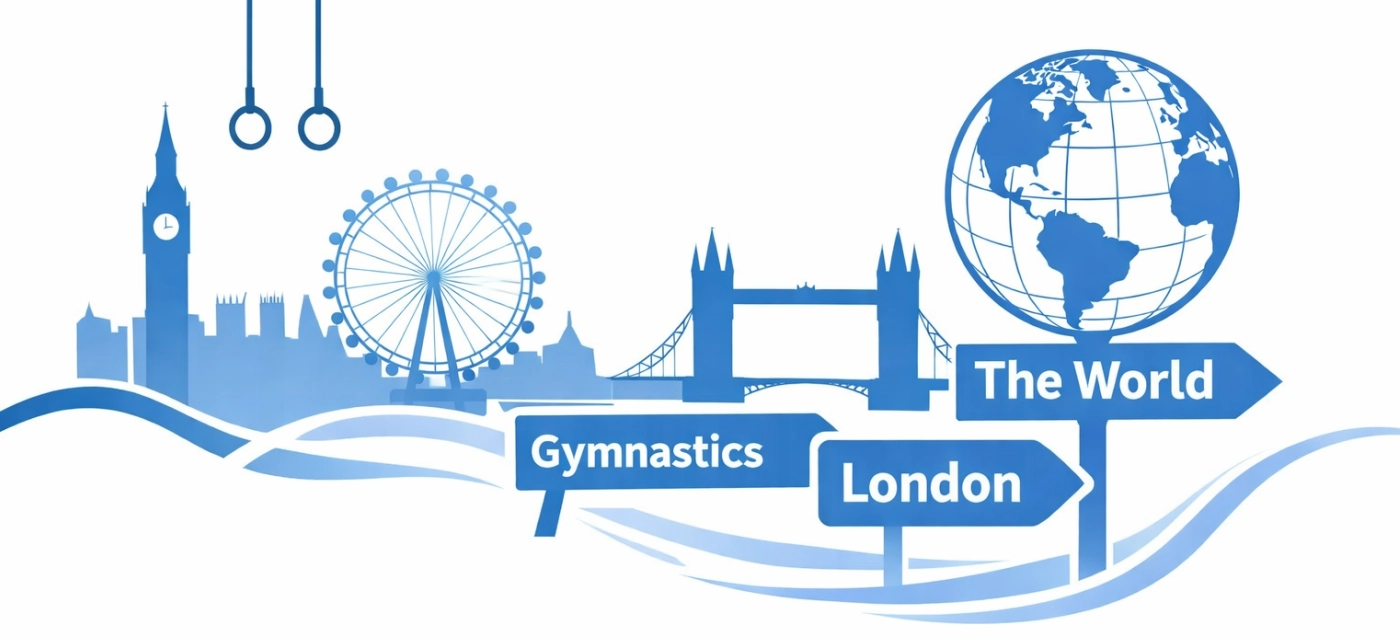
Gymnastics in London
London does not need to be convinced to value excellence. It is a city built on craft: in music, architecture, theatre, science, and sport. Yet when it comes to children’s movement, modern city life can quietly work against us. Space is limited, time is pressured, and many families have to plan movement rather than stumble into it.
Gymnastics fits London unusually well
It is a sport that can be delivered year-round, in compact spaces, and in structured sessions that teach children to move with control. But more than that, it offers something increasingly rare in a busy city: physical literacy: the foundations of strength, balance, coordination, and confidence that support every other sport and, ultimately, long-term health.
A sport with many disciplines — one shared foundation
When people say “gymnastics”, they often mean artistic gymnastics. In reality, gymnastics is a family of disciplines with different traditions, rules, and cultures. In a city like London, families may encounter many forms: artistic and rhythmic, trampoline, acrobatic, and Gymnastics for All.
The disciplines may look different, but the foundation is shared: learning how to control the body in space.
For families, it helps to think of gymnastics not as a single pathway, but as a movement education, something that can be experienced recreationally, competitively, or simply as a lifelong practice.
Recreational gymnastics in a world of pathways
In many sports, public attention gravitates toward elite performance. Gymnastics is no exception. Yet the truth is that the largest part of gymnastics in any city is not elite, it is recreational.
Recreational gymnastics is where most children begin. It is where movement confidence is formed. It is where the majority of families engage with the sport, and where the widest public-health benefit is created.
In London, recreational gymnastics deserves to be recognised as more than a “starter phase”. It is the core of the ecosystem, the place where good coaching, safe progression, and joyful learning matter most.
Competition in London — more varied than many families realise
London’s gymnastics calendar includes a wide range of events. Some competitions sit clearly within performance pathways; others are designed to encourage participation, learning, and community.
For many families, competitions are the first introduction to judging, routines, and the emotional weight of performance. Approached well, competitions can teach resilience, composure, and self-awareness. Misunderstood, they can create pressure that doesn’t belong in childhood sport.
One goal of this magazine is to help London families understand competition culture with clarity, so events become experiences of growth rather than sources of confusion.
Adult and masters gymnastics — a hidden opportunity
London is filled with adults who once moved well, and who now sit for long hours, commute, and live in bodies that gradually become stiffer, weaker, and less confident. This is not a personal failing. It is an urban reality.
Adult gymnastics exists here, and so does a growing culture of adults returning to the sport or trying it for the first time. Within that broad adult community, there is also a smaller group whose approach is more systematic: adults who train seriously over time — masters athletes.
What makes London special is that it contains both: beginners seeking a joyful re-entry into movement, and committed adults seeking long-term development. The potential is enormous, not only for sport, but for public health.
A London standard for gymnastics education
London is a great city not because it claims to be, but because it continuously builds institutions, ideas, communities. Gymnastics in London deserves that same standard of thoughtful development.
This magazine will not attempt to replace governing bodies or speak on behalf of the sport. But it will do something cities thrive on: education.
Issue by issue, we will raise the level of understanding around gymnastics — the science, the culture, the rules, the pathways, and the long-term meaning of the sport. We will also map the landscape of gymnastics in London: how disciplines differ, how competitions work, and what “good coaching” looks like across ages and goals.
If more London families understand gymnastics more clearly, everyone wins: children move better, parents worry less, coaches communicate more effectively, and gymnastics becomes what it has always had the potential to be — a lifelong foundation for health and human development.
Key message: In a city that limits space and time, gymnastics builds physical literacy that supports every sport and long-term health.
Welcome to gymnastics in London.