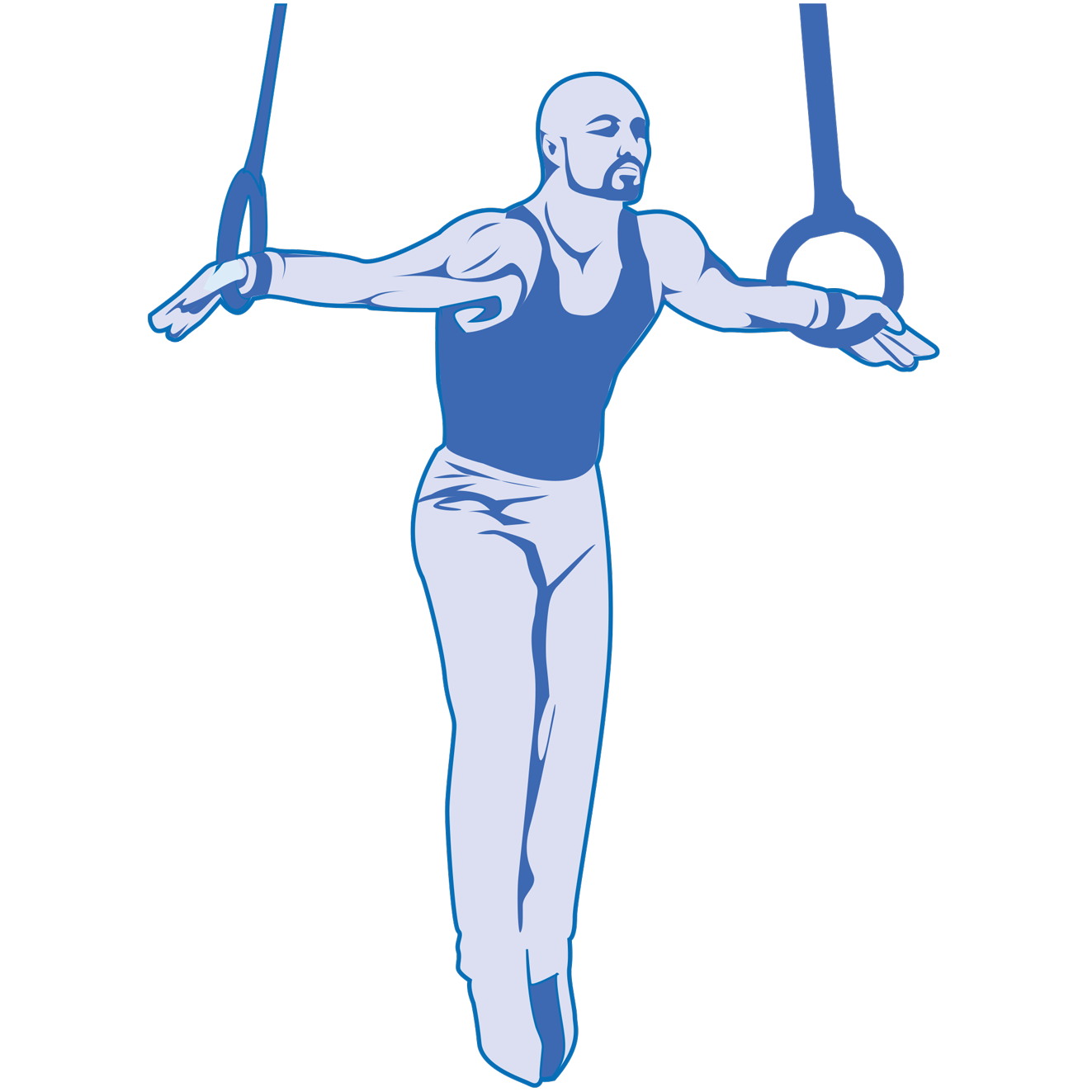
Words, questions and myths form three different doors into the same sport. This family helps readers recognise what gymnastics means—not only what it looks like.
Safety Without Panic
Five familiar beliefs about risk, falls and growing bodies—examined honestly
“Is gymnastics safe?” sounds like a simple question. It is not.
Safety is sometimes discussed as though an activity must belong in one of two boxes: safe or dangerous. Children’s movement does not work like that. Running, climbing, cycling, playground activity and gymnastics all contain the possibility of a fall, a mistake or an injury. The important questions concern what the child is being asked to do, how the task is introduced, what support is present and whether the demands suit that child at that moment.
Gymnastics has real injury risks. Research in competitive gymnastics and paediatric emergency departments makes that clear[1,2]. But those findings do not mean that every gymnast faces the same risk, or that evidence from high-level training can be transferred directly to a young child attending a recreational class.
“Gymnastics is too dangerous.”
Risk does not mean inevitable harm.Why people believe it
Elite gymnastics is dramatic. The apparatus is high, the skills are difficult and televised falls are memorable. A short video of an injury can become someone’s entire picture of the sport.
The word gymnastics also covers very different experiences. A child learning a low balance, an adolescent training a difficult dismount and an international gymnast preparing for competition are all participating in gymnastics—but they are not receiving the same exposure.
What is actually true
Injuries do occur in gymnastics. A systematic review of competitive artistic gymnastics found substantial variation between studies and identified higher competitive level and exposure to competition as risk factors[1]. A separate study of gymnastics injuries treated in United States emergency departments confirmed that children and adolescents present with fractures, sprains, concussions and other injuries[2].
Those studies matter, but they answer particular questions about particular populations. They do not provide a clean injury probability for a child attending one or two recreational classes in London. Injury definitions, training levels, ages and exposure measurements differ, and some research is based only on injuries serious enough to reach an emergency department.
“Too dangerous” therefore hides the information families actually need. A responsible gymnastics environment cannot promise zero risk. It can manage risk through appropriate tasks, equipment, progression, recovery, communication and professional judgement.
“Children will hurt themselves if they fall.”
A fall is not automatically an injury.Why people believe it
Adults naturally want to protect children. When a child loses balance or lands unexpectedly, the movement can look frightening—especially when the adult cannot judge the height, speed or skill involved.
In everyday language, a fall and an injury can begin to sound like the same thing.
What is actually true
A fall is an event. An injury is one possible outcome. What happens depends on several interacting details: the height, speed, direction, surface, equipment, body position, task and the child’s readiness.
Evidence from playground research helps illustrate why context matters. A systematic review identified fall height, surfacing and equipment features among the factors associated with playground injury[4]. That research is not a measure of gymnastics safety, but it shows why the word fall alone cannot describe the level of risk.
In gymnastics, balance can be lost while a child is learning. The answer is not to pretend that every fall is harmless. It is to reduce unnecessary exposure: use suitable heights and equipment, teach manageable steps, and change the task when control is not yet sufficient. These are principles of responsible coaching, not a guarantee against injury.
If pain or injury follows a fall, it must be reported and respected. British Gymnastics guidance states that gymnasts should not hide pain, injury or illness and that clubs and coaches should take reports seriously[3].
“Soft play is safer than gymnastics.”
Soft does not mean risk-free.Why people believe it
Soft play looks forgiving. The surfaces are padded, the colours are friendly and the word play feels less demanding than the word gymnastics.
A gymnastics hall, by contrast, contains technical apparatus and structured tasks. That can make it appear more dangerous before anyone has examined what children are actually doing in either environment.
What is actually true
Impact-absorbing surfaces matter. Playground research indicates that non-impact-absorbing surfaces and greater fall heights are associated with higher injury risk. It also shows that injury can still occur on impact-absorbing surfaces, particularly when height increases[4].
Softness is therefore one part of safety, not a complete safety system.
The activities, heights, equipment, ages, supervision, injury definitions and time spent participating are not equivalent. It would be misleading to declare either environment universally safer.
A soft-play setting can include climbing, speed, collisions and falls. A gymnastics class can include instruction, waiting turns, low-level tasks, planned progressions and specialist equipment. Either description may change from one venue or session to another.
“Gymnastics damages children’s bodies.”
Load is not automatically damage.Why people believe it
Gymnastics asks children to support weight through their hands, land from jumps, hang, rotate and repeat movements. Families may hear about wrist, back, knee, ankle or shoulder problems and conclude that the sport must be damaging the body.
What is actually true
Physical load is not automatically damage. Bodies respond to movement and loading, but the response depends on the amount, intensity, recovery, development and individual capacity involved.
The evidence contains both benefits and risks. Competitive-gymnastics research documents important injury patterns[1]. At the same time, a systematic review found higher bone mineral values in groups of artistic and rhythmic gymnasts than in untrained comparison groups[5]. These findings do not cancel each other. They show why a single word such as damage is too blunt.
An injury is also not automatically permanent harm. Injuries differ in type and severity, and they require appropriate assessment and management. Pain can have several possible sources; it should be treated as information that deserves attention, not as proof that a child is weak and not as something to hide.
British Gymnastics advises that a gymnast’s report of pain, injury or illness must be respected and that medical advice should be recommended where there is doubt[3].
“Gymnastics is bad for growing children.”
Growth is not a reason to stop.Why people believe it
Many elite gymnasts are shorter than average, and some mature later than their peers[6]. Children also change quickly during growth spurts, when movements that once felt easy may temporarily feel unfamiliar or uncomfortable.
These observations can be turned into a simple story: gymnastics must stop growth or harm growing bodies.
What is actually true
Short stature among elite gymnasts cannot be interpreted as proof that training caused it. Gymnastics selects for particular physical characteristics, and children who remain at high level are not a random sample of all children.
A review convened by the FIG Scientific Commission concluded that the available evidence did not show that intensive artistic gymnastics training compromised attained adult height or reduced the growth of body segments. The authors also emphasised limitations in the evidence and insufficient information for some endocrine questions[6].
That conclusion is not permission to ignore growth-related concerns. A 2026 systematic review and meta-analysis reported substantial wrist pain and injury in adolescent artistic gymnasts, while rating the certainty of the included evidence as low to very low[7]. British Gymnastics guidance also encourages discussion of pain during growth spurts[3].
Growing children need training that can change with them. A sudden change in pain, coordination, tolerance or confidence may mean that the task or amount of training needs to be reconsidered.
From Reassurance to Responsibility
What does responsible risk management look like?
No coach, club or activity can remove every possibility of injury. Responsible practice is visible in the decisions made before, during and after a difficult moment.
The child can report pain, fear or uncertainty without being mocked, ignored or treated as a problem. Parents and coaches share relevant information.
The task, height, equipment and level of support match the gymnast’s current readiness—not merely their age, group or ambition.
Difficulty is built through understandable steps. A child is not rushed into a larger movement simply because another child can perform it.
Adults notice changes in control, pain, fatigue, confidence and tolerance, especially during growth or after time away from training.
When there is doubt about pain, injury or illness, activity is adapted and advice is sought from an appropriately qualified healthcare professional[3].
Three useful questions after a fall or painful moment
Risk becomes easier to understand when families move from broad labels to specific observations and responsible decisions.
Honest safety is stronger than a promise
Gymnastics should not be described as harmless. It should not be described as inevitably harmful either.
Children deserve movement, challenge and the satisfaction of learning difficult things. They also deserve adults who recognise that confidence does not replace preparation, softness does not remove every hazard and ambition does not make pain irrelevant.
The most useful family position is neither fear nor blind trust. It is informed attention: understanding the task, listening to the child, noticing change and expecting responsible decisions when something does not feel right.
Safety is not the absence of every fall. It is the presence of good judgement before, during and after one.
References
- Campbell, R. A., Bradshaw, E. J., Ball, N. B., Pease, D. L., & Spratford, W. (2019). Injury epidemiology and risk factors in competitive artistic gymnasts: A systematic review. British Journal of Sports Medicine, 53(17), 1056–1069. DOI · PubMed
- Tisano, B., Zynda, A. J., Ellis, H. B., & Wilson, P. L. (2022). Epidemiology of pediatric gymnastics injuries reported in US emergency departments: Sex- and age-based injury patterns. Orthopaedic Journal of Sports Medicine, 10(6), 23259671221102478. DOI · PubMed
- British Gymnastics. (2024). Pain, injury & illness: Guidance for good practices (Version 1, June 2024). Official guidance
- Richmond, S. A., Clemens, T., Pike, I., & Macpherson, A. (2018). A systematic review of the risk factors and interventions for the prevention of playground injuries. Canadian Journal of Public Health, 109(1), 134–149. DOI · PubMed
- Jürimäe, J., Gruodyte-Raciene, R., & Baxter-Jones, A. D. G. (2018). Effects of gymnastics activities on bone accrual during growth: A systematic review. Journal of Sports Science & Medicine, 17(2), 245–258. PubMed · PMC
- Malina, R. M., Baxter-Jones, A. D. G., Armstrong, N., Beunen, G. P., Caine, D., Daly, R. M., Lewis, R. D., Rogol, A. D., & Russell, K. (2013). Role of intensive training in the growth and maturation of artistic gymnasts. Sports Medicine, 43(9), 783–802. DOI · PubMed
- DiLeo, S. D. F., Noori, A., Day, E., Burkhart, T. A., Paul, R. A., & Chan, A. H. W. (2026). Epidemiology and risk factors of wrist pain and injury in adolescent artistic gymnasts: A systematic review and meta-analysis. Orthopaedic Journal of Sports Medicine, 14(1), 23259671251395329. DOI · PubMed