Words, questions and myths form three different doors into the same sport. This family helps readers recognise what gymnastics means—not only what it looks like.
What Does My Coach Mean?
Eight Everyday Phrases Children Hear in Gymnastics Class
A gymnastics coach may use only two or three words while a child is moving. To a parent in the viewing area, the phrase can sound incomplete. To the gymnast, it may connect with a demonstration, a station, a shape and several weeks of practice.
That is the special character of coaching language. A short cue is not the whole lesson. It is a compact reminder of the part that matters at that moment.
This chapter translates eight phrases heard in recreational classes across London and beyond. The aim is not to turn families into coaches. It is to help children and parents understand the conversation, ask better questions and recognise how much meaning can sit inside a very small phrase.
How a short cue works
A cue is a prompt—not a complete instruction manual
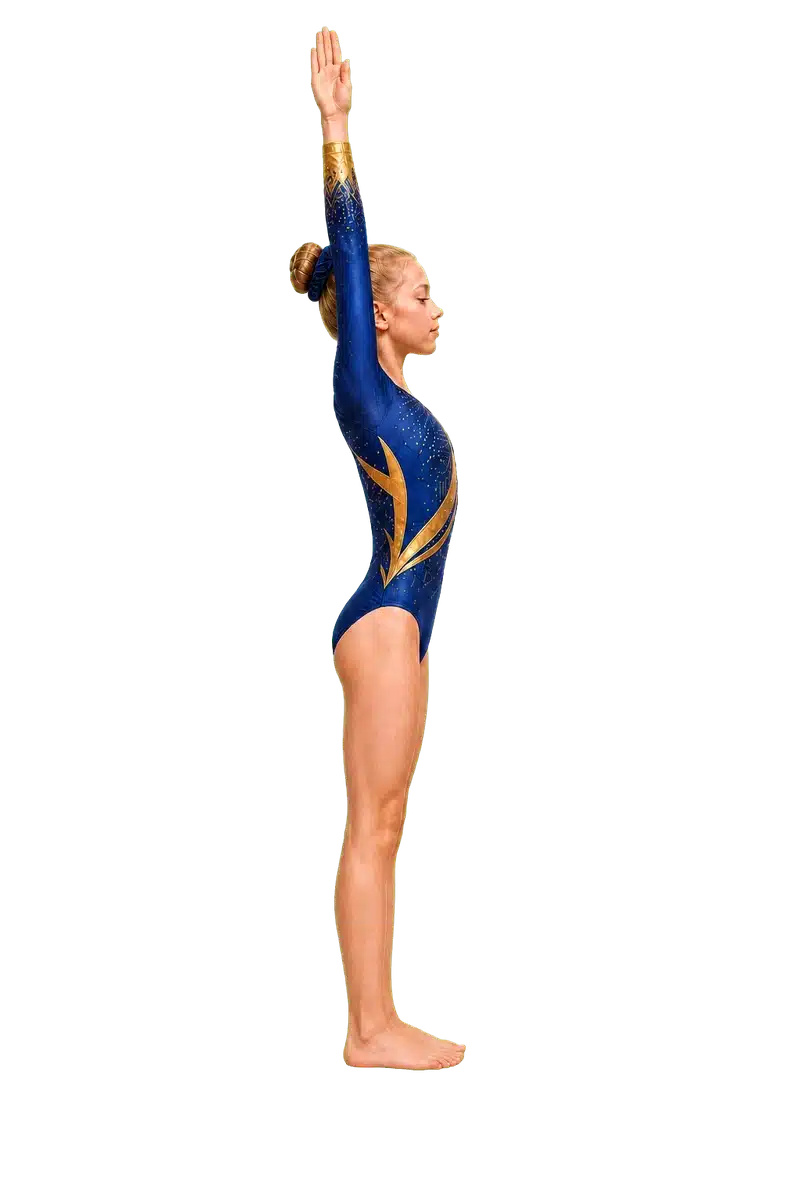
Imagine a child preparing to cartwheel along a floor line. The coach has already explained the station, demonstrated the movement and watched an attempt. “Straight arms” may now be enough to direct attention towards one useful detail.
Move to a landing station and the same coach may say “control”. On balance beam, that word may guide an unhurried finish. During a travelling movement, it may mean staying organised while continuing to move.
The word has not changed. Its job has.
Research on children’s motor learning supports a careful view. Instructions and feedback can influence learning, but the useful focus depends on the learner, task and environment. Much of the evidence comes from typically developing children in middle childhood, and there is no strong basis for one universal cue formula across every child and situation[1–3].
The short phrase selected by the coach.
What the child has seen, felt or practised before the phrase is used.
The skill, station, apparatus and purpose of this attempt.
The gymnast’s age, experience, confidence, understanding and individual needs.
The language changes with the task
Control and technique
Control
Control does not always mean perfectly still. A gymnast may show control while swinging, travelling, turning or making an appropriate adjustment. The useful question is not “Did the body move?” but “Did the gymnast remain organised enough for what came next?”
In a balance, control may include holding a position. In a jump, it may include taking off in the intended direction. In a sequence, it may mean connecting one part to another without rushing.
- a clearer beginning or finish;
- a speed the child can manage;
- balance before the next action;
- enough organisation to continue safely.
Technique
Technique includes timing, direction, body positions, contact with the apparatus and the order in which actions happen. It is not simply “looking beautiful”, and it is not one identical body shape imposed on every movement.
Good technique is specific. The arm action used for one jump may not suit another. A beginner’s appropriate version of a task may not look like an international gymnast’s finished skill. What matters is that the method suits the activity, the gymnast’s stage and the purpose of the exercise.
“Control means no movement, and technique means one perfect appearance.” A clearer view: Control can include movement. Technique has standards, but those standards belong to a particular task and stage of learning.
Professional support · clear family boundaries
What does spotting mean?
In gymnastics, spotting can describe purposeful coach positioning, readiness to assist or physical manual support used when appropriate within qualified coaching practice.
The purpose may be to help a gymnast experience part of a movement, understand a position, build confidence or manage the risk of an error. Spotting does not guarantee that nothing can go wrong, and it is not automatically required for every attempt.
British Gymnastics’ current safeguarding education emphasises child-centred, safe and positive environments and the importance of gymnast voice[4]. Its current coach-education pathway includes learning to provide and receive manual support as part of formal practical training[5].
The family boundary
British Gymnastics tells parents and supporters that their role is not to coach. Where a child needs additional physical support, it should be agreed with the club and provided under the direct supervision of a suitably qualified coach[6].
A parent can ask what a child is learning, tell the coach about a worry and support the child emotionally. Technical manual support belongs to the coaching environment.
COACHING
JUDGEMENTPosition · readiness · assistanceProgression · equipment · child voice
What spotting does not mean
- Evidence that the child has failed.
- Permission for an unqualified adult to copy hand placement.
- A technique learned from a magazine photograph.
- Physical contact in every attempt.
- A replacement for progression, equipment or professional judgement.
A clear starting point supports the next attempt
Ready position and reset
Ready position
Simple meaning: The agreed place and body arrangement from which a particular task begins.
There is no single ready position for all of gymnastics. A child preparing to run towards a vault station needs a different beginning from a child waiting beside a balance beam or holding a low bar.
The phrase may organise where the feet, hands or body begin; the direction the gymnast faces; enough personal space; attention to the coach’s signal; and the first action in a sequence. “Ready” is therefore both physical and practical.
Reset
Simple meaning: Pause, reorganise and return to the agreed starting point before another attempt.
A reset can be very small: step back to the marker, replace the hands, take a breath, check the direction and listen for the next cue.
It does not erase the previous attempt. The gymnast keeps the information and begins again with a cleaner starting point.
I know where and how I begin.
I try the task and collect information.
I pause, reorganise and prepare for the next try.
“The coach said reset because my child was not listening or did everything wrong.” A clearer view: Reset is often ordinary learning language. It can protect space, restore attention and give the next attempt a clear beginning.
Complete the movement
Landing
Simple meaning: The part of a jump, flight or dismount in which the gymnast returns to the surface and regains balance and control.
The landing begins before the feet touch down. The gymnast must recognise where the surface is, prepare for contact and organise the finish. The exact action depends on the height, direction, rotation, surface, apparatus and stage of learning.
That is why this chapter does not prescribe one landing shape for every situation.
What might a coach mean?
- Complete the skill all the way to the finish.
- Look for the surface and prepare for contact.
- Arrive in the intended area.
- Regain balance before moving away.
- Show that the attempt has ended.
What is a “stuck landing”?
USA Gymnastics defines the familiar phrase stuck landing as slang for a landing performed without movement of the feet[7]. In competition, foot movement and other landing faults can affect execution scoring, with the exact rules set by the relevant Code of Points[8].
But a stuck landing is not the only useful landing in learning. A child may need an appropriate adjustment while developing a skill. The coach decides what the landing task is meant to teach at that stage.
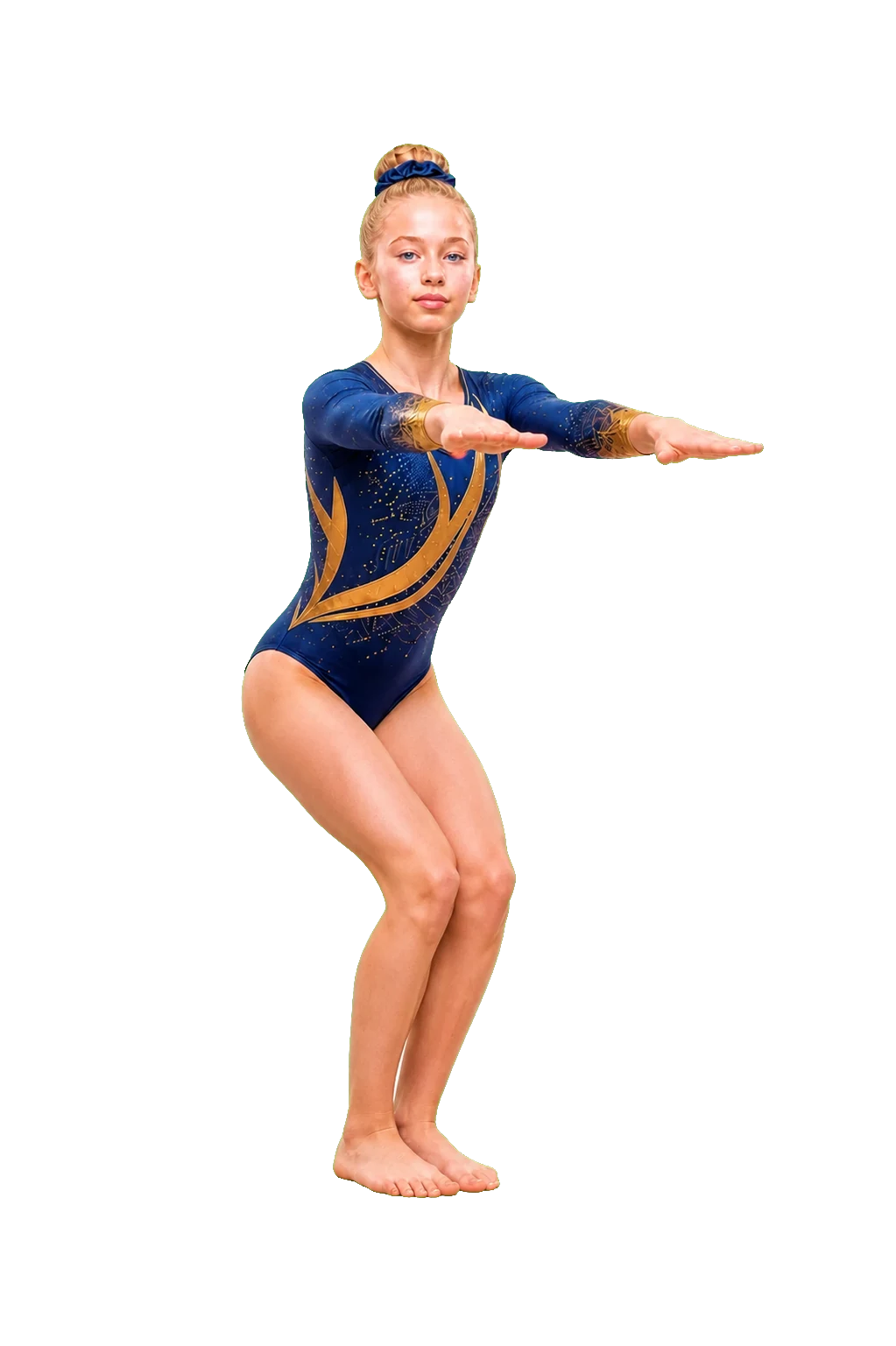
“A good landing must always be silent and completely still.” A clearer view: Quietness and stillness may be useful cues in some exercises, but the central purpose is an organised return to the surface appropriate to that task.
The elbows have a particular job
Straight arms
Simple meaning: Extend the elbows for the shape, support or line required in this particular task.
Straight arms can help a gymnast create a clear handstand line, maintain an appropriate support position or transfer force through the hands. The phrase may also make it easier for the coach to see whether the child is arriving in the intended position.
Yet “straight arms” is not a permanent rule for all gymnastics. Many actions use purposeful elbow bending. The cue only makes sense when connected to the skill being practised.
“Straight arms” may be followed by “as you push”, “when you reach support” or “during this shape”. Those extra words reveal the real job of the cue.
Task first. The same elbows may extend, bend, absorb, support or redirect at different moments. The cue identifies the position required now; it does not create a permanent rule for every movement.
“Straight arms means force the elbows as far back as possible.” A clearer view: The goal is the position required for the activity—not forcing a joint for appearance. Bodies differ, and discomfort should be communicated to the coach.
One region · one useful focus
Tight legs
The phrase is common because the legs can separate, soften or lose their intended shape while a child is concentrating on the hands, direction or apparatus.
In a straight jump, “tight legs” may guide extension and a clear body line. In a handstand, it may help the two legs behave as one organised unit. In another skill, the legs may deliberately separate into a straddle or step—so keeping them together would be the wrong instruction.
Not the same as “tight body”
Issue 3 explained tight body as whole-body organisation beneath many gymnastics shapes. Tight legs is narrower. It directs attention to one region because that is the useful focus at this moment.
What the phrase does not mean
A child may understand the phrase and still need time to coordinate it with the hands, direction, speed and timing of the skill. Knowing a word and applying it during movement are different achievements.
The phrase belongs to the exercise
Gymnastics words behave differently in motion
A dictionary gives one definition. A coach chooses a working meaning for the task in front of the child.
| Phrase | In one task it may mean… | In another task it may mean… |
|---|---|---|
| Control | Hold the finish long enough to show balance. | Keep the travelling movement organised without stopping it. |
| Technique | Change the order of the actions. | Repeat the same action with clearer timing or direction. |
| Ready position | Begin behind a floor marker facing forward. | Wait beside the apparatus until the coach invites the attempt. |
| Landing | Finish a low jump and regain balance. | Complete a dismount and show a clear end to the skill. |
| Straight arms | Maintain elbow extension in a support shape. | Reach with extended elbows during one part of a movement. |
| Tight legs | Keep the legs connected in a straight shape. | Maintain the intended leg line while the body turns or travels. |
| Reset | Return to the start marker. | Pause, reorganise the body and wait for a new cue. |
Why the difference matters
If a family treats the phrase as one permanent command, the child can receive a conflicting message at home. “But you were told to keep your legs together” is unhelpful if today’s task deliberately uses a straddle.
The more reliable question is: “What was that word helping you do in this exercise?”
That question protects the coach’s context and gives the child space to explain what they understood.
Correction is part of learning
What families often misunderstand
Repetition can mean many things. The child may be coordinating several actions at once. A familiar cue can also become more meaningful as experience grows.
A short cue often identifies the next workable detail precisely because other parts are already in place.
The family may not have heard the demonstration, previous attempt or reason the cue was chosen. Repeating it away from the task can add pressure or create a competing coaching voice.
Spotting may introduce a feeling, manage an identified risk, guide part of a progression or support confidence. Ask what role it has in the plan.
The gymnast carries learning into the next attempt. Reset changes the starting point, not the history.
A technical phrase belongs to the movement being practised. It does not define the child’s effort, confidence or value.
The supportive family role
Chelsea explains
It is all right to ask what a word means
 ASK · WATCH · TRY · CHECK AGAIN
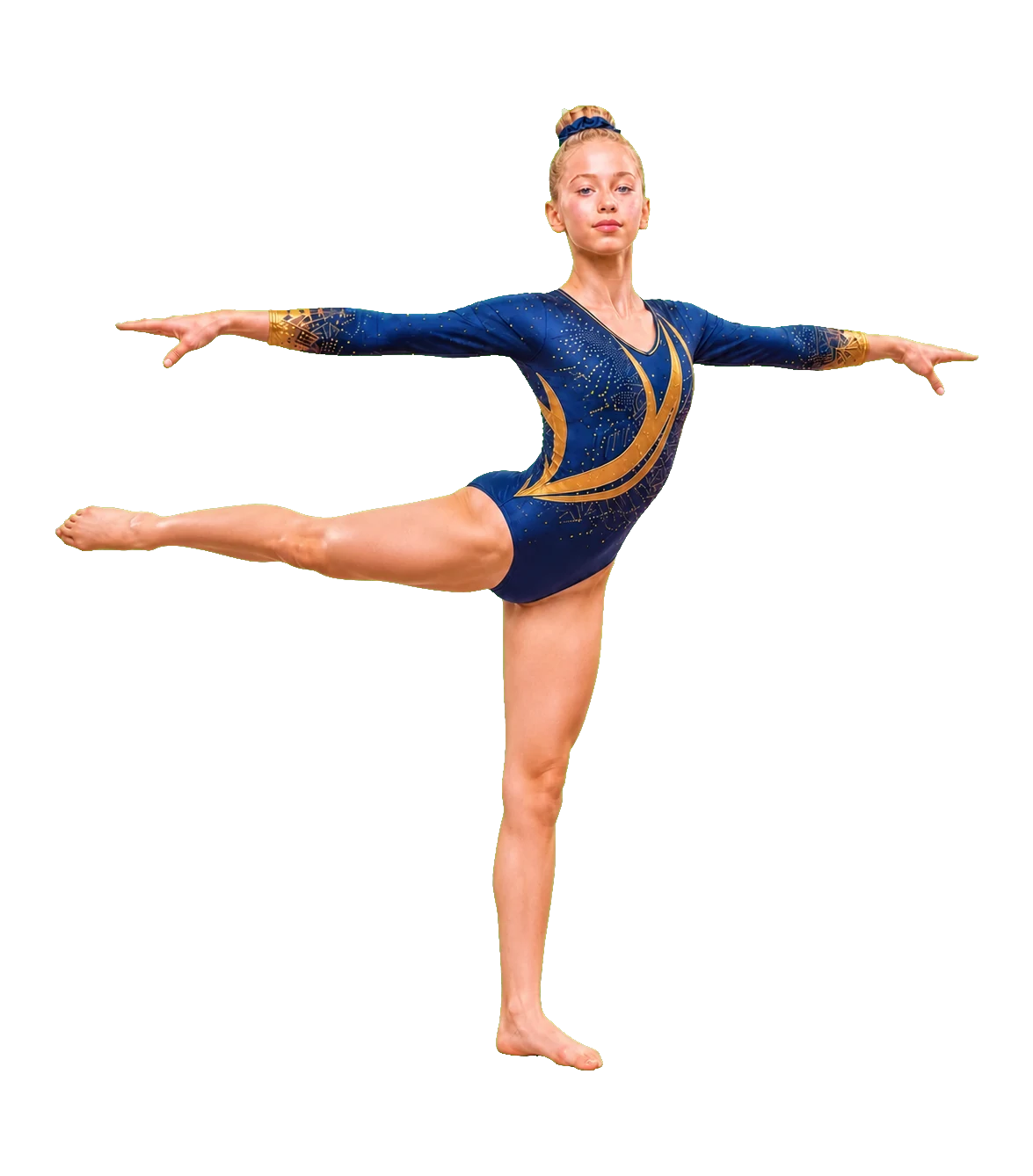
“Sometimes I know the word but I am not sure what it means in this exercise. I can ask: ‘Can you show me which part you want me to think about?’”
A note about confidence
Children do not need to pretend that every word is understood. Asking for clarification is not disobedience, and needing another demonstration is not failure. A healthy learning environment leaves room for the child’s voice.
“Tell me what the word meant in today’s exercise.”
“It is all right if it did not happen every time yet.”
“If you are unsure or worried, we can ask your coach together.”
Keep the translation connected to the task
Gymnastics translation box
| When the coach says… | A useful family translation is… |
|---|---|
| Control | Keep the movement purposeful and manageable for this task. |
| Technique | Organise how this particular action is performed. |
| Spotting | The coach is positioned or assisting within qualified practice when appropriate. |
| Ready position | Begin from the agreed place and arrangement for this exercise. |
| Landing | Complete the return to the surface and regain balance and control. |
| Straight arms | Extend the elbows for this part of the task. |
| Tight legs | Organise the legs to keep the intended shape or connection. |
| Reset | Pause, return to the start and prepare for another attempt. |
Key references
- Eguia, K. F., Ng, S. S. M., & Wong, T. W. L. (2023). Attentional focus strategies for promoting children’s motor learning: A scoping review with a learner–task–environment framework. Perceptual and Motor Skills, 130(6), 2700–2722. DOI · PMID 37899527
- van der Veer, I. P. A., Verbecque, E., Rameckers, E. A. A., Bastiaenen, C. H. G., & Klingels, K. (2022). How can instructions and feedback with external focus be shaped to enhance motor learning in children? A systematic review. PLOS ONE, 17(8), e0264873. DOI · PMID 36007080
- Werner, I., & Federolf, P. (2023). Focus of attention in coach instructions for technique training in sports: A scrutinized review of review studies. Journal of Functional Morphology and Kinesiology, 8(1), 7. DOI · PMID 36648899
- British Gymnastics. (2025). Safeguarding Children in Gymnastics. Official source
- British Gymnastics. (2026). Delivering Gymnastics Activities. Official source
- British Gymnastics. (n.d.). Parent Hub. Official source
- USA Gymnastics. (n.d.). Glossary of Terms. Official source
- World Gymnastics. (2025). 2025–2028 Codes of Points. Official source