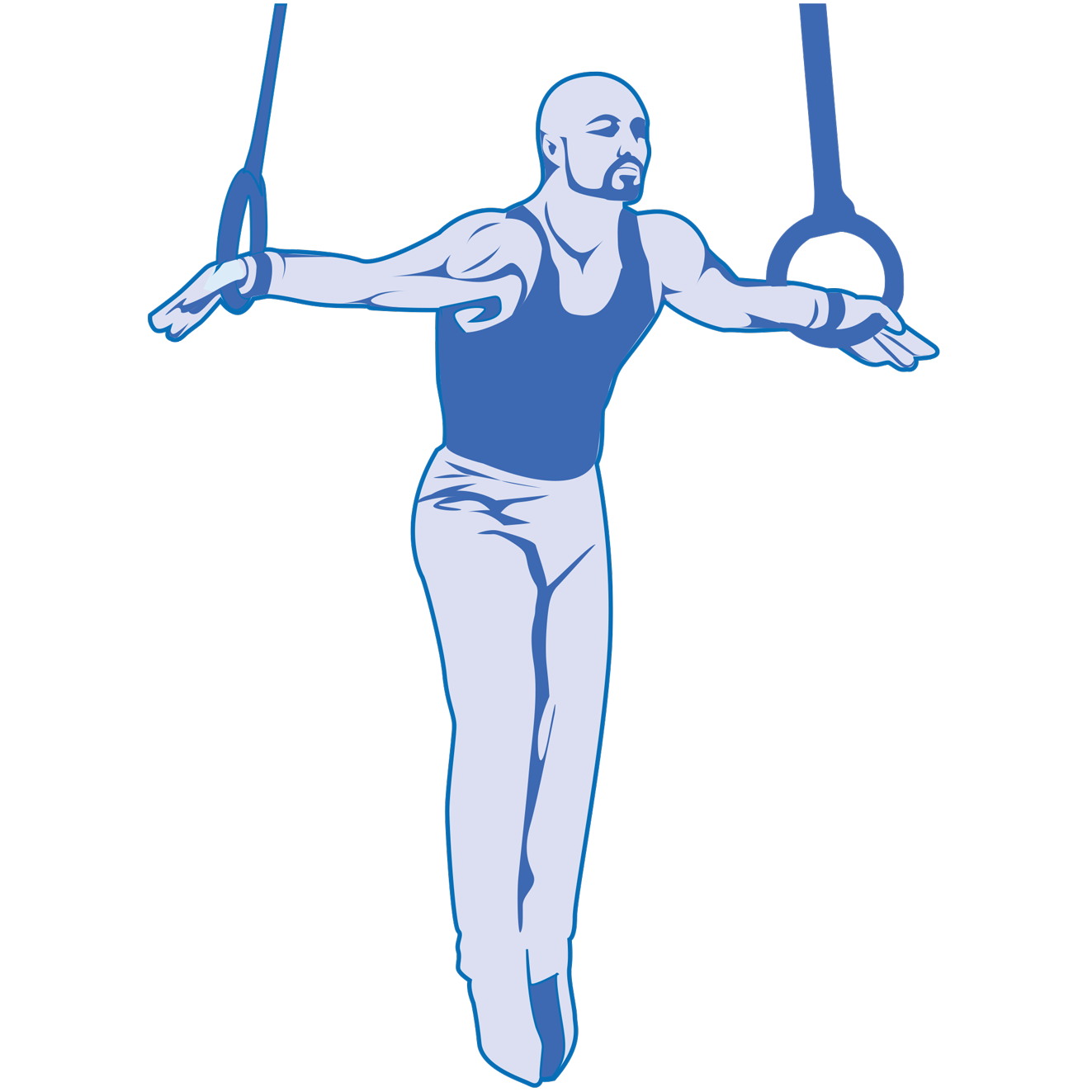
One Sport, Two Great Traditions
Why Men’s and Women’s Artistic Gymnastics Use Six and Four Apparatus
At a major artistic gymnastics competition, the men move through six apparatus: Floor Exercise, Pommel Horse, Still Rings, Vault, Parallel Bars and Horizontal Bar. The women compete on four: Vault, Uneven Bars, Balance Beam and Floor Exercise[1].
Those numbers are more than a timetable. They are the recognisable shape of two great competitive traditions within one sport.
Much of the men’s apparatus lineage reaches back to Athens 1896. Women entered Olympic gymnastics in 1928, and their familiar four-apparatus programme crystallised during the middle of the twentieth century[2–5].
Since the 1950s, the six and four have remained remarkably stable. Equipment, Codes and skills continued to evolve; each generation inherited the apparatus—and found new possibilities within them.
A tradition visible from the beginning
Athens 1896
Gymnastics stood on the programme when the modern Olympic Games opened in Athens in April 1896. Seventy-one men from nine nations competed[2].
Five apparatus familiar from today’s men’s programme were already represented: Pommel Horse, Still Rings, Vault, Parallel Bars and Horizontal Bar.
Floor Exercise had not yet joined them. Rope Climbing was included, and team contests were held on Parallel Bars and Horizontal Bar[2, 3].
Athens therefore did not present a finished version of modern artistic gymnastics. It gave the sport a visible beginning. The apparatus, formats and rules would be tested and refined over the decades that followed.
What is striking is not that everything was already complete. It is that a family watching gymnastics today can still recognise so much of what those first Olympic gymnasts encountered.
A structure formed over time
The six were formed—not simply announced
Early international gymnastics did not follow one permanent formula. Competitions experimented with rope climbing, club swinging, team systems and even activities that would later sit outside artistic gymnastics[2, 3].
Across the first decades of the twentieth century, the apparatus identity became clearer.
Still Rings returned permanently to the World Championship programme in 1909 after earlier disagreement about swinging and still versions of the apparatus[6]. Floor Exercise became an official men’s event in 1930, made its individual Olympic debut in 1932 and entered the World Championships in 1934[1, 3, 16].
Berlin 1936 used Team, All-Around and six individual apparatus finals—the structure World Gymnastics describes as the continuing standard[3]. Its history page identifies Helsinki 1952 as the beginning of the modern age with today’s six apparatus[4].
There is no need to force one artificial birthday. By the 1930s, the six-apparatus structure was recognisable; by the post-war era, it had become the mature international programme inherited today.
An apparatus inheritance
The men’s six
Power, tumbling, balance, mobility and control in one continuous performance.
Circles, flairs and scissors while the hands repeatedly redirect the body.
Swing and handstand work connected with strength positions that appear motionless.
Running speed transformed into height, rotation, flight and landing.
Support, hang, swing, flight and handstand positions between two rails.
Enormous swing, release, return and a high-flying dismount.
Each apparatus asks a different question of the gymnast[7].
Six apparatus do not mean six versions of the same task. Together they create a broad test of acrobatics, strength, speed, balance, mobility, rhythm, spatial awareness and courage.
A historic entrance
Amsterdam 1928
Women first competed officially in Olympic gymnastics at Amsterdam in 1928. Their opportunity was limited to a team competition, but their participation opened an essential new chapter in the sport’s history[3, 5].
This was not yet the modern women’s all-around. The programme included horse vault, an apparatus exercise and a team drill shaped by the group-gymnastics traditions of the period. Different nations could present work on different apparatus, making the event far less standardised than competition today[3, 8].
The significance of Amsterdam lies in both what it achieved and what remained unfinished.
Women were finally Olympic competitors. At the same time, the sport still had to decide which apparatus would define their international programme and how individual achievement would be recognised.
A distinct tradition emerges
How the women’s four took shape
Women and men had often trained on the same equipment in the early gymnastics halls. As international competition became more formal, organisers developed a distinct women’s programme[1, 14].
By the late 1930s, Vault, Balance Beam and Floor Exercise were visible, while Parallel Bars was beginning its transformation[1, 9]. Uneven Parallel Bars made their first Olympic appearance in 1936[3, 9].
At the 1950 World Championships, the bar apparatus had developed into Uneven Parallel Bars[1]. Helsinki 1952 awarded individual medals in All-Around, Vault, Uneven Bars, Balance Beam and Floor Exercise, while Team and Team Portable Apparatus were also contested[10].
Team Portable Apparatus appeared for the final time in 1956. World Gymnastics records that the modern four events, with Team and All-Around competition, have been in place since then[5, 8].
Four complete performance worlds
The women’s four
A rapid approach becomes spring, hand contact, flight, rotation and landing—often in only a few seconds.
Continuous swing, transitions, releases, regrasping, pirouettes and dismounts above and between two bars.
Acrobatics, leaps, turns, balance, rhythm and composure on a surface ten centimetres wide.
Tumbling, dance, leaps, turns and choreography organised with music into one performance.
The women’s programme cannot be reduced to grace or flexibility. It brings together explosive power, flight, strength, acrobatics, rhythm, precision, control and individual expression[11].
Four apparatus provide no shortage of range. Each has developed a deep technical culture, its own champions and a continually expanding vocabulary of named skills.
Shared roots · different routine languages
Two shared stages
Floor Exercise and Vault connect the men’s and women’s programmes. The apparatus names are shared; the current competitive requirements are not identical[7, 11, 13, 17].
The common root on Floor is whole-body movement across the performance area. Each programme has developed its own compositional tradition.
On Vault, shared technique does not mean identical competition. The apparatus creates a common family of movement while the two Codes define distinct competitive languages.
Preserved · renewed
Change without losing identity
The old horse gave way to a larger modern table, supporting safety and technical development[4, 12].
Raised Parallel Bars became a continuous swing-and-flight apparatus through changes in distance, height and construction[5, 9].
An eight-centimetre beam at the 1934 Worlds later settled at today’s ten centimetres as covering and construction evolved[15].
A plain surface developed into a specialised sprung apparatus capable of supporting far more powerful tumbling[5, 16].
Preserving tradition does not mean preserving every object, rule or technique exactly as it once was.
Codes of Points continue to change. New elements can enter the official vocabulary and may carry a gymnast’s name after a successful first international performance at an eligible official FIG competition, formal submission and Technical Committee confirmation[13, 17].
The silhouette of the sport remains familiar. The performance inside it continues to advance.
Editorial position
A sport can remember itself
Kensington Gymnastics Magazine regards the preservation of the men’s six and women’s four as one of artistic gymnastics’ great strengths.
A stable apparatus programme gives the sport a recognisable identity. A rings gymnast today belongs to a technical lineage visible at Athens 1896. A beam gymnast inherits an event shaped across generations of athletes who progressively expanded what could be imagined on ten centimetres.
Continuity also creates expertise. Coaches, judges, equipment makers and gymnasts can deepen an apparatus culture over decades. Specialists may devote a career to one event; all-around gymnasts learn to connect several different movement worlds.
It also creates shared memory. Parents and children can watch routines separated by many years and still recognise the apparatus—even when the skills, equipment and judging are very different.
Chelsea explains
I inherit the sport—and add my own chapter
“Gymnasts before me used these apparatus too. I learn the same movement language, and one day my generation may find new ways to perform it.”
Chelsea · Kensington Gymnastics Magazine
When you learn to support, hang, balance, swing, jump, roll or land, you are meeting ideas that belong to a very long gymnastics story.
You do not have to perform an Olympic skill to be part of that tradition. Your first safe landing, controlled shape or confident swing matters because every advanced routine is built from foundations.
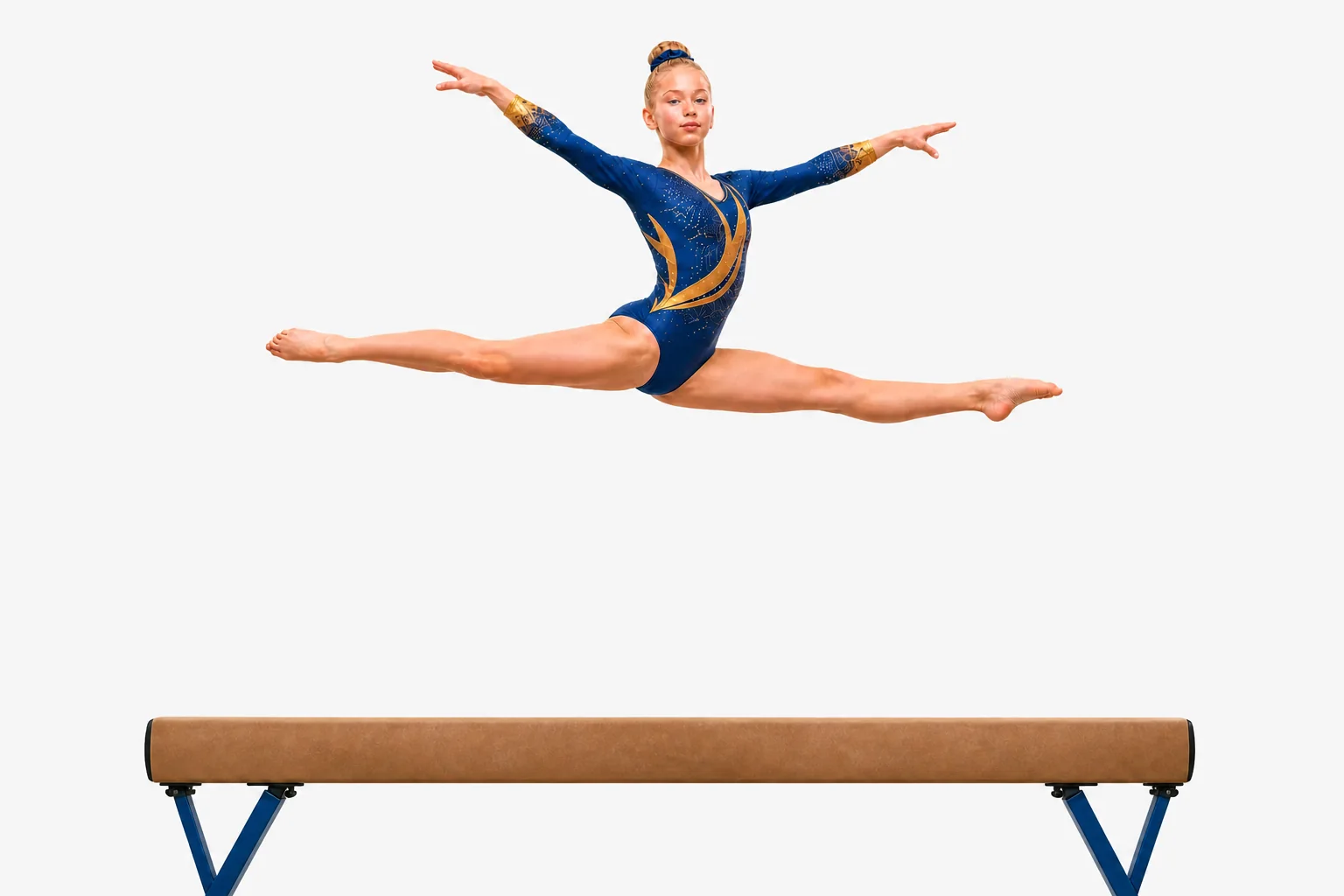 THE APPARATUS ENDURE · EVERY GENERATION ADDS NEW POSSIBILITIES
Closing perspective
Six and four · preserved and renewed
The men’s six and women’s four are not arbitrary numbers placed on a competition timetable. They are the mature forms of two histories that artistic gymnastics developed, tested and chose to preserve.
That preservation has not stopped progress. Apparatus, Codes and skills have continued to evolve. Gymnastics has remained recognisably itself while every generation has made performance more ambitious.
Key references
- World Gymnastics. (2020, March 6). Why are there four events for women and six for men?
- World Gymnastics. (2020, May 15). Looking back at Gymnastics at the early modern Olympic Games, 1896–1912.
- World Gymnastics. (2020, June 12). Looking back at Gymnastics at the early modern Olympic Games, 1920–1936.
- World Gymnastics. (n.d.). Men’s Artistic Gymnastics: History.
- World Gymnastics. (n.d.). Women’s Artistic Gymnastics: History.
- World Gymnastics. (2021, January 29). Still Rings: The apparatus of strength and swing.
- World Gymnastics. (n.d.). Men’s Artistic Apparatus.
- World Gymnastics. (2020, November 6). Once a tenet of Artistic competitions, Group Gymnastics found its niche in Rhythmic.
- World Gymnastics. (2020, October 23). Uneven Bars: An apparatus of daring and flight.
- World Gymnastics. (2020, July 10). Looking back on Gymnastics at the early modern Olympic Games, 1948–1960.
- World Gymnastics. (n.d.). Women’s Artistic Apparatus.
- World Gymnastics. (2020, October 9). Vault: The apparatus where the sky is the limit.
- World Gymnastics. (2025). Men’s Artistic Gymnastics Code of Points 2025–2028.
- Cervin, G. (2021). Degrees of Difficulty: How Women’s Gymnastics Rose to Prominence and Fell from Grace. University of Illinois Press.
- World Gymnastics. (2020, December 18). Balance Beam: The apparatus of physical skill and psychology.
- World Gymnastics. (2020, September 25). Floor Exercise: The apparatus where tumbling is elevated to performance art.
- World Gymnastics. (2025). Women’s Artistic Gymnastics Code of Points 2025–2028.