Protein: Building the Growing Body
Why children need protein for growth and repair — and why ordinary family food is usually enough
When families think about sport and food, protein is often the first nutrient that comes to mind. It appears on yoghurt pots, snack bars and breakfast cereals. It is discussed in gyms, promoted on social media and sold in powders, shakes and products designed to look scientific.
For a growing child, however, the picture is more interesting — and much less dramatic.
Protein is essential. Children need it to grow, renew tissues and produce many of the working substances that keep the body functioning. But protein is not a shortcut to strength, and it does not work alone.
For most healthy primary school-aged children in London, the practical question is not how to add a sports supplement. It is how ordinary family food can support a growing body across school, travel, gymnastics and home life.
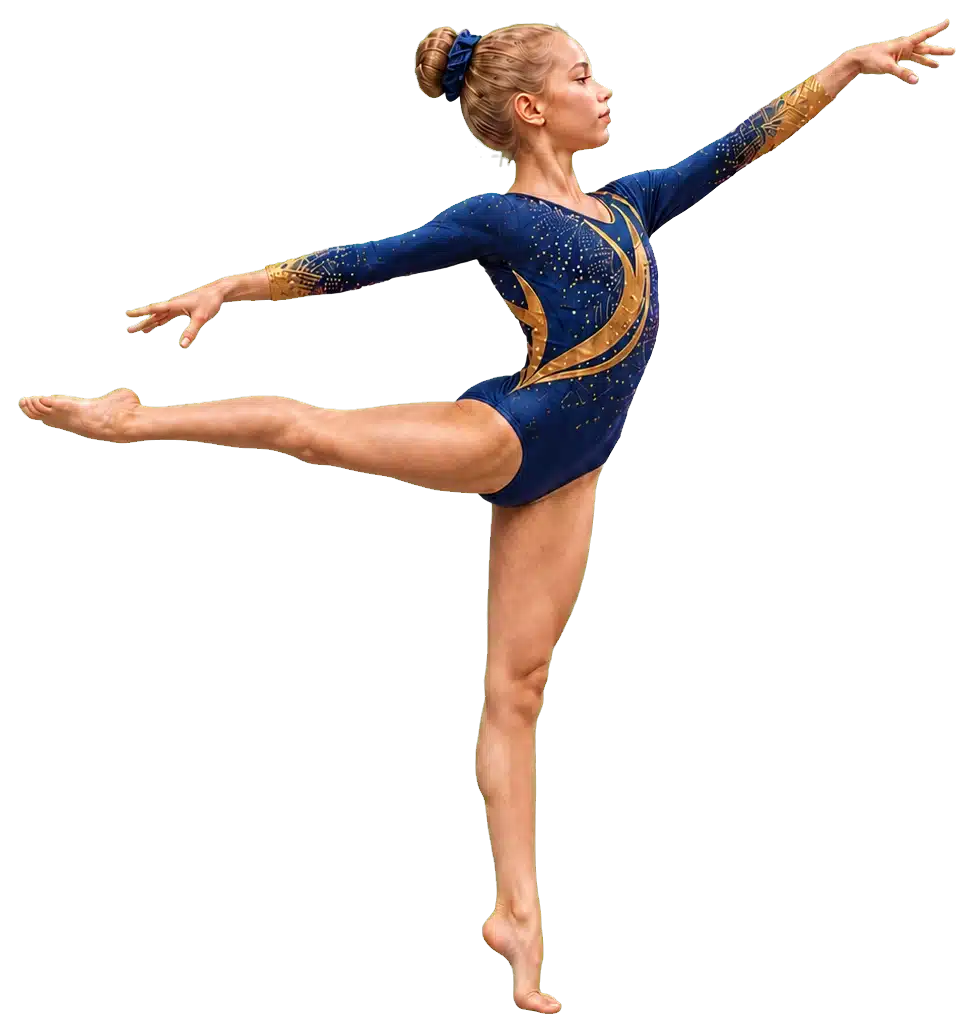
Children are not small adults. Food supports growth, learning and movement.
Carbohydrate provides energy for the brain, school and gymnastics.
Protein helps build and renew the growing body.
No nutrient works alone
In Issue 2, we looked at carbohydrate: the body’s main source of readily available energy.
That energy matters here. Building and renewing tissue requires energy. If a child is not eating enough overall, adding more protein does not automatically solve the problem.
Carbohydrate helps provide energy for school, play and gymnastics. Protein provides amino acids that the body uses to make its own proteins. Dietary fat, vitamins and minerals support other essential parts of growth and health.
The useful question is not, “Which nutrient is best?” It is, “How do the different parts of food work together to support a growing child?”
Growth comes before performance
Food must support the whole child, not only the hour they spend in gymnastics. A child also needs enough total energy, sleep, appropriate activity and time.
Protein cannot teach technique. It cannot replace recovery. It cannot make an inappropriate training demand suitable for a growing child.
This broader view protects families from an idea that is common in adult fitness culture: that progress can be reduced to maximising one nutrient.
From food to amino acids
Protein is one of the major nutrients in food, alongside carbohydrate and fat.
When a child eats protein, digestion breaks it into smaller components called amino acids. These amino acids are absorbed and become available for the body to use.
Amino acids are sometimes described as “building blocks”. The comparison is helpful, provided we remember that the body is not a simple wall being made taller. It is a living system that is constantly building, dismantling, repairing and reorganising.
Essential amino acids
The body can make some amino acids for itself. Others must come from food. These are called essential amino acids.
Different foods contain different amounts and patterns of amino acids. Families do not usually need to match individual amino acids at every meal. A varied eating pattern across the day can provide the mixture the body needs.
Growth is happening all the time
Children do not grow only when they are visibly becoming taller.
Throughout childhood, tissues are being renewed. Bones are developing, organs are maturing, blood cells are being produced and the nervous system is changing. Existing proteins are continually broken down and replaced.
This process is called protein turnover.
The word “turnover” may sound wasteful, but it is part of how a living body adapts. Old or damaged proteins can be dismantled. Their components may be reused, while new proteins are built where they are needed.
Growth occurs when building exceeds breakdown over time. This is one reason children cannot be treated simply as smaller adults. An adult body needs protein for maintenance and renewal. A child needs those things while also supporting growth.
Training gives the body a reason to adapt. Food supplies energy and materials. Rest and time allow that adaptation to take place.
A stimulus, not instant construction
Gymnastics asks children to support, lift and organise their own body.
Even in a recreational class, a child may hang, climb, jump, land, balance, shape the trunk, push through the arms and repeat movements many times. These actions provide a physical stimulus.
Protein supplies amino acids that can contribute to the renewal and adaptation of tissues after activity. Small laboratory studies in healthy active children show that eating protein after exercise can influence whole-body protein balance during recovery.1, 2
The paediatric studies are small. They examine short-term metabolism under controlled conditions, often after cycling rather than gymnastics. They do not show that a protein shake makes a recreational gymnast stronger, or that a particular post-training dose produces better skills months later.
They help us understand a biological process. They do not create a universal feeding formula.
The whole day matters
Breakfast, school lunch, an after-school snack and the evening meal all contribute. A child who eats regularly may already have several sources of protein before class begins.
How much protein do children need?
There is no single protein number that means the same thing in every context.
Population reference values describe amounts expected to meet the needs of nearly all healthy children. Sports-nutrition literature may discuss higher intakes for active young people—but these are contexts, not interchangeable prescriptions.
19.7 g/day
UK RNI
28.3 g/day
UK RNI
A clinical review notes that young athletes typically need about 1.5 g/kg/day when energy intake is sufficient, while intakes above approximately 2.5 g/kg/day provide no additional adaptive benefit.4 The quality and distribution of food—and enough total energy and carbohydrate—remain essential.
National dietary surveys indicate that mean protein intakes in UK child age groups are generally above the relevant RNIs.6 This does not mean every child’s diet is ideal, but it does mean that protein shortage should not be presented as an everyday crisis.
Gymnastics nutrition, studied from within
This magazine does not only interpret research from a distance. Its editor has contributed to the scientific literature on nutrition in gymnasts.
Dr Stefan Kolimechkov, Editor of Kensington Gymnastics Magazine, has co-authored several studies examining nutrition in young and elite gymnasts.
In one study of 38 preschool and primary-school artistic gymnasts, estimated protein intake averaged 3.23 g/kg/day in the younger group and 2.94 g/kg/day in the older group.7 A subsequent study of 76 competitive young artistic gymnasts also found significantly higher relative protein intake than in matched national-survey groups.8
Where protein comes from
Protein is found in more foods than many families realise.
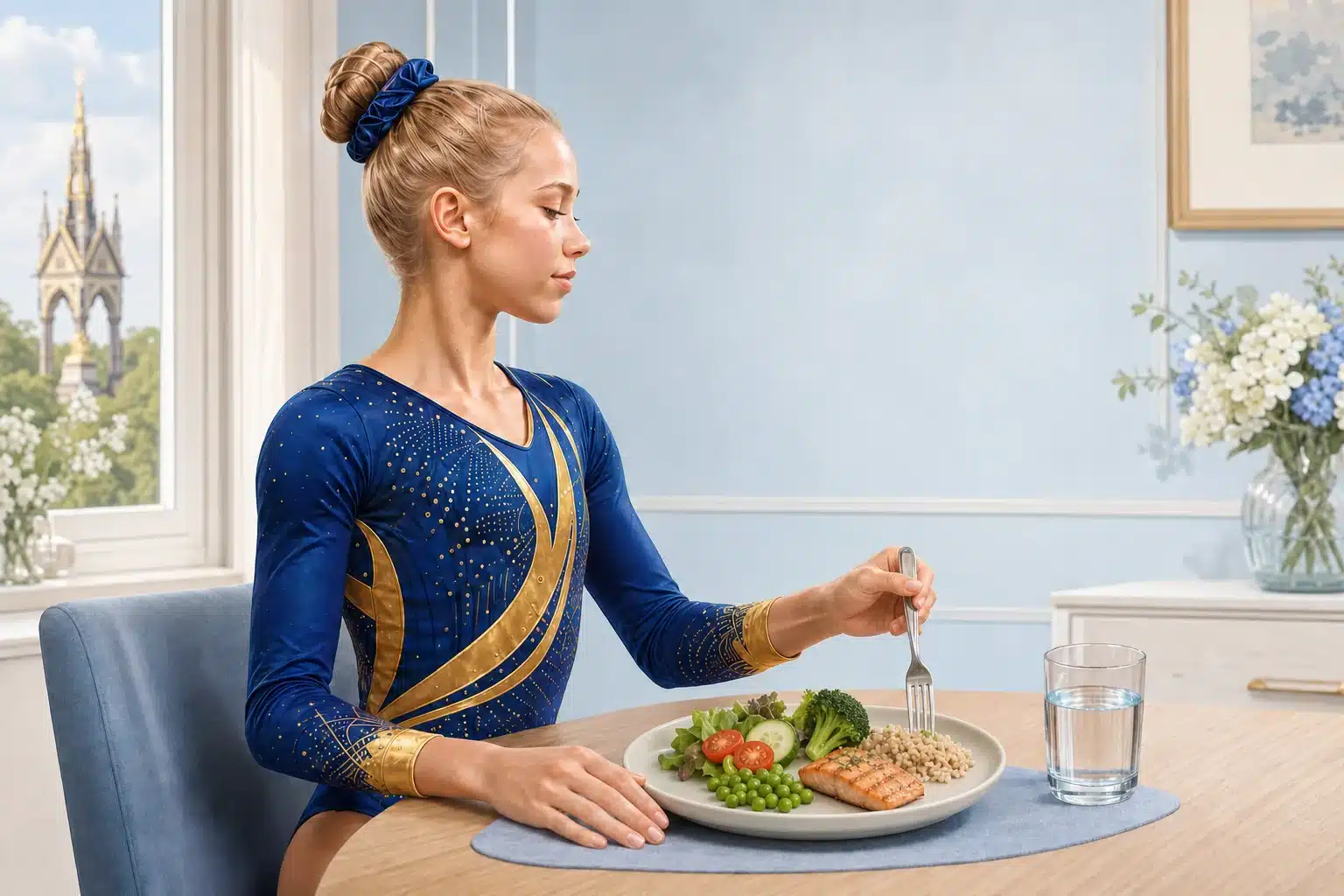
“Protein does not have to come from one ‘perfect’ food. A varied plate can bring protein, carbohydrate, vitamins, minerals and fibre together.”
Animal and plant foods can both contribute. What matters most is the pattern across the day—not making every meal win a protein contest.
Animal foods often provide all essential amino acids in readily used proportions. Plant foods contribute protein alongside components such as fibre and carbohydrate. A varied diet can provide the essential amino acids children need.12 Vegan, highly restricted or multiple-allergy diets may require individual guidance from a GP or registered dietitian.
Which foods contain more protein?
Protein concentration can be compared as grams per 100 grams of food. Numerically, this is also the percentage of the food’s weight that is protein.
The ranking below compares selected animal and plant foods from the UK Composition of Foods Integrated Dataset.13 It does not rank overall health, protein quality or what a child “should” eat most often.
| No. | Food | Protein per 100 g | Example serving | Protein in serving |
|---|---|---|---|---|
| 1 | Parmesan cheese | 36.2 g · 36.2% | 15 g | 5.4 g |
| 2 | Chicken breast, grilled | 32.0 g · 32.0% | 70 g | 22.4 g |
| 3 | Cheddar cheese | 25.4 g · 25.4% | 25 g | 6.4 g |
| 4 | Tuna, canned in brine, drained | 24.9 g · 24.9% | 60 g | 14.9 g |
| 5 | Salmon, farmed, grilled | 24.6 g · 24.6% | 80 g | 19.7 g |
| 6 | Peanut butter, smooth | 22.8 g · 22.8% | 15 g | 3.4 g |
| 7 | Almonds, whole | 21.2 g · 21.2% | 15 g | 3.2 g |
| 8 | Tempeh | 20.7 g · 20.7% | 50 g | 10.4 g |
| 9 | Egg, whole, boiled | 14.1 g · 14.1% | 1 egg · 50 g | 7.1 g |
| 10 | Porridge oats, dry | 10.9 g · 10.9% | 30 g | 3.3 g |
| 11 | Chickpeas, cooked | 8.4 g · 8.4% | 80 g | 6.7 g |
| 12 | Tofu, steamed | 8.1 g · 8.1% | 80 g | 6.5 g |
| 13 | Red lentils, cooked | 8.1 g · 8.1% | 80 g | 6.5 g |
| 14 | Green peas, boiled | 6.7 g · 6.7% | 80 g | 5.4 g |
| 15 | Greek-style plain yoghurt | 5.7 g · 5.7% | 125 g | 7.1 g |
Serving examples are illustrative, not prescribed portions. Whole nuts should not be given to children under five because of choking risk.14 Allergies and school or club food policies must always be considered.
Protein without a sports product
For many London children, the difficult part is not identifying a protein-rich food. It is finding a calm opportunity to eat.
A practical snack might include:
These are examples, not rules. Fresh, minimally processed foods are a useful starting point, but timing, appetite, allergies, choking safety, storage and the child’s normal tolerance all matter. Some children prefer a lighter snack before class and a fuller meal afterwards.
Most importantly, a pre-gymnastics snack needs to provide usable energy. Protein can be present, but carbohydrate remains important—particularly after a long school day.
A simple snack that a child will comfortably eat is more useful than a theoretically perfect snack that remains in the bag.
What families often hear
“My child does gymnastics, so they need a protein shake.”
Most young recreational gymnasts can obtain sufficient protein from ordinary food. Supplements are not an automatic requirement of sport.
“More protein will make my child stronger.”
Strength develops through growth, appropriate activity, coordination, progressive challenge, sufficient food, recovery and time.
“Protein matters more than carbohydrate.”
They have different roles. Carbohydrate provides important energy; protein supplies amino acids for building and renewal.
“Only meat counts.”
Fish, eggs, dairy, beans, lentils, chickpeas, tofu, peas, nuts, seeds and grains can all contribute.
“Every meal must be calculated.”
Regular meals, varied foods and attention to overall growth, energy and wellbeing are usually more useful than measuring every gram.
What families may notice
It would be misleading to offer a simple list of signs that a child “needs more protein”.
Tiredness, irritability, changing appetite and slower progress can have many possible explanations. They may relate to insufficient total food, sleep, illness, stress, the school day, a growth phase or something entirely different.
These observations do not diagnose a nutritional problem. Persistent concerns are better discussed with the child’s GP or a registered dietitian, especially where allergies, medical conditions or significant dietary restrictions are involved.
What this chapter does not say
It does not say that protein intake never matters, that every child eats enough, or that every dietary pattern is automatically complete. It does not dismiss vegetarian or vegan diets, and it does not claim that animal protein is compulsory.
The responsible conclusion is measured: protein is essential, but most healthy UK children already consume amounts above population reference levels.6 Ordinary varied food is usually a more appropriate foundation than sports supplements.
The whole child, not one nutrient
Protein has become a symbol of sport. Yet children’s gymnastics is not adult fitness culture in miniature. The aim is not to maximise one nutrient, construct a particular appearance or make food feel like a technical test.
A child needs enough energy to arrive ready to learn. They need carbohydrate to fuel active muscles and the brain. They need protein to build and renew tissues. They need dietary fat, vitamins and minerals. They need rest, sleep, safe coaching and time.
References
- Moore, D. R., et al. (2014). Postexercise protein ingestion increases whole body net protein balance in healthy children. Journal of Applied Physiology, 117(12), 1493–1501. doi:10.1152/japplphysiol.00224.2014
- Volterman, K. A., et al. (2017). Timing and pattern of postexercise protein ingestion affects whole-body protein balance in healthy children: a randomized trial. Applied Physiology, Nutrition, and Metabolism, 42(11), 1142–1148. doi:10.1139/apnm-2017-0185
- EFSA Panel on Dietetic Products, Nutrition and Allergies. (2012). Scientific opinion on dietary reference values for protein. EFSA Journal, 10(2), 2557. doi:10.2903/j.efsa.2012.2557
- Hecht, C., Bank, N., Cook, B., & Mistovich, R. J. (2023). Nutritional recommendations for the young athlete: current concept review. JPOSNA, 5(1). doi:10.55275/JPOSNA-2023-599
- Public Health England. (2016). Government dietary recommendations. UK government report .
- Public Health England & Food Standards Agency. (2017). National Diet and Nutrition Survey: results from years 1–4 of the rolling programme .
- Kolimechkov, S. T., Petrov, L. A., Alexandrova, A. V., & Atanasov, P. S. (2016). Nutrition and physical development assessment of pre-school and primary school children practising artistic gymnastics. African Journal for Physical Activity and Health Sciences, 22 (2:2), 565–577.
- Kolimechkov, S., et al. (2019). Nutritional status and body composition of young artistic gymnasts from Bulgaria. Journal of Applied Sports Sciences, 3(1), 39–52. doi:10.37393/jass.2019.01.4
- Kolimechkov, S., et al. (2013). Assessment of the nutrition and physical development of pre-school and primary-school children practising artistic gymnastics. VI Bulgarian Nutrition Conference, Sofia.
- Kolimechkov, S., Miteva, S., Yanev, I., & Petrov, L. (2019). Body composition and nutrient intake of Olympic and elite rhythmic gymnasts. Abstract 1081, 24th Annual Congress of the European College of Sport Science, Prague.
- Miteva, S., et al. (2020). Nutrition and body composition of elite rhythmic gymnasts from Bulgaria. International Journal of Sports Science & Coaching, 15 (1), 108–116. doi:10.1177/1747954119892803
- Food and Agriculture Organization of the United Nations. (2013). Dietary protein quality evaluation in human nutrition. FAO Food and Nutrition Paper 92. FAO report .
- Public Health England. (2021). McCance and Widdowson’s The Composition of Foods Integrated Dataset 2021 . UK government dataset .
- Scientific Advisory Committee on Nutrition. (2023). Feeding young children aged 1 to 5 years. UK government report .