Foundations
Gymnastics Anatomy
The Core: How the Trunk Organises Gymnastics Movement
Understanding the muscles that help children hold shape, transfer force, and control movement
When families hear the word core, they often picture the muscles at the front of the abdomen.
They may think of sit-ups, a flat stomach, or the visible outline sometimes called a “six-pack”. None of these gives us a complete picture of what trunk control means in gymnastics.
The core is not one muscle or a particular appearance. Nor is it a permanent instruction to hold the stomach tight. It is better understood as a changing system around the trunk that helps the body organise itself while the arms and legs move.[1]
Sometimes the trunk must resist movement; sometimes it must create it. Most often, it must move between these roles in a carefully timed sequence.
Organisation changes with the task
That organisation matters throughout gymnastics.
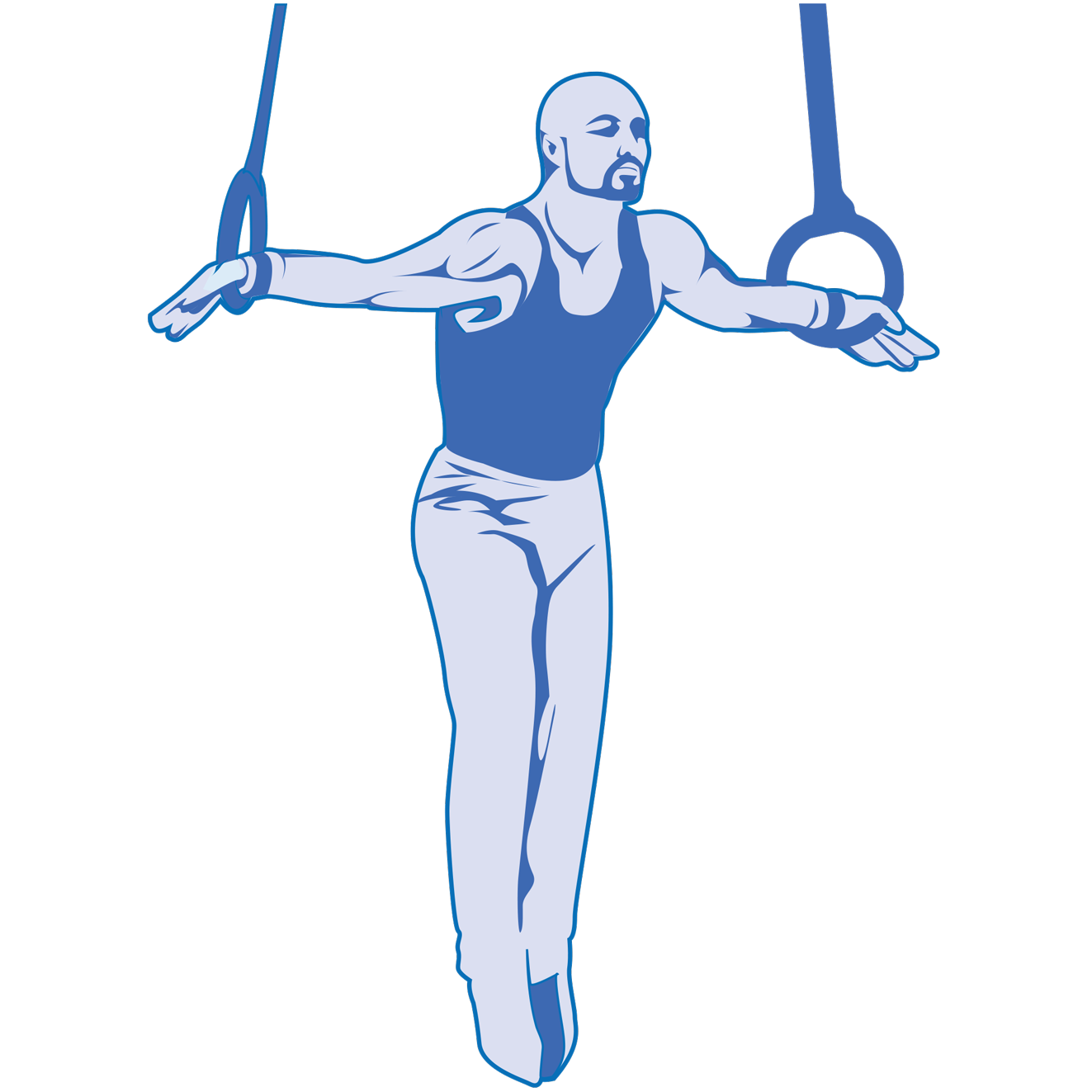
A child may be hanging from a bar, supporting their weight through their hands, balancing on one leg, changing from a hollow shape into an arch, or preparing to land. The task changes, and the muscular response changes with it.
This chapter continues the anatomical journey begun in Issues 1 and 2. We started with the upper arm and shoulder, then moved deeper to the shoulder blade and rotator cuff. Now we arrive at the body’s moving centre: the region that links the shoulder system above with the hips and legs below.
A simple way to picture it
The trunk is not a concrete column, and stability does not mean keeping it motionless. It is more like an adjustable centre: organised enough to connect the body, responsive enough to change.
Breathing belongs to the system
The diaphragm is primarily a breathing muscle, but breathing and trunk control cannot be separated completely. Changes in breathing, abdominal-muscle activity and pressure inside the abdomen occur together during physical effort.[2]
This does not mean children should be taught complicated breathing rules for ordinary gymnastics. It means that useful control must allow breathing to continue. A child who is holding their breath and becoming increasingly rigid is not necessarily showing better stability.
What do we mean by “the core”?
There is no single boundary around the core that every textbook, clinician and coach defines in exactly the same way.
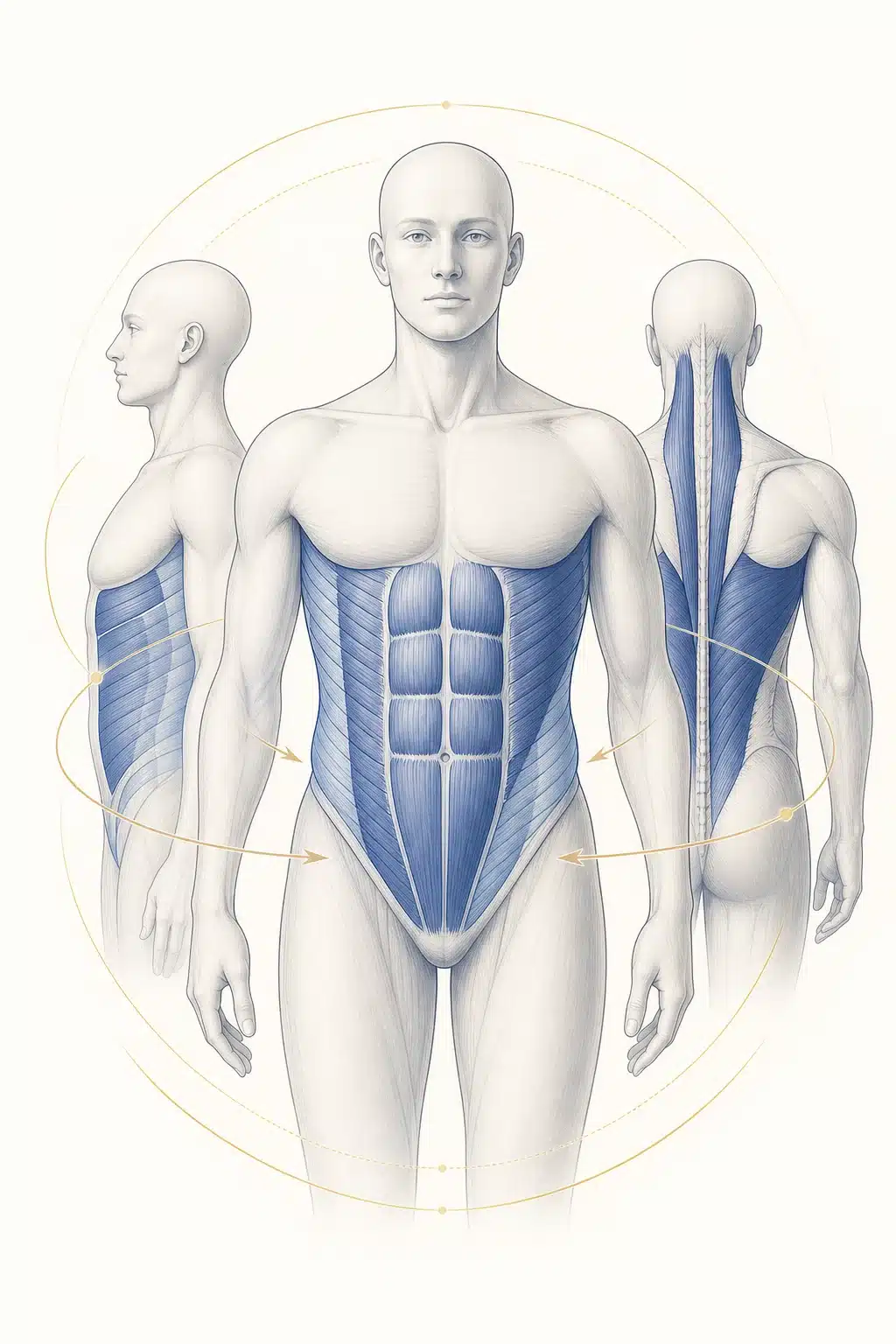
For this family-facing anatomy series, we use the term to describe the muscles and related structures that surround and control the trunk. These include the abdominal wall at the front and sides, muscles along the back, the diaphragm above, the pelvic floor below, and muscles connecting the trunk with the pelvis and hips.
In this issue, we concentrate on four parts of that wider system:
- rectus abdominis
- transversus abdominis
- the internal and external obliques
- erector spinae
These muscles have different positions and anatomical actions, but the nervous system does not use them as four separate buttons. It coordinates combinations of muscles according to the task.
Biomechanical research examining lumbar-spine stability supports this systems view. Different tasks require different patterns of muscular activity, and no single trunk muscle has been identified as the most important stabiliser in every situation.[3]
This distinction protects us from two common mistakes: reducing the core to the muscles visible at the front of the abdomen, and assuming that more tension is always better.
Useful trunk control is adaptable. The body must create enough stiffness for the task while remaining able to breathe, change shape, absorb force and move when movement is required.
Muscle spotlight
Rectus Abdominis
Where it sits
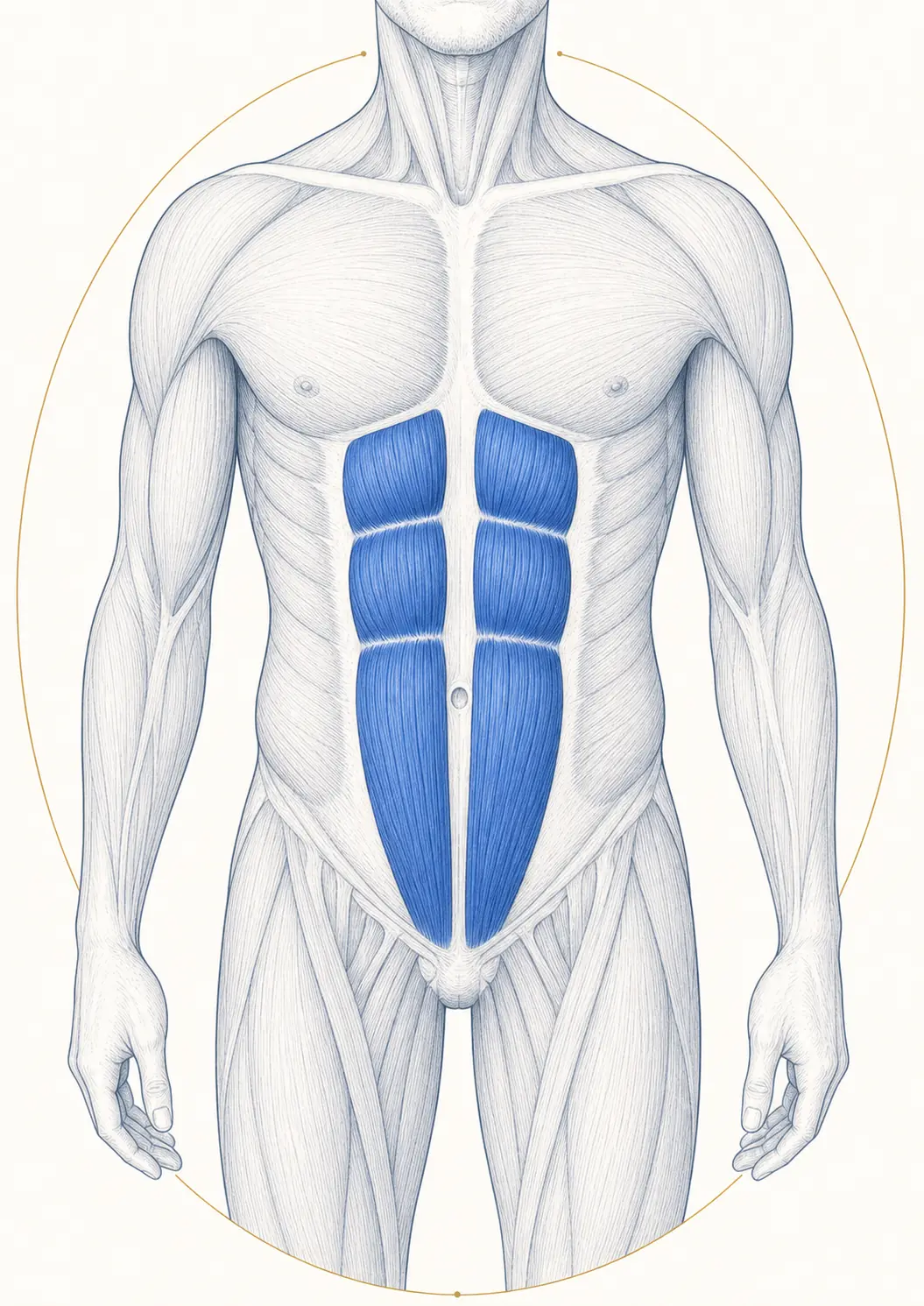
The rectus abdominis consists of two long bands running vertically down the front of the abdomen, from the lower ribcage and sternum towards the pelvis.
Bands of connective tissue divide the muscle into sections. In some people these divisions become visible through the skin, creating the familiar “six-pack” appearance.
Whether these divisions are visible is influenced by many factors and tells us very little about how well a child organises movement.
What it does
The rectus abdominis contributes to bending the trunk forwards. It can also help control the opposite movement: as the body extends or arches, the muscle may regulate how far and how quickly that movement occurs.
Through these actions, it contributes to the changing relationship between the ribcage and pelvis.
Rectus abdominis: from anatomy to movement
In gymnastics
The rectus abdominis contributes when a child:
- creates or maintains a rounded hollow-body shape
- controls the tendency to over-arch during support
- links the ribcage and pelvis during a change of body position
- manages the trunk while the legs move away from the body
This does not mean that the rectus abdominis works alone in any of these positions. The obliques, deeper abdominal wall, back muscles, hip muscles and breathing system all contribute.
It is part of the core, but not the whole system. Training or observing one visible muscle cannot tell us how the trunk will respond during a complex gymnastics task.
This does not automatically mean the child is weak, and it is not a failure. It may simply reflect the coordination demands of a new task.
Muscle spotlight
Transversus Abdominis
Where it sits
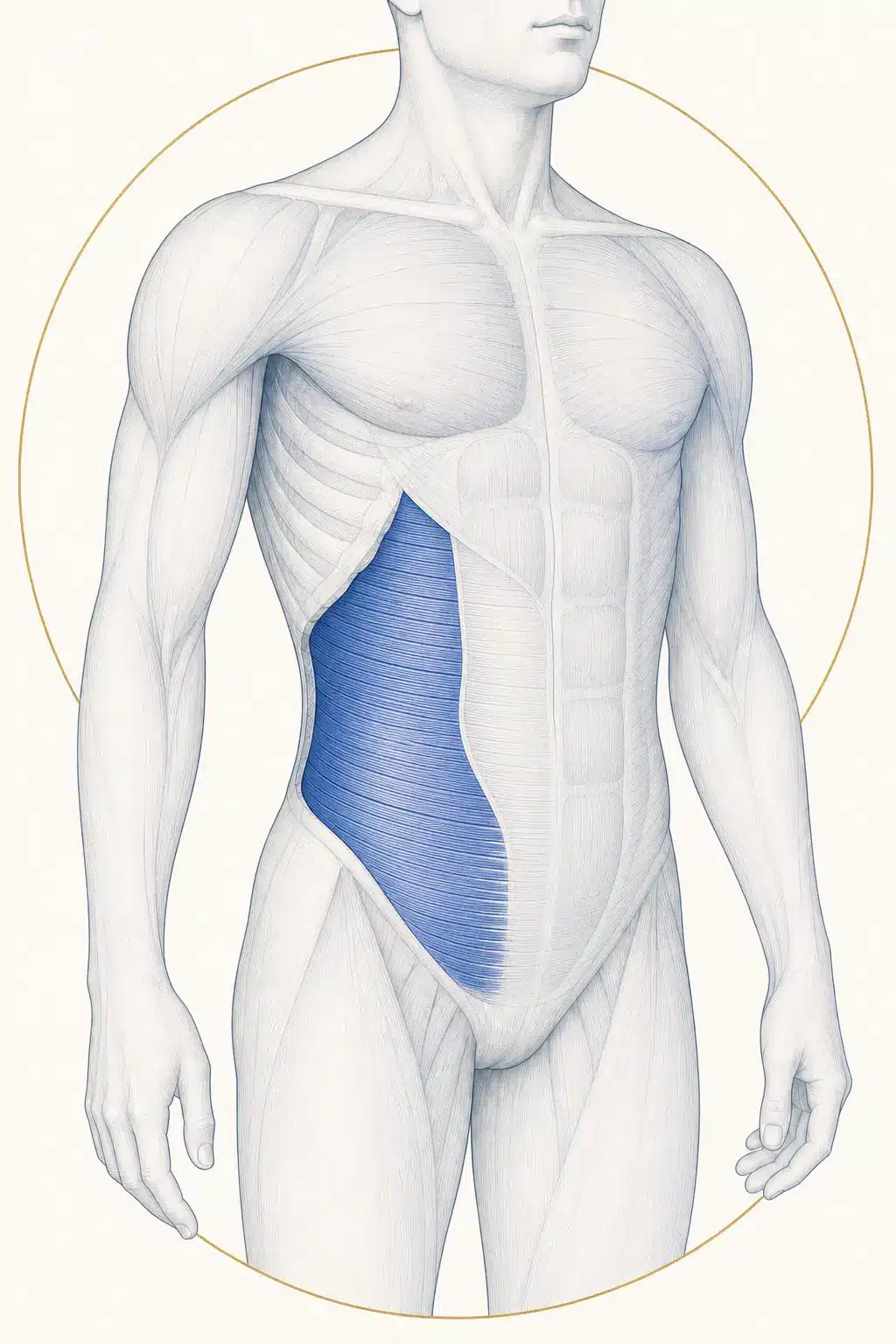
Transversus abdominis is the deepest of the broad muscles in the anterolateral abdominal wall. Its fibres run mainly around the trunk rather than vertically.
Because it lies beneath the obliques, it cannot be judged by looking at the surface of the abdomen.
What it does
It compresses the abdominal contents and contributes to regulating pressure within the abdomen. Through its attachments and coordination with other muscles, it contributes to trunk control.[2]
In one influential laboratory study of adults, transversus abdominis activity began in anticipation of rapid arm movement. This offers an example of the nervous system preparing the trunk before a limb moves.[4]
Deep does not mean dominant
In gymnastics
The transversus abdominis contributes as part of the wider trunk system when a child:
- prepares for movement of the arms or legs
- maintains body shape while the base of support changes
- manages pressure and trunk position during effort
- connects breathing with controlled movement
Trunk control is not the same as continuously drawing the abdomen inward. Children need to breathe, respond and change muscular effort according to the task. Holding one cue permanently may make movement rigid and distract from the wider shape or action being learned.
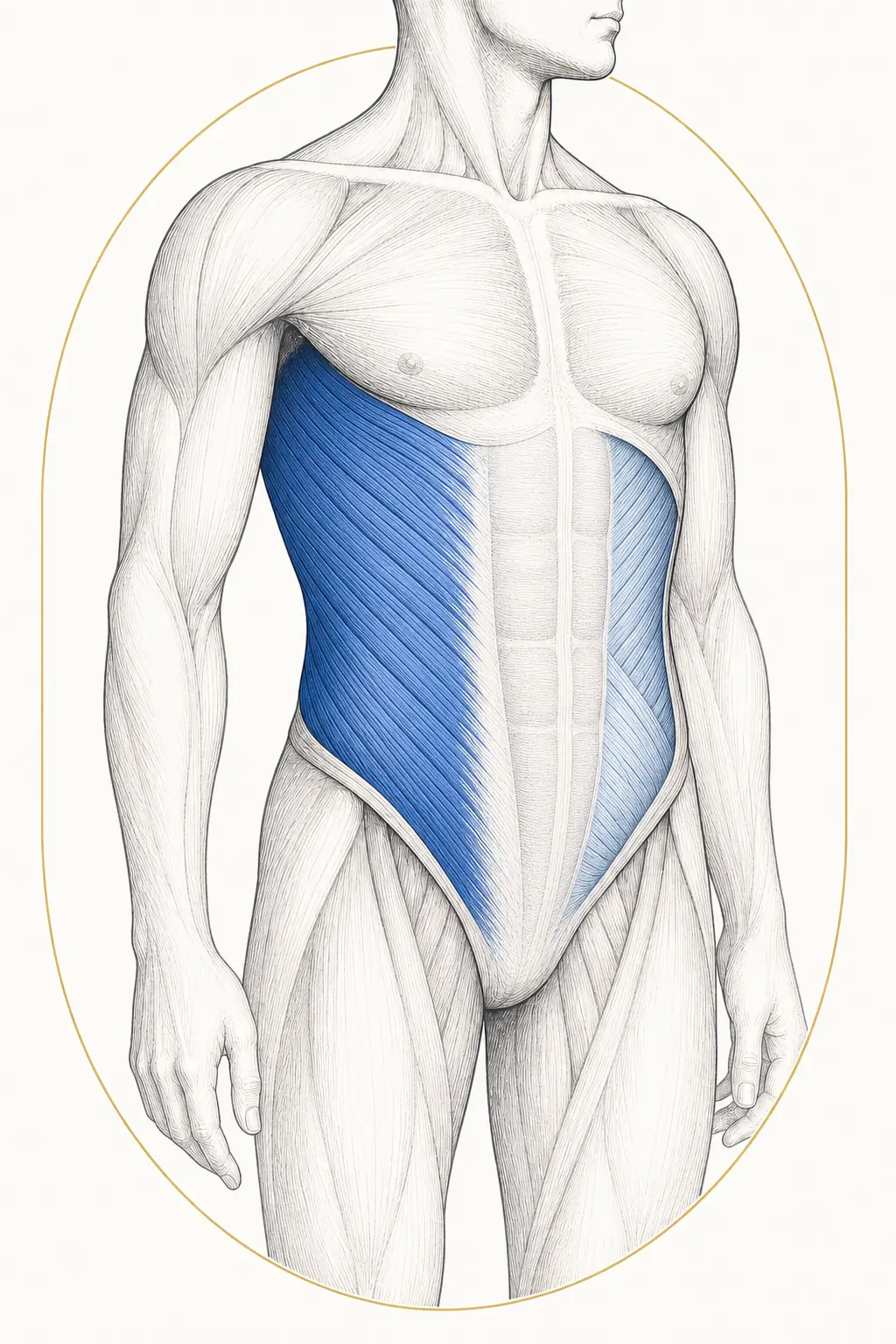
Muscle spotlight
Internal & External Obliques
Where they sit
The obliques form broad layers along the sides of the abdomen.
The external oblique is the more superficial layer. Its fibres run diagonally downwards and forwards.
The internal oblique lies underneath. Much of its fibre direction runs diagonally upwards and forwards.
Together with transversus abdominis and rectus abdominis, these muscles form the abdominal wall.
What they do
- rotate the trunk
- bend the trunk sideways
- control rotation created by other parts of the body
- manage the relationship between ribcage and pelvis
- compress the abdomen and support trunk stiffness when required
Controlling rotation
The left and right sides can work in different combinations—particularly when a task is asymmetrical.
In gymnastics
The obliques contribute when a child:
- resists unwanted twisting in a straight or hollow shape
- turns the trunk deliberately
- controls the body during one-sided support
- keeps the chest and pelvis connected as one leg or arm moves differently from the other
- manages transitions into and out of rotational movement
Muscles can produce movement, but they can also control or resist it. During a balanced shape, the obliques may contribute precisely because the trunk is not twisting.
What families see may be simple: a shape looks calmer, and the movement arrives closer to where the child intended.
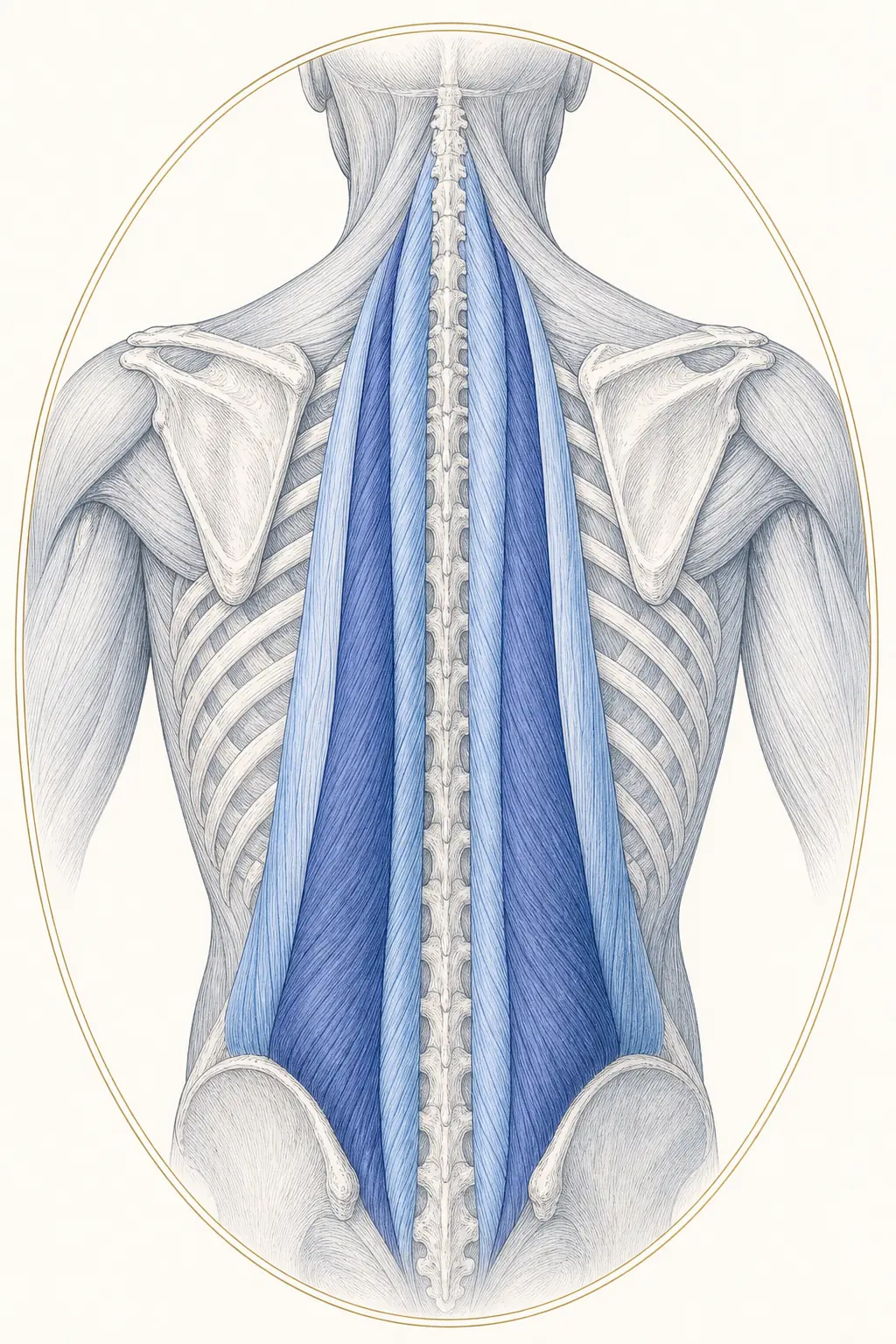
Muscle spotlight
Erector Spinae
Where it sits
Erector spinae is the collective name for long columns of muscle running along the back of the spine. The group extends through the lumbar and thoracic regions and continues towards the neck.
It is not one small muscle but a group with different attachments and contributions along the spine.
What it does
When both sides work together, they contribute to extending the trunk. When one side contributes more, they can assist side-bending and control rotation.
The erector spinae can also work without producing obvious movement. This is called an isometric action: the muscles produce force while helping the trunk maintain position against gravity or another external force.
The back is part of the core
In gymnastics
The erector spinae contribute when a child:
- creates and controls an arch shape
- returns from a flexed position
- keeps the trunk organised in upright balance
- controls the body during landing and deceleration
- connects the upper back, lower back and pelvis during transitions
Flexors and extensors are sometimes presented as opposing teams. In living movement, they often work at the same time. This shared activity—often called co-activation—can increase trunk stiffness when stability is required. The amount and pattern still need to match the task.
Movement lens
Hollow, Straight & Arch
Gymnastics uses recognisable body shapes, but the muscular activity inside them is not fixed.
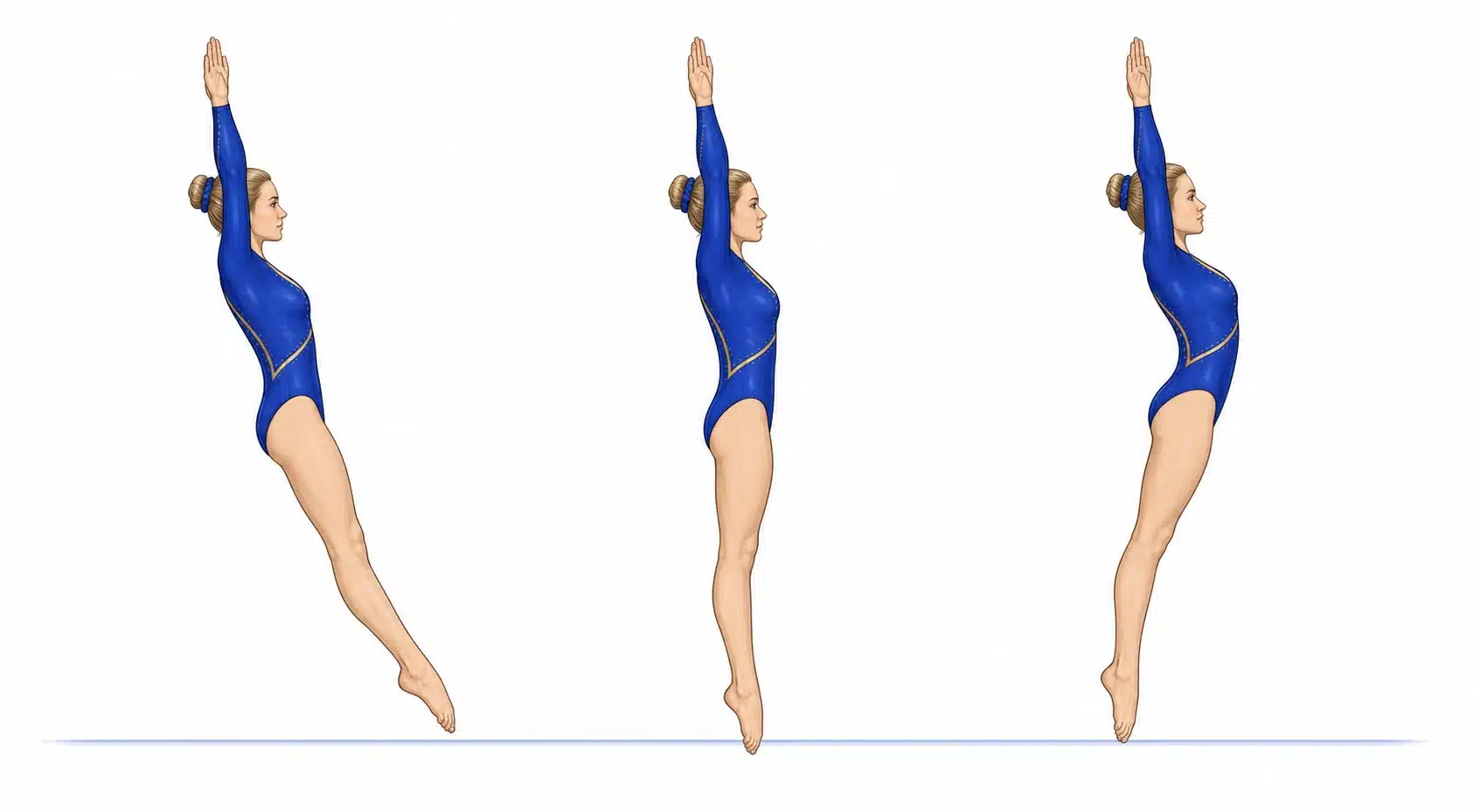
Hollow
Front and side muscles contribute to a more flexed relationship between ribcage and pelvis. Posterior and hip muscles continue to contribute according to the task.
Straight
A straight shape is not passive. Shoulders, trunk, pelvis and legs organise the intended line, with small adjustments continuing even when it looks still.
Arch
Back muscles contribute to extension while the abdominal wall helps regulate it. Movement should be distributed rather than forced into one spinal region.
What changes between shapes?
In a hollow shape, muscles at the front and sides of the trunk contribute to a more flexed relationship between the ribcage and pelvis. The back of the body does not simply switch off: posterior and hip muscles continue to contribute according to the position and task.
In a straight shape, the body must organise the shoulders, trunk, pelvis and legs so the intended line can be maintained against gravity or another force. Small adjustments continue even when the position appears still.
In an arch shape, muscles along the back contribute to extension while the abdominal wall helps regulate the movement. A well-organised shape distributes movement through the body rather than forcing it into one region of the spine.
From one shape to another, the body adjusts:
- the direction of muscular force
- the amount of stiffness required
- the relationship between the ribcage and pelvis
- the position of the arms and legs
- the balance demands
- the contribution of breathing
The same child may organise one shape more easily than another. That is normal: coordination develops through experience, appropriate progressions and time.
Gymnastics does not ask the trunk to remain rigid in one position. It asks the trunk to organise many positions and to change between them with control.
What families may notice over time
Trunk control does not always appear as a dramatic new skill.
These are observations, not diagnostic tests.
A child who arches, bends, rotates or loses balance is not necessarily showing that something is medically wrong. They may be learning, growing, tired, responding to a new task, or working with strength and coordination that are still developing.
Good coaching responds by adjusting the task, support, duration or progression. It does not treat every change of shape as a fault to be forced away.
For London families moving between school, travel and evening activities, this matters. Children do not arrive at every session with identical energy, attention or readiness. Movement quality can vary from day to day without erasing the progress already made.
What the science allows us to say
Research supports the principle that trunk stability depends on coordinated muscular activity that changes with the task.[1]
Laboratory studies of rapid limb movement have demonstrated anticipatory activity in parts of the abdominal wall.[4] Biomechanical work has also shown that many trunk muscles can contribute to spinal stability; no single muscle has a universal claim to being the most important.[3]
Research involving trained young and adult gymnasts adds another useful observation: muscular activation during a handstand differed according to the apparatus and support conditions. A handstand on the floor, parallel bars and rings does not present the nervous system with exactly the same problem.[5]
This supports an important educational message. The body does not carry one fixed muscular programme into every task. It selects and adjusts a response.
What the evidence does not allow us to say is that one isolated exercise, one muscle cue or one type of core training guarantees better gymnastics or prevents injury.[6][7]
A systematic review of core-training research found limited and mixed evidence for direct improvements in sporting performance. Integrated training may transfer more readily than isolated trunk work, but the studies vary widely in their participants, methods and outcomes.[6]
For children in recreational gymnastics, the responsible conclusion is therefore modest:
That is valuable without turning the core into a cure-all.
Safety and health notices
This chapter is educational and is not a home exercise programme, a diagnostic tool or individual medical advice.
Gymnastics positions involving inversion, impact, hanging or weight-bearing through the arms should be taught with qualified supervision, appropriate equipment and progressions suited to the child’s age, experience and readiness.
Children should not be instructed to hold their breath, pull the abdomen inward continuously, force the lower back flat, or work through pain in order to appear “strong”.
Stop the activity if pain occurs. Seek advice from an appropriate healthcare professional when pain is persistent, severe or worsening, follows a significant injury, disturbs normal daily activity, or is accompanied by weakness, altered sensation or other concerning symptoms.
References
- McGill, S. M., Grenier, S., Kavcic, N., & Cholewicki, J. (2003). Coordination of muscle activity to assure stability of the lumbar spine. Journal of Electromyography and Kinesiology, 13(4), 353–359. https://doi.org/10.1016/S1050-6411(03)00043-9
- Cresswell, A. G., Grundström, H., & Thorstensson, A. (1992). Observations on intra-abdominal pressure and patterns of abdominal intra-muscular activity in man. Acta Physiologica Scandinavica, 144(4), 409–418. https://doi.org/10.1111/j.1748-1716.1992.tb09314.x
- Cholewicki, J., & VanVliet, J. J. IV. (2002). Relative contribution of trunk muscles to the stability of the lumbar spine during isometric exertions. Clinical Biomechanics, 17(2), 99–105. https://doi.org/10.1016/S0268-0033(01)00118-8
- Hodges, P. W., & Richardson, C. A. (1997). Feedforward contraction of transversus abdominis is not influenced by the direction of arm movement. Experimental Brain Research, 114(2), 362–370. https://doi.org/10.1007/PL00005644
- Kochanowicz, A., Niespodziński, B., Mieszkowski, J., Marina, M., Kochanowicz, K., & Zasada, M. (2019). Changes in the muscle activity of gymnasts during a handstand on various apparatus. Journal of Strength and Conditioning Research, 33(6), 1609–1618. https://doi.org/10.1519/JSC.0000000000002124
- Reed, C. A., Ford, K. R., Myer, G. D., & Hewett, T. E. (2012). The effects of isolated and integrated “core stability” training on athletic performance measures: A systematic review. Sports Medicine, 42(8), 697–706. https://doi.org/10.2165/11633450-000000000-00000
- Behm, D. G., Drinkwater, E. J., Willardson, J. M., & Cowley, P. M. (2010). Canadian Society for Exercise Physiology position stand: The use of instability to train the core in athletic and nonathletic conditioning. Applied Physiology, Nutrition, and Metabolism, 35(1), 109–112. https://doi.org/10.1139/H09-128