Building Upper Body Strength in Primary School Children – The Safe Way
Upper body strength plays a crucial role in children’s gymnastics development. From handstands and cartwheels to climbing and supporting body weight on the arms, strong shoulders, arms, and core muscles create the foundation for safe and confident progress.
However, building strength in primary school children requires a thoughtful, age-appropriate approach. The goal is not muscle size — it is control, balance, and coordination.
At our children’s gymnastics classes in Kensington & Chelsea, we prioritise safe strength development before introducing more advanced skills.
Why Upper Body Strength Matters in Gymnastics
Many gymnastics skills rely on the ability to support body weight through the arms and shoulders.
Strong upper body development helps children:
-
Maintain safe handstand alignment
-
Protect their shoulders during weight-bearing skills
-
Improve posture
-
Reduce injury risk
-
Develop better control in tumbling and floor work
Without sufficient strength, children may compensate with poor technique — which can slow progress and increase strain on joints.
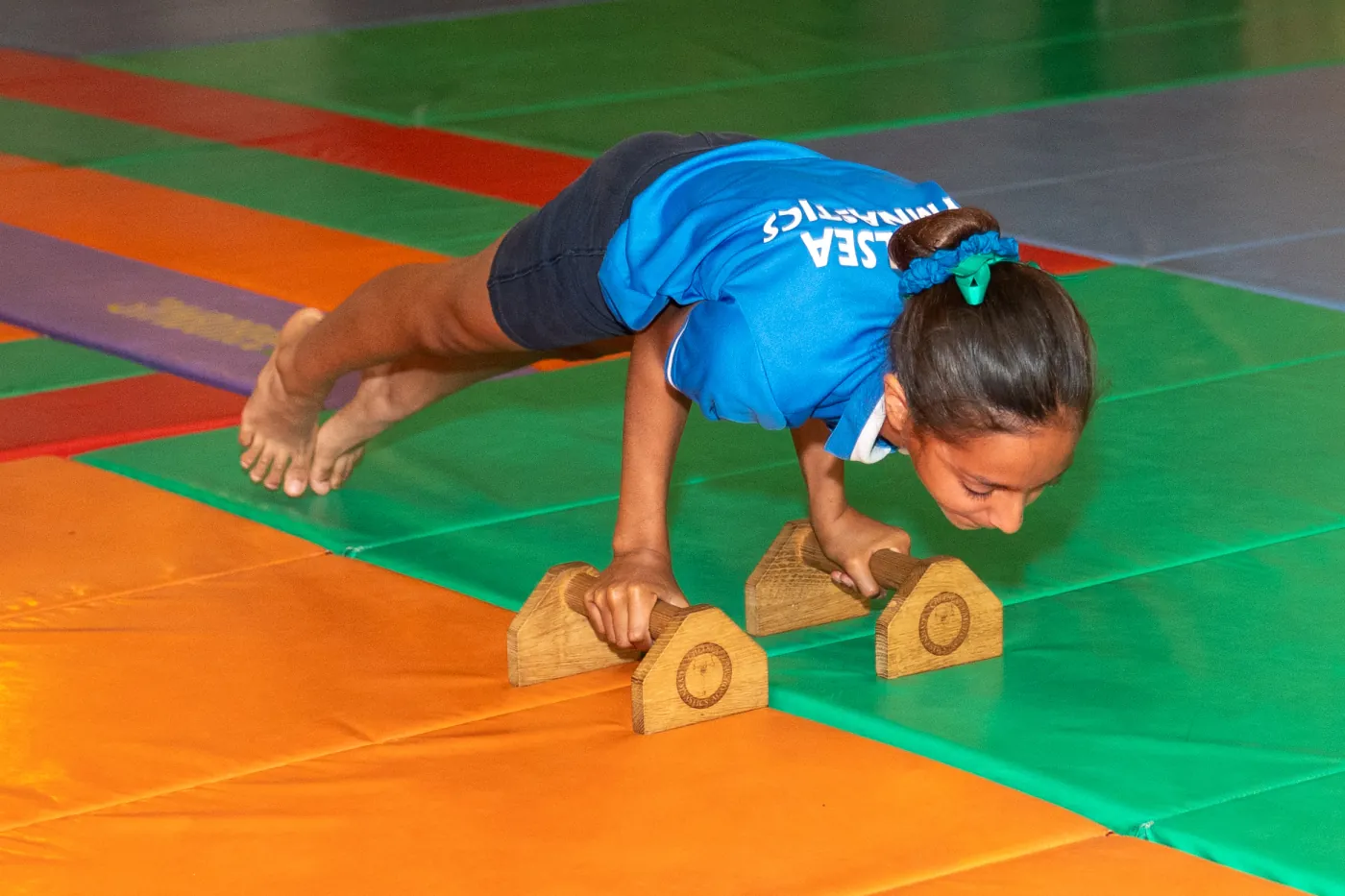
Strength Before Skills
A common mistake in children’s gymnastics is rushing toward advanced skills before the body is ready.
Parents often ask when children should begin developing these foundations. If you are wondering about the ideal starting point, you can read our guide on the right age to start gymnastics.
True progress follows this order:
- Strength
- Control
- Alignment
- Skill complexity
For example, a stable handstand depends far more on shoulder strength and core control than flexibility.
Encouraging children to build strength gradually allows skills to feel lighter and more natural over time.
What Safe Upper Body Training Looks Like for Children
Upper body strength for primary school children should be:
✔ Bodyweight-based
✔ Supervised
✔ Symmetrical (both sides trained equally)
✔ Short and consistent
✔ Technique-focused
Safe, effective exercises include:
-
Wall push-ups
-
Incline push-ups
-
Bear crawls
-
Plank holds
-
Crab holds
-
Supported wall handstand holds
Two to three short sessions per week are more than sufficient. Read our blog article to learn more on how to support gymnastics practice at home safely.

Avoiding Common Mistakes
Parents often unintentionally push children toward:
-
High repetitions with poor technique
-
Fatigue-based training
-
Overemphasis on one side
-
Comparing strength between children
Strength development in primary school years should feel controlled and manageable — not exhausting.
Consistency and quality matter more than intensity.
The Role of Symmetry in Strength Development
Balanced upper body strength is essential for healthy development.
Activities such as writing, tablet use, or one-sided sports can sometimes lead to muscular imbalance. Gymnastics, when structured properly, encourages children to load both arms and shoulders evenly.
Balanced development supports:
-
Improved posture
-
Reduced strain
-
Better coordination
-
Long-term joint health
When to Seek Structured Coaching
While simple strength exercises can be supported at home, structured coaching ensures:
-
Correct alignment
-
Safe progressions
-
Gradual skill development
-
Individualised guidance
If you are looking for research-informed children’s gymnastics classes in Kensington, Chelsea, or Knightsbridge, small-group environments allow for close attention and safe strength progression.
Final Thoughts
Upper body strength in primary school children is not about lifting heavy weights or training intensely.
It is about building:
✔ Control
✔ Balance
✔ Stability
✔ Confidence
When strength comes first, skills follow naturally — and safely. Next steps: read our blog article on the benefits of gymnastics for primary school children.
Frequently Asked Questions About Upper Body Strength in Children
How can I build upper body strength in my child safely?
The safest way to build upper body strength in primary school children is through age-appropriate, bodyweight-based exercises. The focus should be on control, alignment, and balanced development rather than high intensity or heavy resistance.
Safe options include:
-
Wall push-ups
-
Incline push-ups
-
Bear crawls
-
Plank holds
-
Crab holds
-
Supported wall handstands (with supervision)
Sessions should be short (10–15 minutes), supervised, and performed two to three times per week. Quality of movement is far more important than quantity.
Are push-ups safe for primary school children?
Yes — push-ups can be safe for primary school children when adapted appropriately.
Instead of full floor push-ups, younger children should begin with:
-
Wall push-ups
-
Incline push-ups with hands on a stable surface
These variations reduce load on the shoulders and wrists while still developing strength. Proper alignment and slow, controlled movement are essential to avoid strain.
Children should never be encouraged to perform high repetitions to exhaustion. Technique and control always come first.
How often should children train upper body strength?
For primary school children, two to three short sessions per week are sufficient.
Each session can include:
-
2–4 exercises
-
1–3 controlled sets
-
Emphasis on posture and balanced effort
Overtraining is unnecessary at this age. Strength develops gradually through consistent exposure rather than intensity.
Gymnastics classes often incorporate structured upper body conditioning naturally within skill progressions.
Does gymnastics improve shoulder strength?
Yes — structured gymnastics training is highly effective for developing shoulder strength in children.
Many gymnastics skills require supporting body weight through the arms, including:
-
Handstands
-
Cartwheels
-
Floor transitions
-
Basic bar preparation
When taught progressively and safely, these movements help children build shoulder stability, upper body control, and balanced strength.
Gymnastics also encourages symmetrical development, as both arms are regularly loaded and trained evenly.
👤 About the Author
Dr. Stefan Kolimechkov
Sports Scientist, British Gymnastics Coach, and Founder of Kensington & Chelsea Gymnastics Academy.
Dr Kolimechkov specialises in children’s physical development and health-related exercise science. His international, peer-reviewed research underpins the science-based approach used throughout the KCGA Academy, helping parents make informed decisions about their children’s long-term health and wellbeing.
📘 Continue Learning in the KCGA Academy
If you found this guide helpful, you may also be interested in exploring related topics in the KCGA Academy, where we share calm, evidence-based insights to support children’s physical development.
Great post,Thanks for sharing