
KCGA Research · Opportunity, participation and place
Gymnastics in London
An independent, longitudinal research programme examining how London shapes gymnastics provision, opportunity, participation and development across the lifespan.
Beginning with a controlled 2026 baseline, the programme brings together population and spatial research, urban context, history and human experience—building a foundation for long-term analysis, evidence synthesis and carefully governed investigation into physical capability and health.
Dataset 2026
2026: establishing the baseline
Across the August–September 2026 methodological evidence period, the first research wave recorded identifiable gymnastics provision across every London local-authority area using consistent Provider, Venue and Programme definitions. The wave is now preserved as a frozen research snapshot.
- London local-authority areas
- 33
- Providers
- 163
- Physical Venues
- 247
- Programmes
- 1,131
- Provider–Venue relationships
- 261
These are research Dataset figures. The public Provider Register applies an additional publication-verification layer, so its published Provider population may legitimately be smaller than the controlled scientific population.
Why this research exists
London is not simply the setting. It is part of the research question.
Gymnastics is shaped by the city around it: geography, available space, facilities, transport, schools, affordability, programme design and the realities of family and working life.
The programme therefore studies more than where provision is located. It asks how people find and reach gymnastics, what opportunities exist at different stages of life, what helps participation continue or return, and how the system develops over time.
Contemporary data will sit alongside historical research and human experience, creating a fuller account of gymnastics as a sporting, social and urban ecosystem.
From evidence to public value
- Research identificationSystematic discovery and source recording across all 33 areas.
- Controlled scientific DatasetDefined entities, relationships, dates and quality controls for research use.
- Analysis and publicationsMethods and findings prepared through appropriate scholarly processes.
- Separately governed public outputsThe first State report and public Provider Register are now available, each with its own verification and publication decisions.
Research scope
From one London baseline to a wider body of knowledge
The 2026 map is the starting point for a programme connecting place, participation, people and change—while keeping future methods and findings protected until they are ready.
The city and its infrastructure
How geography, facilities, schools, transport and the use of dedicated or shared space shape the environment for gymnastics.
Opportunity across life
How children, families, teenagers, adults, returning gymnasts and Masters participants encounter different routes into and through the sport.
History and human experience
How London’s gymnastics ecosystem developed, and how gymnasts, families, coaches and organisations experience it in practice.
Research that can travel
How carefully documented work in London may support future comparison, adaptation and independent research in other places.
The wider programme
A wider scientific horizon
Gymnastics in London is intended to contribute to a wider, developing programme of research connecting three fundamental questions: who has a realistic opportunity to participate; what the international scientific evidence tells us about gymnastics, health and human development; and which unanswered questions require carefully governed independent investigation.
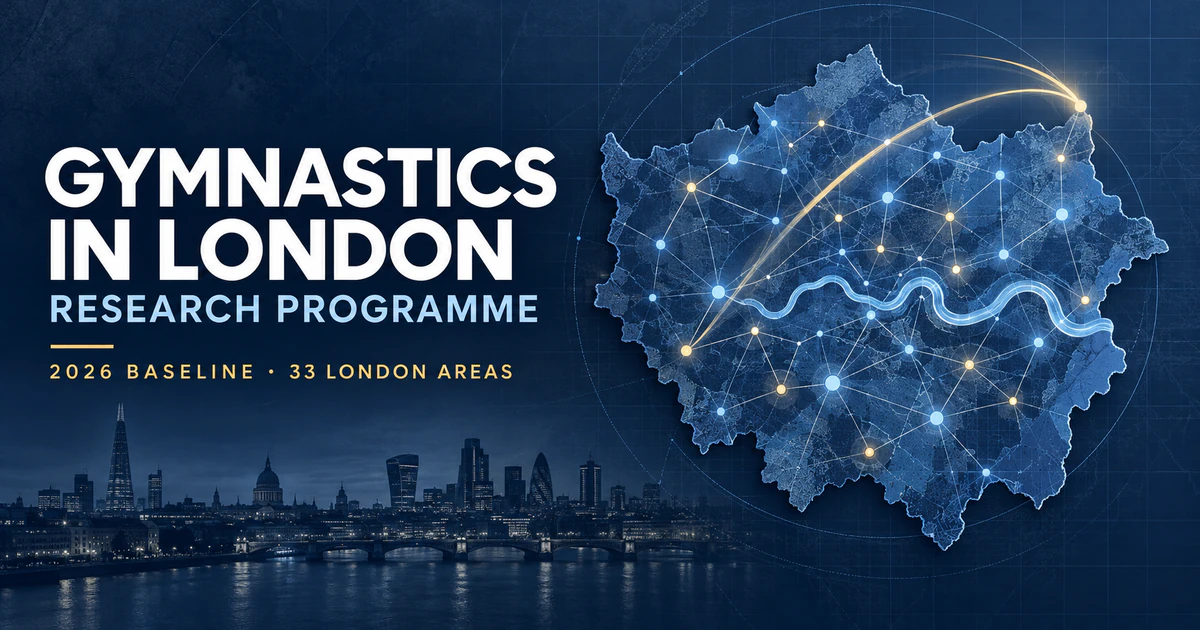
London opportunity and participation
The 2026 baseline begins with the environment for participation: where provision exists, how opportunity is structured and how London’s gymnastics ecosystem changes over time.
Gymnastics Evidence Observatory
A future structured home is envisaged for bringing together and continually organising peer-reviewed research relating to gymnastics, physical fitness, physical function, health and development across the lifespan.
Independent human research
In time, identified evidence gaps may inform carefully governed studies examining how different forms and histories of gymnastics participation relate to health and physical capability across life.
The Evidence Observatory and human-research strands are not presented as established outputs. Any future studies would require appropriate scientific collaboration, ethics and governance. No health-effect findings, research partnerships or delivery dates are being announced at this stage.
Explore London
Explore the 33 London areas
The 32 London boroughs and the City of London form the programme’s geographic framework. Choose an area to confirm its place in the 2026 baseline; borough profiles will appear only when they are genuinely published.
Looking for public Provider records? Search the Gymnastics in London Provider Register. Its borough and name filters are separate from this research-framework map.
With JavaScript enabled, use arrow keys to move between areas and Enter or Space to select. The native selector and complete list provide an equivalent route.
Borough boundaries: Greater London Authority, licensed under the Open Government Licence v3.0. Contains OS data © Crown copyright and database right 2026. Boundaries are generalised for this interface and must not be used for measurement or address assignment.
View all 33 areas as an alphabetical list
- Barking and DagenhamIncluded in the 2026 research framework
- BarnetIncluded in the 2026 research framework
- BexleyIncluded in the 2026 research framework
- BrentIncluded in the 2026 research framework
- BromleyIncluded in the 2026 research framework
- CamdenIncluded in the 2026 research framework
- City of LondonIncluded in the 2026 research framework
- CroydonIncluded in the 2026 research framework
- EalingIncluded in the 2026 research framework
- EnfieldIncluded in the 2026 research framework
- GreenwichIncluded in the 2026 research framework
- HackneyIncluded in the 2026 research framework
- Hammersmith and FulhamIncluded in the 2026 research framework
- HaringeyIncluded in the 2026 research framework
- HarrowIncluded in the 2026 research framework
- HaveringIncluded in the 2026 research framework
- HillingdonIncluded in the 2026 research framework
- HounslowIncluded in the 2026 research framework
- IslingtonIncluded in the 2026 research framework
- Kensington and ChelseaIncluded in the 2026 research framework
- Kingston upon ThamesIncluded in the 2026 research framework
- LambethIncluded in the 2026 research framework
- LewishamIncluded in the 2026 research framework
- MertonIncluded in the 2026 research framework
- NewhamIncluded in the 2026 research framework
- RedbridgeIncluded in the 2026 research framework
- Richmond upon ThamesIncluded in the 2026 research framework
- SouthwarkIncluded in the 2026 research framework
- SuttonIncluded in the 2026 research framework
- Tower HamletsIncluded in the 2026 research framework
- Waltham ForestIncluded in the 2026 research framework
- WandsworthIncluded in the 2026 research framework
- WestminsterIncluded in the 2026 research framework
Research outputs
One programme, a growing body of work
Two foundation outputs are now public: a dated State report preserving the 2026 research snapshot and a separately governed Provider Register for public discovery. Developing and future work remains clearly labelled and non-clickable.
Current stage
The 2026 research foundation is now public
The Hub distinguishes public outputs, work in development and work under review.
- State reportVersion 1.0 publishes the frozen August–September 2026 research snapshot, methods and supporting evidence.
- Provider RegisterThe live public resource supports discovery by postcode, London borough or Provider name.
- Research developmentSelected monograph chapters are in development and one manuscript is submitted for review; no publication claim is made for either.
State of Gymnastics in London 2026
Read the first controlled London-wide baseline of publicly identifiable gymnastics provision across all 33 local-authority areas.
The report preserves the August–September 2026 evidence period and presents the methods, interpretation, limitations and supporting tables as a dated research record.
Read the 2026 State reportGymnastics in London Provider Register
Find publication-verified gymnastics Providers across London by postcode, borough or Provider name.
The Register is a separately governed public-discovery resource, not a live availability or quality assessment. Scientific inclusion in Dataset 2026 does not automatically establish authority for public republication.
Search the Provider RegisterA longitudinal programme
A programme designed to show change over time
A single snapshot can describe a moment. Repeated, dated research waves can begin to show what changes, what remains stable and where new questions emerge.
-
2026 · Baseline research wave
The first controlled London-wide reference point
The State report preserves the wave’s definitions, evidence period, coverage and research controls. The separately verified Provider Register translates part of that foundation into a public-discovery resource without turning the controlled Dataset into a live directory.
-
Future research waves
Extending the evidence without inventing the timetable
Future waves may examine change in provision, places, participation pathways and opportunity while preserving each dated wave as its own historical record. Dates and outputs will be added only when confirmed.
From research to public value
Evidence for better questions—and better conversations
The programme does not promise that research alone will solve access or development challenges. It can create a clearer shared evidence base for people making decisions about sport, place and participation.
- Families
- A publication-verified Provider Register for discovery, alongside clear boundaries that it is not live availability or a quality assessment.
- Gymnastics Providers and coaches
- A common London-wide frame for understanding the breadth and structure of provision.
- Researchers
- A developing platform for reproducible, interdisciplinary work spanning urban sport, evidence synthesis, opportunity, participation and future questions about health across life.
- London councils and policymakers
- Evidence that may help frame local and London-wide questions about facilities, access, participation and public health without substituting for consultation or current operational data.
- Sports organisations, schools and facility partners
- A developing reference point for discussions about provision, shared infrastructure, participation pathways and the wider gymnastics system.
- Interested readers
- One public home for the 2026 State report, Provider Register and future outputs as they are genuinely released.
Research collaboration
Help build research that London—and other cities—can use
Gymnastics in London is being developed as serious, independent research rather than a closed organisational project. Dr Stefan welcomes thoughtful conversations with researchers, universities, London councils, public-health and sport bodies, schools and facility partners whose expertise could strengthen future work.
Conversations are welcome around
- Interdisciplinary research and methodological review
- Evidence synthesis and future Observatory development
- Future research on participation, physical capability and health
- Official or public data and London local context
- Future comparative or multi-site research
- Knowledge exchange across councils, sport, schools, facilities and public health
Any collaboration would be defined separately with appropriate governance, ethics, independence, attribution and responsibilities. An initial conversation implies no endorsement or commitment.
Research leadership
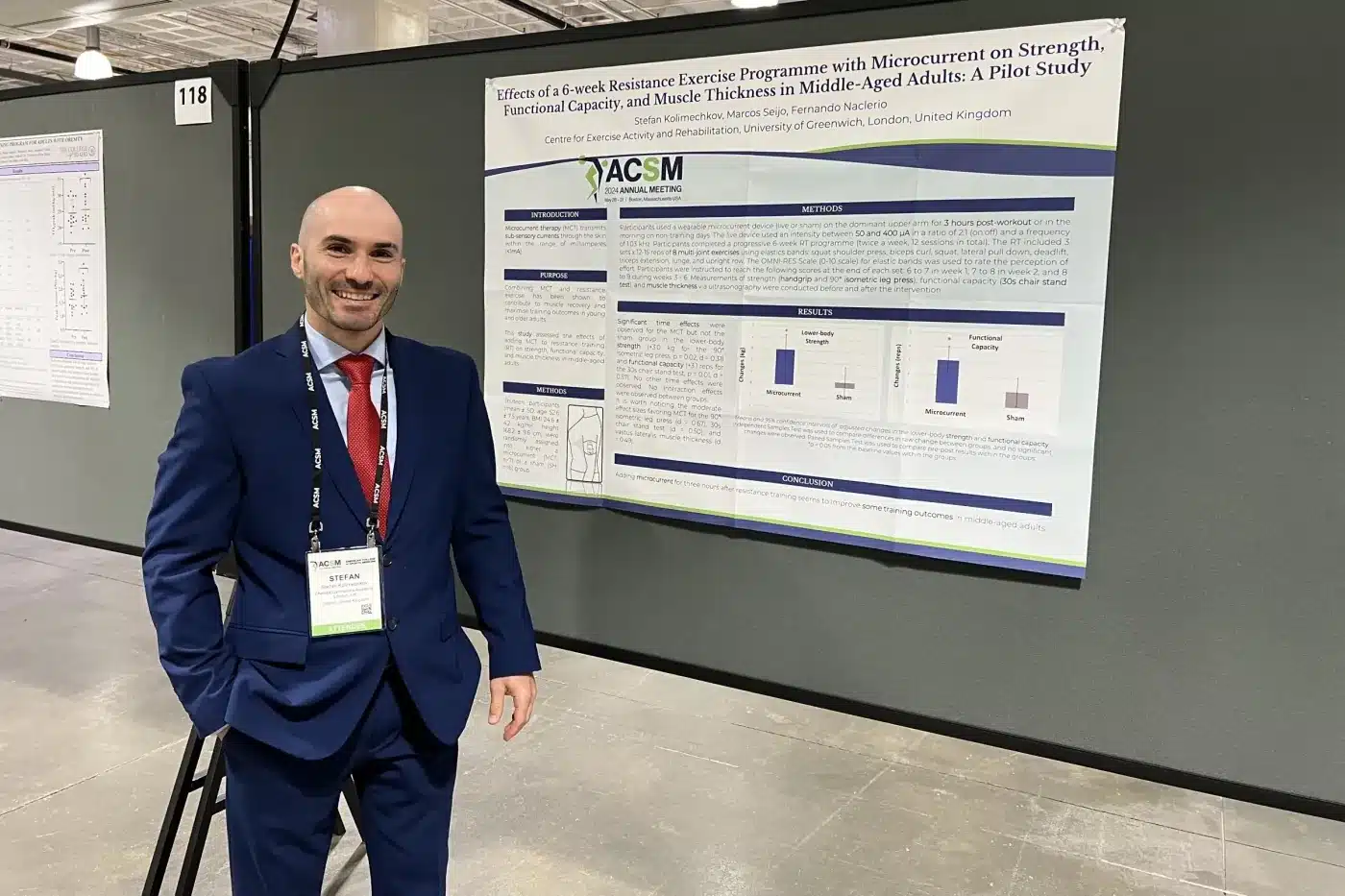
Led by Dr Stefan Kolimechkov
Dr Stefan Kolimechkov leads the Gymnastics in London research programme. He is KCGA’s Founder and Director, a gymnastics coach and Masters gymnast, and a published sport science researcher.
He completed a PhD in Physical Education in 2018. His work connects practical knowledge of gymnastics with wider questions about opportunity, participation, physical activity and research measurement across life.
For Gymnastics in London, that combined perspective supports a programme spanning contemporary data, urban context, history, human experience, evidence synthesis and reproducible research—without allowing professional interest to replace scientific independence.
Read Dr Stefan Kolimechkov’s verified profileResearch principles
Trust detail, available when it matters
The Hub keeps the opening clear for ordinary readers and makes the programme’s research boundaries available below.
Independence
Research and public-output decisions are not popularity rankings, endorsements or commercial placement. Where KCGA appears in a public resource, it follows the same published rules as other Providers.
Transparent methodology
Methods, definitions, evidence periods and material limitations should be stated clearly enough for readers to understand how an output was produced and what it cannot establish.
Reproducibility
Research decisions, controlled identifiers and validation checks are maintained so that reported aggregates and future analyses can be traced to the relevant governed research wave.
Dated research waves
Each wave is a dated research record rather than a claim of live availability. Later change should be documented without silently rewriting the historical baseline.
Controlled research data and public outputs
The scientific Dataset is controlled. A Provider’s inclusion in it does not by itself authorise public republication. Each public output has its own field, rights, verification and safeguarding decisions.
Corrections and governance
Published outputs distinguish a correction to the research record from a change that happened later. The Provider Register has its own corrections route, while the dated State report preserves its version and permanent identifier; future outputs will define equivalent routes before release.
The future programme
A research home designed to grow with the evidence
The 2026 State report and public Provider Register now make the programme’s first foundation visible. This Hub will continue to grow only as scholarly work, public resources and future research waves are genuinely ready—without overstating evidence, publication status or partnerships.
Explore KCGA’s current resources