Handspring – Front Tuck: An Educational Progression Model
Who This Resource Is For
This article presents an educational progression model used in elite artistic gymnastics training to demonstrate how complex vault skills are broken down safely and systematically under expert supervision.
It is shared as part of the KCGA Academy to help parents, older gymnasts, coaches, and physical education professionals understand the process behind skill development at higher levels of the sport.
Important note for parents:
This resource is not intended for unsupervised practice and does not represent the activities used in KCGA’s recreational children’s classes. All advanced gymnastics skills require qualified coaching, appropriate facilities, and strict safety protocols. You can read more in our Is gymnastics safe for children? (science-based guide). For further reassurance, parents can read our Safeguarding at KCGA policy, which outlines how children’s welfare, supervision, and best practice standards are protected across all programmes.
Academic Context & Authorship
This educational progression model originates from a gymnastics training project developed by Dr Neli Tankusheva, PhD, Gymnastics Department, National Sports Academy “Vassil Levski” (Bulgaria).
Dr Tankusheva was a lecturer and academic supervisor of Dr Stefan Kolimechkov during his Bachelor’s degree in Sports Science with a professional qualification in Artistic Gymnastics Coaching at the National Sports Academy. The project reflects the elite coaching methodology and academic standards taught within the Gymnastics Department.
The material has been translated, visually adapted, and curated for educational use within the KCGA Academy by Dr Stefan Kolimechkov, drawing on his academic training and coaching experience to make elite methodology accessible for learning and reference.
Why Progressions Matter in Gymnastics Vault Training
Vault is one of the most dynamic and demanding apparatuses in artistic gymnastics. Skills are completed in fractions of a second, leaving little margin for error. For this reason, elite gymnastics training relies on progressive learning models that:
-
Break complex skills into manageable stages
-
Develop strength, coordination, and spatial awareness gradually
-
Reduce injury risk through structured preparation
-
Emphasise visual control and body awareness
Understanding these progressions helps parents appreciate why gymnastics development cannot be rushed and why qualified coaching is essential for safe long-term progress.
The Handspring Front Tuck Vault
The handspring front tuck vault is a classic forward-style vault that combines:
- A forward handspring action onto the vault (first flight phase)
- A tucked forward somersault after take-off (second flight phase)
At elite level, this vault belongs to the forward handspring and Yamashita-style vault family and is taught through carefully planned preparatory stages.
Educational Progression Model
The following progression model illustrates how elite coaches prepare gymnasts for the handspring front tuck vault. Each stage develops specific physical and technical qualities before the full skill is attempted.
🔹Level 1 – Foundational Preparatory Exercises
The initial level focuses on creating a safe physical foundation before any vault flight or rotation is introduced. These exercises are deliberately simple in appearance, but highly purposeful in what they develop.
Level 1 – Preparatory Exercise 1: Handspring Onto a Low Platform (≈30 cm)
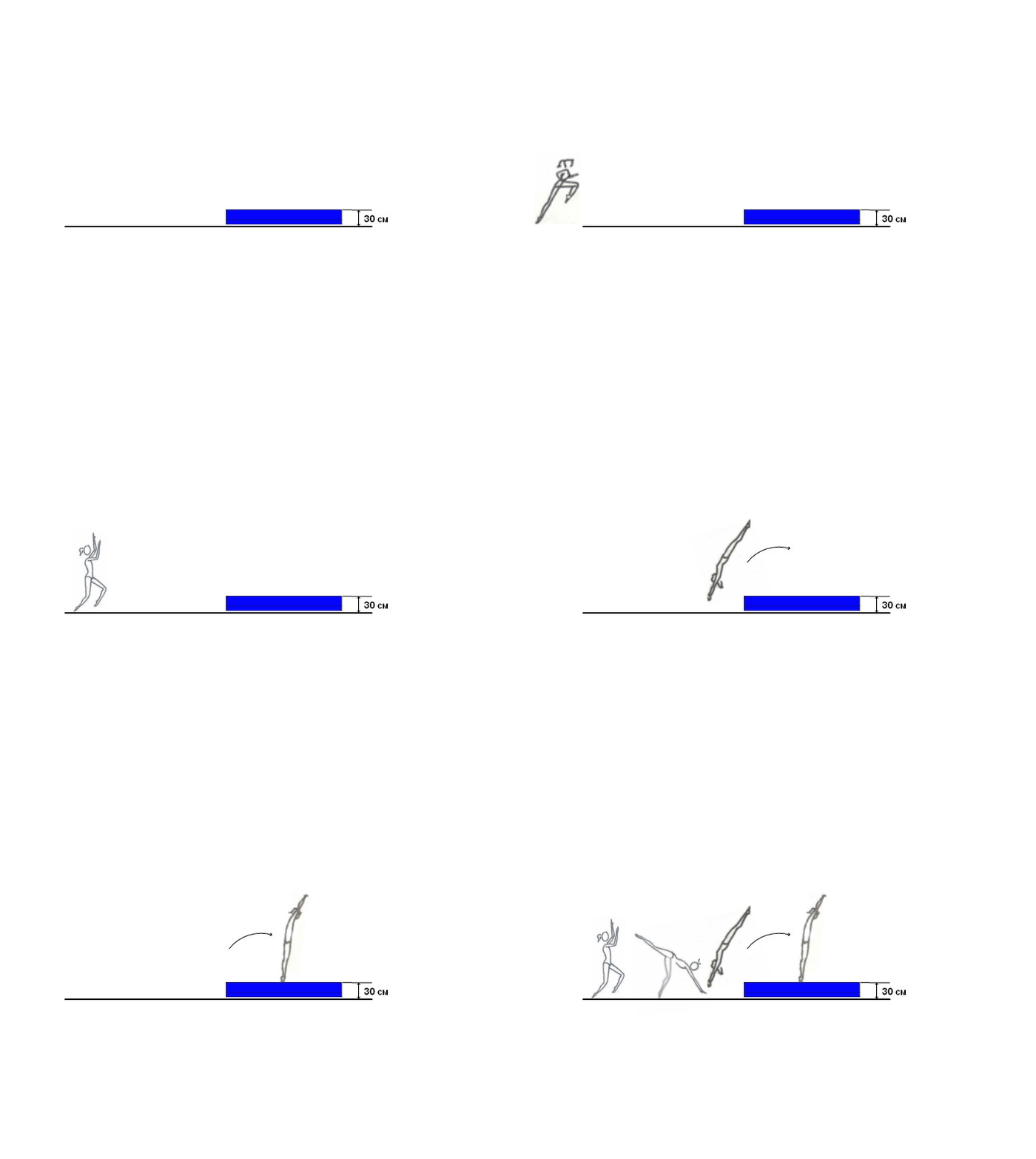
This first progression introduces the handspring entry pattern by asking the gymnast to place the hands on the floor, then perform a fast, straight-body handspring action to land up onto a low platform (around 30 cm high).
The key coaching idea here is the blocking action through the shoulders: the gymnast learns to push “up and away” from the hands using a quick shoulder extension, rather than collapsing through the arms. Landing on a slightly higher surface provides immediate feedback — if the shoulders block strongly, the gymnast can lift and travel onto the platform with a tighter, more organised body line.
What this exercise develops:
-
Forward hand placement and shoulder support in a safe, simplified setup
-
Body alignment and “tight” posture through the handspring action
-
Confidence with forward inversion before adding more speed, amplitude, or flight
In elite methodology, early progressions often reduce height and complexity so the gymnast can repeat correct mechanics safely before the skill is developed at full speed.
Level 1 – Preparatory Exercise 2: Handspring From Springboard Onto a Raised Platform (≈60 cm)
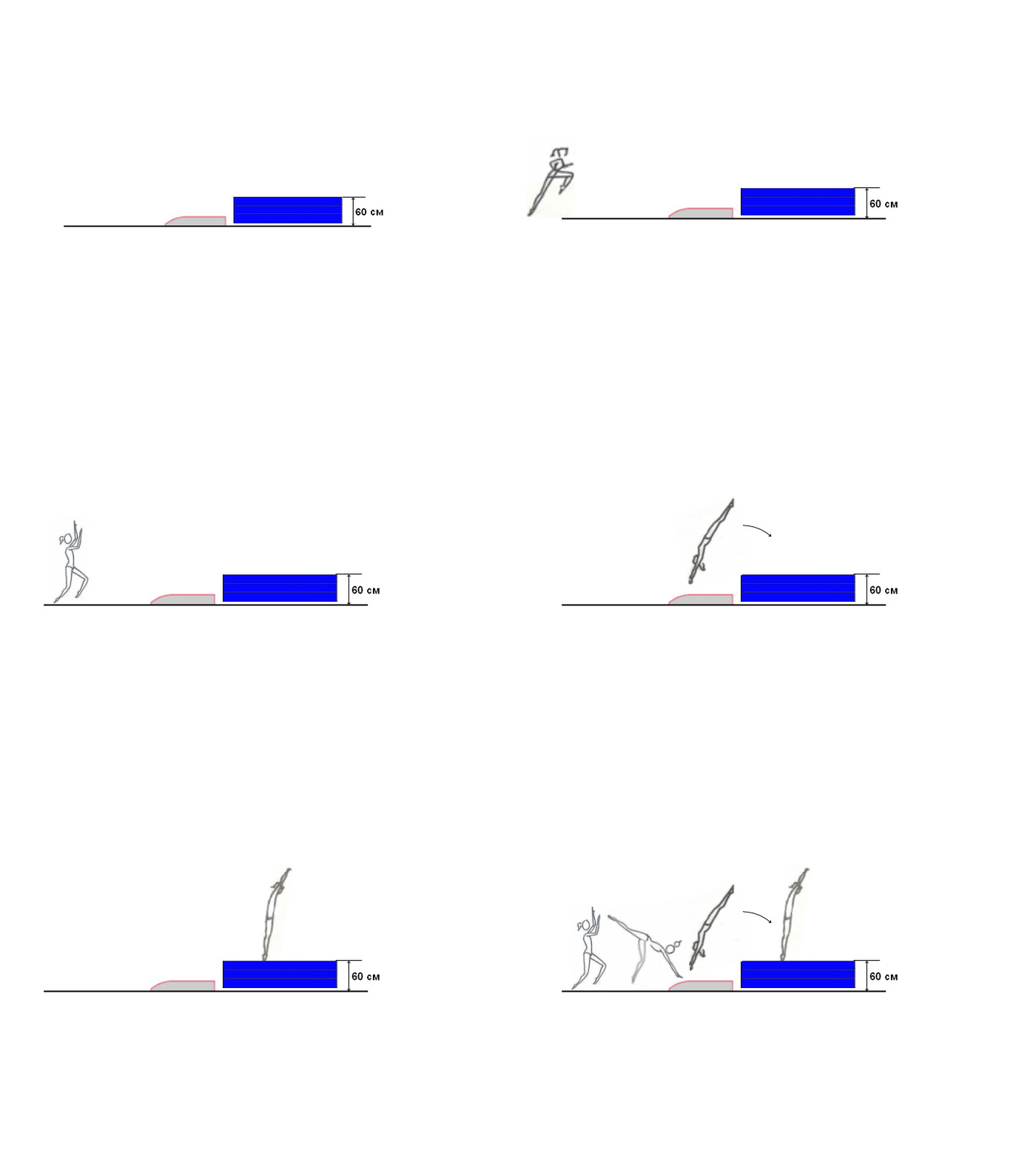
This second Level 1 progression builds directly on the previous exercise by introducing a springboard under the hands and increasing the landing height to approximately 60 cm.
The springboard adds elastic resistance and rebound, requiring the gymnast to coordinate a faster and more decisive shoulder block at hand contact. Landing onto a higher platform further reinforces the concept of pushing upward, not simply rotating forward.
Together, these elements encourage the gymnast to:
-
Use the shoulders and upper body actively during the handspring action
-
Convert horizontal speed into vertical lift
-
Maintain a strong, extended body line through the support phase
What this exercise develops:
-
More powerful shoulder blocking and arm support
-
Timing and coordination between hand contact and rebound
-
Improved awareness of upward trajectory before flight and rotation are added
In elite vault methodology, the gradual introduction of elastic surfaces and increased height helps gymnasts learn to generate lift efficiently while maintaining technical precision and safety.
Level 1 – Preparatory Exercise 3: Handspring Vault Onto a Platform at Vault Height (≈115 cm)
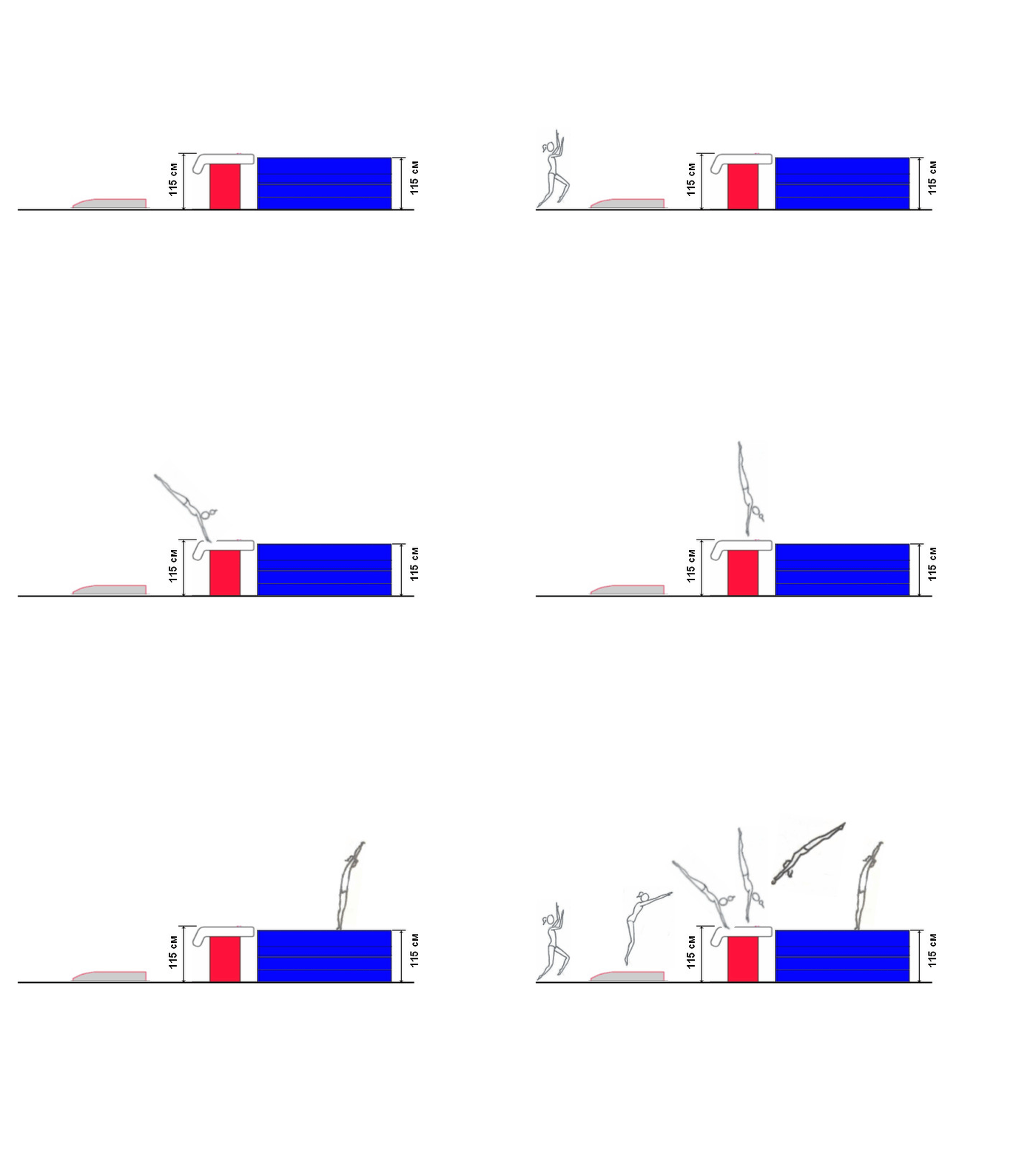
This third Level 1 progression represents a key transition point in the learning process. The gymnast now performs a full handspring vault onto a vaulting table set at approximately 115 cm, landing onto a platform positioned at the same height as the vault.
By matching the landing height to the vault table, the exercise strongly emphasises the blocking and repulsion phase at hand contact. To successfully rise onto the platform, the gymnast must generate a powerful and well-timed shoulder push, producing a clearly visible second flight phase after leaving the vault.
This setup helps the gymnast experience how effective shoulder blocking directly influences:
-
Height and duration of the second flight phase
-
Upward lift immediately after leaving the vault table
-
The time available for future airborne rotation (such as the forward somersault)
What this exercise develops:
-
Strong and efficient shoulder blocking on the vault table
-
Clear separation between the first and second flight phases
-
Awareness of vertical lift and flight time before rotation is introduced
In elite handspring vault preparation, exercises that require the gymnast to land at vault height reinforce the importance of upward repulsion and flight generation — essential prerequisites for safe and controlled somersaulting vaults.
Level 1 – Preparatory Exercise 4: Handspring From Trampoline to Front Tuck Somersault Into Foam Pit

This fourth Level 1 progression introduces forward somersault rotation in a highly controlled and protected environment. The gymnast performs a handspring action with the hands placed on a trampoline, followed by a front tuck somersault into a gymnastics foam pit.
The trampoline provides greater elasticity than a springboard, amplifying the upward lift created by the shoulder block and significantly extending the second flight phase. This additional flight time allows the gymnast to experience the correct sequence of actions: first pushing strongly through the shoulders to gain height, and only then initiating the somersault rotation.
Landing into a soft foam pit reduces impact forces and provides psychological reassurance, particularly during the first experiences of forward rotation after the handspring.
What this exercise develops:
-
Clear separation between blocking (push-off) and rotational phases
-
Improved height and time in the air before initiating the somersault
-
Confidence and spatial awareness during forward rotation
-
Safe introduction of front tuck mechanics in a protected setting
In elite vault preparation, highly elastic surfaces and soft landings are used strategically to teach correct timing of rotation while minimising physical and psychological risk for the gymnast.
Level 1 – Preparatory Exercise 5: Handspring Vault to Forward Roll Onto Inclined Platform (≈115 cm)

This final Level 1 progression returns the gymnast to the vaulting table set at approximately 115 cm, consolidating the pushing mechanics developed in the previous exercises.
After performing a handspring vault with a clearly defined blocking and second flight phase, the gymnast continues the movement into a controlled forward roll onto an inclined platform with soft matting. The incline and padding allow the gymnast to safely redirect forward momentum without the need for an airborne somersault.
The purpose of this exercise is to bridge flight and rotation awareness. Having already learned to generate height and time through effective shoulder blocking, the gymnast now experiences how forward rotation can follow the second flight phase in a progressive and protected way.
What this exercise develops:
-
Reinforcement of strong shoulder blocking and second flight lift
-
Awareness of forward rotational pathways following the push-off phase
-
Safe introduction to rotational continuation without full aerial somersaulting
-
Confidence transitioning from flight into forward rotation
In elite progression models, forward rolls onto inclined and padded surfaces are used to introduce rotational awareness while preserving correct take-off mechanics and minimising impact.
What Level 1 focuses on
Level 1 is designed to build the physical foundations required for safe and effective vaulting before any advanced somersaulting skills are attempted.
Across these preparatory exercises, the emphasis is on:
- Learning how to push strongly and safely through the shoulders (known as blocking)
- Developing height and time in the air during the second flight phase
- Experiencing forward rotation in controlled and protected ways
- Building confidence through gradual exposure and safe landings
Rather than rushing toward difficult skills, Level 1 ensures that gymnasts understand how lift and flight are created, and how rotation should follow (not replace) a strong push-off.
For parents, this level illustrates an important principle of quality gymnastics coaching: complex skills are earned through preparation, patience, and progression.
🔹Level 2 – Advanced Preparatory Exercises
Once foundational qualities are established, progression continues with more demanding exercises that:
- Increase flight time and rotation control
- Refine timing between hand contact and take-off
- Improve spatial awareness during the second flight phase
These exercises remain preparatory in nature and are only introduced when the gymnast demonstrates sufficient readiness.
Level 2 – Preparatory Exercise 1: Handspring Vault Onto a Platform Above Vault Height (+10 cm)
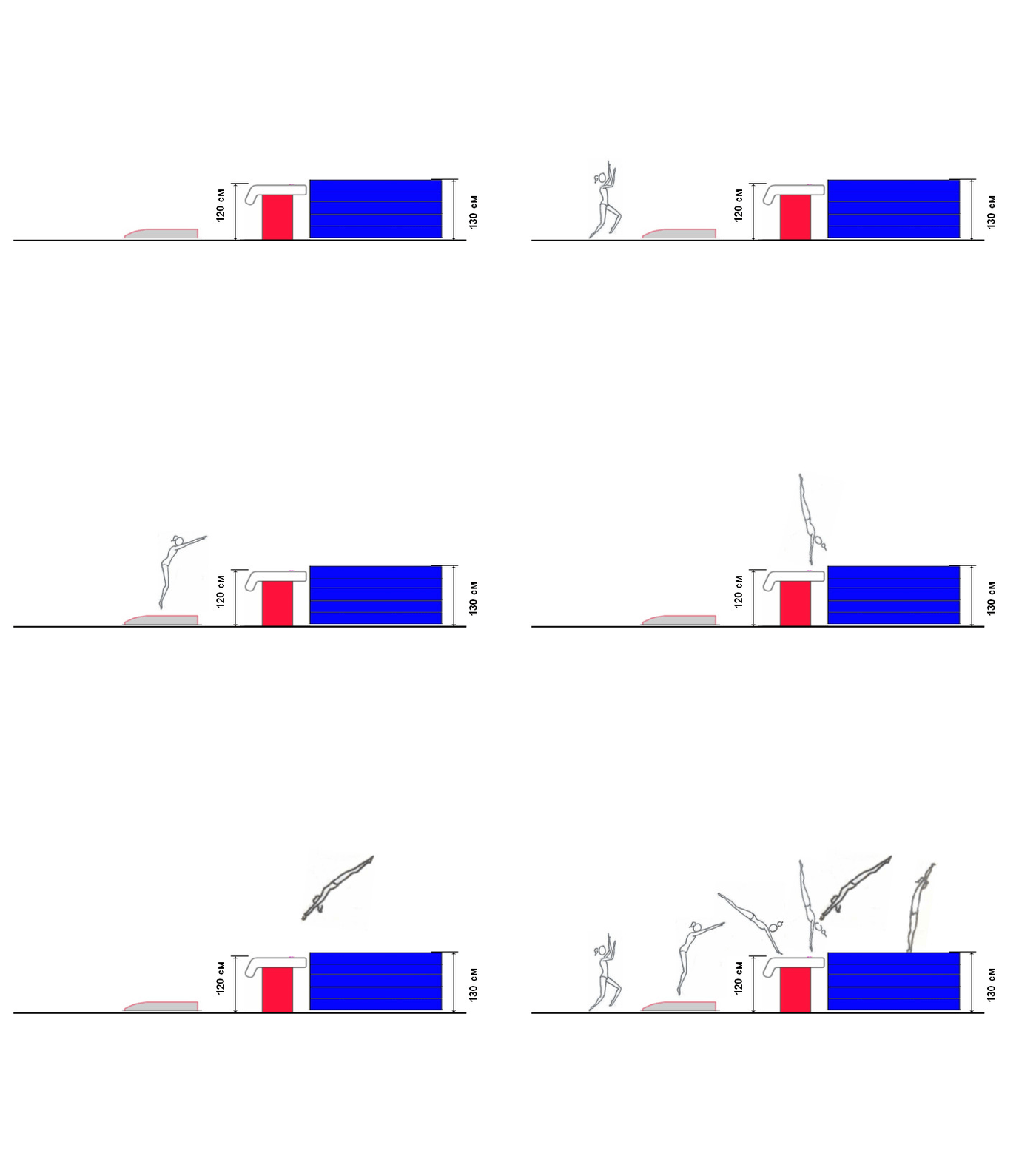
This first Level 2 progression builds directly on the foundations established in Level 1 by increasing the physical demand on the blocking and second flight phase.
The gymnast performs a handspring vault on the vaulting table, with the vault height adjusted according to age and discipline (for example, approximately 125 cm for elite women’s artistic gymnastics and 135 cm for elite men’s artistic gymnastics). In early stages, this progression may begin at a slightly lower height (around 120 cm) and increase progressively.
The key progression element is the landing platform positioned approximately 10 cm higher than the vault table. To successfully rise onto the platform, the gymnast must demonstrate a strong, fast, and well-directed shoulder block, producing increased height and a clearly defined second flight phase.
This configuration places a clear physical demand on the gymnast’s ability to:
-
Push upward and away from the vault table
-
Maintain body alignment through the support phase
-
Generate sufficient height and time for upcoming somersault progressions
What this exercise develops:
-
Enhanced shoulder blocking power and efficiency
-
Increased second flight height and duration
-
Readiness for advanced somersaulting vaults introduced in later Level 2 progressions
In elite vault preparation, raising the landing height beyond the vault table provides objective feedback on the quality of the blocking action and confirms the gymnast’s readiness for more complex airborne skills.
Level 2 – Preparatory Exercise 2: Handspring Front Tuck Vault Into Foam Pit

This second Level 2 progression presents the complete handspring front tuck vault, performed onto the regulation vault table height appropriate to the gymnast’s age and discipline, with the landing directed safely into a gymnastics foam pit.
At this stage, the gymnast is expected to demonstrate the full sequence of actions developed throughout Level 1 and confirmed in Level 2 – Exercise 1: a strong approach, an effective handspring entry, a powerful shoulder block, and a clearly timed front tuck somersault initiated only after sufficient height and second flight have been achieved.
The foam pit plays a critical role by:
-
Reducing impact forces during landing
-
Allowing repeated practice without cumulative stress
-
Supporting spatial awareness and confidence during full rotation
This environment enables the gymnast to focus on quality of execution and timing, rather than fear of landing.
What this exercise develops:
-
Integration of blocking, flight, and rotation into a single coordinated skill
-
Correct timing of somersault initiation following the push-off phase
-
Enhanced aerial awareness during the full handspring front tuck vault
-
Safe repetition of the complete skill under controlled conditions
In elite gymnastics preparation, foam pit landings are used to introduce full vault skills while preserving technical integrity and minimising injury risk during early repetitions.
Level 2 – Preparatory Exercise 3: Handspring Front Tuck Vault to Crash Mat Over Pit

This third Level 2 progression further advances the full handspring front tuck vault by reducing landing assistance while still maintaining a controlled and protective environment.
The gymnast performs the same vault action as in the previous exercise — handspring onto the vault table followed by a front tuck somersault — but now lands on a firm crash mat positioned over the foam pit. This setup introduces a more realistic landing surface, while the underlying pit continues to reduce overall impact forces.
The aim of this exercise is to refine spatial awareness, body tension, and landing preparation after the somersault, without exposing the gymnast to full competition-level landing demands too early.
By progressing from pit-only landings to a mat-over-pit configuration, the gymnast learns to:
-
Maintain shape and control throughout the entire flight and rotation
-
Prepare the body for contact with a firmer surface
-
Regulate rotation speed and body position during the descent
What this exercise develops:
-
Improved landing awareness following the front tuck somersault
-
Better control of rotation speed and body tension
-
Gradual adaptation to firmer landing surfaces
-
Confidence transitioning toward regulation landing conditions
In elite vault progressions, crash mats placed over foam pits are used to bridge the gap between fully assisted landings and competition-style surfaces, ensuring safety while refining landing mechanics.
🔹Level 3 – Final Skill Execution
Level 3 represents the transition from preparatory learning to full skill execution under controlled conditions. At this stage, all key components — approach, blocking, flight, rotation, and landing preparation — have already been systematically developed.
Level 3 – Final Exercise: Handspring Front Tuck Vault (Regulation Landing)
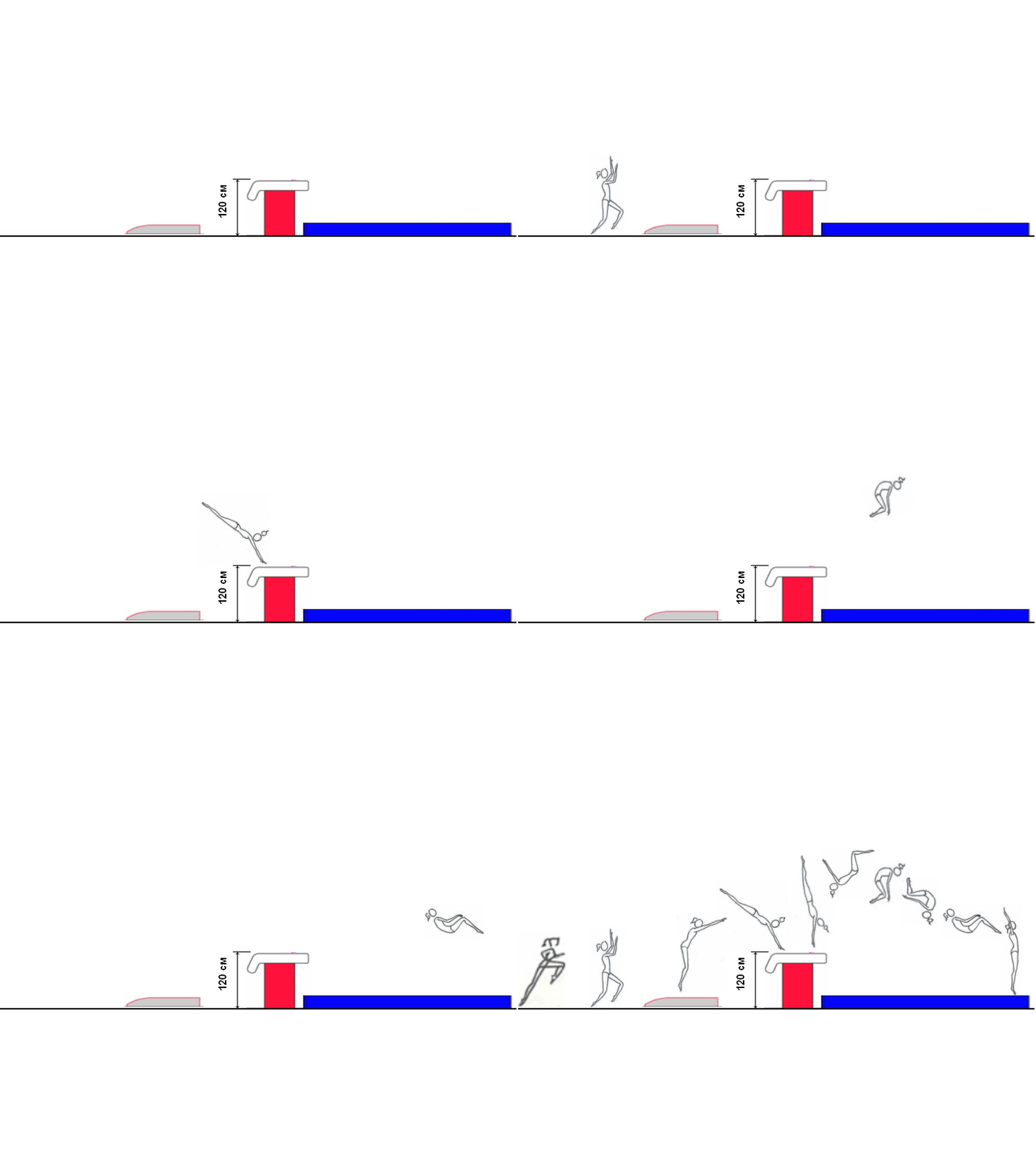
This final progression represents the complete execution of the handspring front tuck vault under near-competition conditions.
The gymnast performs a handspring onto the regulation-height vault table (competitive level: 125 cm for women and 135 cm for men), followed by a front tuck somersault and landing on a standard gymnastics landing surface. At this point, no additional assistance from pits or elevated landing platforms is required, as the gymnast has already demonstrated:
-
Consistent and powerful shoulder blocking
-
Sufficient second flight height and time
-
Correct timing of somersault initiation
-
Controlled body tension throughout flight and rotation
The purpose of this final exercise is not to introduce new technical elements, but to confirm technical readiness, coordination, and confidence in executing the skill as it would appear in formal training or competition settings.
What this exercise confirms:
-
Integration of all technical phases into a single fluent vault
-
Stable execution under realistic landing demands
-
Readiness to perform the skill consistently and safely
In elite gymnastics, full skill execution is introduced only after objective readiness has been demonstrated through structured preparatory progressions.
Requirements for Visual Control
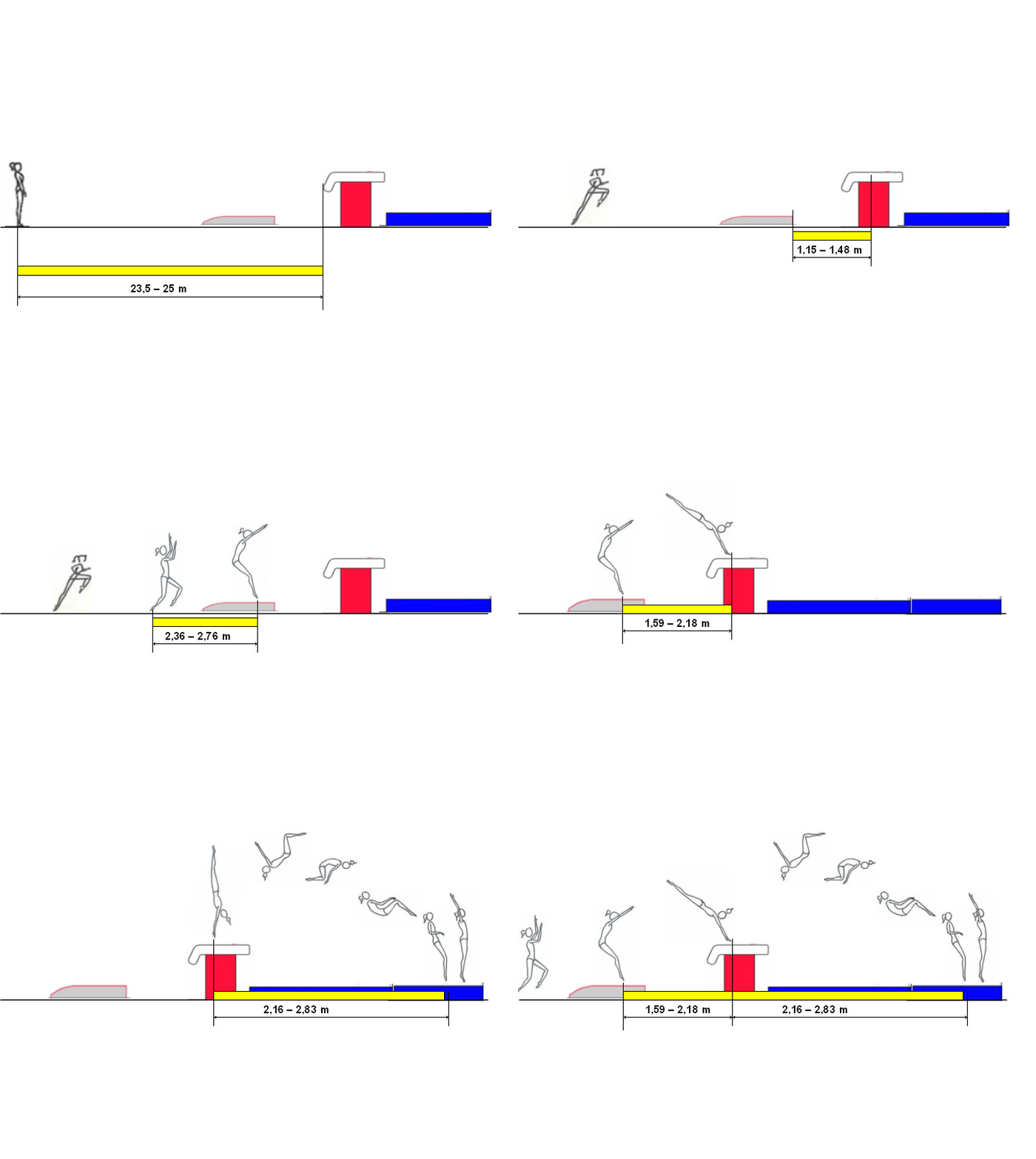
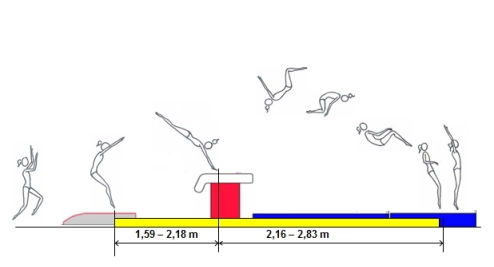
An essential component of elite vault training is visual control — the gymnast’s ability to orient themselves accurately during fast, airborne movements.
The visual above provides a general reference framework commonly used in elite training environments, illustrating:
-
Typical approach run length
-
Relative positioning of the springboard and vault table
-
Spatial organisation of the take-off and second flight phases
These measurements are shown for educational context only. They may vary depending on the gymnast’s age, discipline, body size, and coaching methodology, and are often adapted in practice — particularly between women’s and men’s artistic gymnastics.
Rather than focusing on exact numbers, the purpose of this visual is to help readers understand how consistent spatial relationships support orientation, timing, and safe landing preparation during vaulting.
Visual control is not instinctive; it is developed progressively through structured training, repetition, and expert supervision.
Key Coaching Principles Illustrated in This Article
-
Preparation before performance: complex vault skills are earned through progressive physical preparation, not rushed execution.
-
Blocking creates flight: effective shoulder blocking is the foundation for height, time in the air, and safe rotation.
-
Rotation follows lift: somersaults are introduced only after sufficient flight has been consistently developed.
-
Safety through structure: elastic surfaces, pits, and mats are used strategically to reduce risk while learning.
-
Readiness over age: progression depends on physical and technical readiness, not simply chronological age.
What Parents Can Take Away From This
While the skills shown here are advanced, the principles behind them apply to all levels of gymnastics, including recreational programmes:
-
Skills are built step by step
-
Safety comes before difficulty
-
Physical readiness matters more than speed of progression
-
Quality coaching is essential for long-term development
At Kensington & Chelsea Gymnastics Academy, these same principles guide our age-appropriate programmes for children, whether families are exploring KCGA classes or seeking more individualised support through private one-to-one gymnastics lessons for children. In every setting, our aim is to ensure gymnastics remains a positive, safe, and confidence-building experience.
👤 Authorship & Academic Context
Author:
Dr Neli Tankusheva, PhD
Gymnastics Department, National Sports Academy ‘Vassil Levski’ (Bulgaria)
Design, translation, and visual assembly:
Dr Stefan Kolimechkov, PhD
Expert in Physical Education & Sport Science
This educational resource reflects internationally recognised coaching methodology and academic collaboration within artistic gymnastics.
📘 Final Note
The KCGA Academy shares selected elite and academic resources to support understanding, not imitation. Gymnastics progressions must always be delivered by qualified professionals in appropriate environments.
If you are interested in how KCGA applies scientific principles to child-centred gymnastics development in London, we invite you to explore our other Academy resources designed specifically for parents and families
This article is part of the KCGA Academy – a trusted knowledge hub for London families seeking evidence-based guidance on children’s gymnastics development.
0 Comments